How to Check Bicycle Chain Tension: A Practical Guide
Learn how to check bicycle chain tension across different drivetrain setups. This practical guide covers tools, safety, step-by-step methods, and tips to keep your chain running smoothly and efficiently.


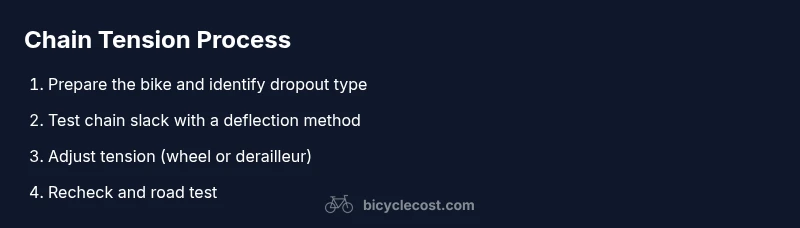
Goal: learn how to check bicycle chain tension quickly and safely. You’ll need a stable workspace, basic tools, and an understanding of your dropout type (horizontal, vertical, or eccentric). Use the step-by-step method to test chain slack, verify alignment, and adjust the wheel or derailleur as needed, or seek a professional if in doubt.
Why Chain Tension Matters
A bicycle chain that moves freely without binding is essential for smooth shifting, efficient pedaling, and drivetrain longevity. Correct chain tension helps keep the chain aligned on the chainrings and sprockets, reduces the risk of derailments, and minimizes weave or slap on rough roads. A chain that’s too loose can fall off or skip under load, while a chain that’s too tight may hinder bearing rotation and create unnecessary wear. According to BicycleCost, maintaining proper chain tension is a core part of responsible maintenance that saves money over time by reducing chain, cog, and derailleur wear. In this section we explain why tension matters across different drivetrain configurations and how to recognize when your chain is not in the right zone. Use these guidelines as a practical baseline for everyday riding and gentle off-road adventures.
Understanding Your Drivetrain: Single-Speed vs Multi-Speed
The approach to checking chain tension changes with your drivetrain. Single-speed bikes and bikes with internal hubs rely on correct chain tension to keep the chain engaged with the teeth under load. Multi-speed bikes with a rear derailleur use tension through the derailleur mechanism and, in many cases, rely less on wheel movement for tensioning. Knowing which setup you own helps you pick the right method and avoid over-tightening or under-tightening. The basic principle remains the same: the chain should be taut enough to stay on the gears, but not so tight that it restricts crank movement or causes excessive wear. Familiarize yourself with your bike’s dropout type and derailleur configuration before you begin.
How Dropouts and Derailleurs Control Tension
Dropout design and drivetrain components determine how tension is managed. Horizontal dropouts or eccentric hubs allow you to adjust wheel position to increase or decrease chain tension directly. Vertical dropouts place the tension responsibility on the derailleur, which takes up slack as you shift through gears. On hubs with internal gear systems, tension is managed internally and still requires periodic checks for chain wear and proper alignment. When you understand where tension comes from on your bike, you’ll know whether to adjust the wheel or to fine-tune the derailleur and chain length for a stable riding experience.
Visual and Feel Checks You Can Perform
Before diving into tools, perform quick visual checks: look for a straight chain line, check that the chain sits cleanly on both chainring and sprocket, and listen for rubbing or skipping noises during light pedaling. Feel the slack with a light push on the chain midway between the chainring and rear cog. If you notice obvious rubbing, derailleur misalignment, or the chain hangs loosely without catching teeth, you likely need adjustment. These checks help you decide whether to perform a wheel-tension adjustment or a derailleur-based tension tweak.
Measuring Tension Without Manufacturer Specs
If you don’t have a spec sheet for your model, you can assess tension using simple reference methods. A practical approach is to measure how much the chain deflects when pressed at the midpoint between the chainring and sprocket. The goal is to have a consistent take-up that keeps the chain engaged under typical pedaling loads, while avoiding excessive tightness that can cause resistance and wear. Use a ruler or a dedicated tension gauge to compare deflection across the same part of the chain on multiple rides. Document readings over time to track wear.
Step-By-Step Quick Check (Deflection Test)
This quick check helps you gauge whether tension is in the safe range. Position the bike on a stand or stable surface. Shift to a mid-gear, then press the chain between the chainring and rear cog to feel for slack. Compare your reading to your past measurements and to the feel of a well-tensioned chain on a similar bike. If the chain moves more than a small, controlled amount, it’s a sign you may need to adjust. Always perform this test with the bike stationary and in a safe gear to avoid sudden drivetrain movement.
Adjusting Tension Safely: Wheel vs Derailleur
For bikes with horizontal dropouts or eccentric hubs, adjust tension by moving the rear wheel within the dropout slots. Loosen the axle nuts, push the wheel to achieve the desired tension, then re-tighten. For bikes with vertical dropouts or derailleur systems, tension is adjusted via the derailleur mechanism and, if needed, by changing chain length. Ensure the derailleur hanger is straight and the chainline is aligned to keep the chain engaged across gears. Do not force components; if you’re unsure, consult the manual or a professional.
Road Testing and Fine-Tuning
After making adjustments, take a short test ride in a safe area. Shift through all gears and listen for slipping, skipping, or chain drops. Re-check tension once more after the ride because drivetrain components settle slightly under load. If shifting remains rough or you hear grinding, re-check derailleur alignment and cable tension. Consistency across gears is the best indicator that tension is set correctly for your specific bike.
When to Seek Help and Replacement Considerations
If the chain continues to slip, misalign, or drop even after adjustments, you may have worn teeth, a stretched chain, or a misadjusted derailleur. In such cases, replacing the chain or inspecting the sprockets may be necessary. The BicycleCost Team recommends consulting a qualified bike technician if you notice persistent issues, unusual wear, or if you’re unsure about the safe tension level for your bike. Regular maintenance of chain tension protects your drivetrain and keeps riding enjoyable.
Tools & Materials
- Adjustable wrench (6-8 mm)(Check axle type; some bikes use 15 mm or hex bolts)
- Ruler or chain tension gauge(Used to measure deflection and compare to baseline readings)
- Bike stand or stable work surface(Keeps the bike steady during adjustments)
- Lubricant (chain lube)(Apply after adjustment to minimize wear)
- Gloves(Protect hands during adjustments)
- Notebook and pen(Record measurements and adjustments)
Steps
Estimated time: 25-35 minutes
- 1
Prepare the bike and workspace
Place the bike on a stable stand or ensure it is on a flat, level surface. Shift to a mid-gear if applicable and inspect the wheel for true alignment. Put on gloves if you like, and make sure no moving parts will pinch during adjustment.
Tip: Secure the bike so it won’t tip during wheel adjustments. - 2
Identify dropout type and approach
Check whether your bike uses horizontal dropouts, vertical dropouts, or an eccentric hub. This determines whether you’ll tension by moving the wheel or by adjusting the derailleur/chain length.
Tip: If in doubt, consult the owner’s manual or a trusted guide for your bike model. - 3
Loosen and prepare for tensioning (horizontal dropouts)
If you have horizontal dropouts, slightly loosen the axle nuts or quick-release, but don’t remove hardware. You’ll move the wheel to create tension, keeping the chain aligned with both chainring and rear cog.
Tip: Only loosen just enough to allow movement; overtightening can damage parts. - 4
Tension via derailleur or vertical dropouts
For vertical dropouts or derailleur-driven systems, tension is taken up by the derailleur. Ensure the derailleur hanger is straight and the cable tension is correct before adjusting chain length if needed.
Tip: Don’t force the derailleur; if it sticks, check for bent components. - 5
Check tension with a deflection test
With the chain engaged, press the mid-chain area and observe slack. Compare to your baseline readings or a known-good setup on a similar bike.
Tip: Aim for consistent take-up without excessive slack. - 6
Tighten and recheck
Retighten axle nuts or secure the derailleur, then recheck tension by rotating the pedals and performing another deflection test.
Tip: Test across multiple gears to ensure even tension. - 7
Road test and finalize
Take a short ride to verify shifting and chain behavior under load. Listen for slipping or rubbing; if present, recheck alignment and tension.
Tip: If the chain still feels off, seek professional inspection.
People Also Ask
Is chain tension the same for all bikes?
No. Chain tension and adjustment methods vary with drivetrain type (single-speed, derailleur, hub gear).
No. Tension methods vary by drivetrain type.
Can I ride with loose chain tension?
Riding with improper tension can cause derailments or chain drops. Always aim for the recommended tension for your setup.
Riding with wrong tension can be dangerous and cause damage.
How often should I check chain tension?
Check during routine maintenance, after drivetrain work, or if you notice shifting issues or unusual noise.
Check during maintenance or if you notice issues.
What’s the difference between tension and chain length?
Tension refers to chain slack during riding; chain length affects wrap and gear engagement. Both influence shifting and wear.
Tension is about slack; length is about fit and wrap.
What tools do I need to adjust tension?
Wrenches or hex keys suited to your axle, a ruler or tension gauge, and a stable work surface.
Tools include wrenches, a ruler or gauge, and a stand.
Watch Video
Quick Summary
- Check tension regularly to prevent wear
- Dropout type dictates tension method
- Use proper tools and safe technique
- Test across gears and recheck after riding
- Seek professional help if unsure about tension level