How to Stop Bicycle Brakes from Rubbing
Learn practical, step-by-step fixes to stop bicycle brakes from rubbing. From quick diagnostics to at-home adjustments and maintenance tips, BicycleCost provides expert guidance for smooth braking.


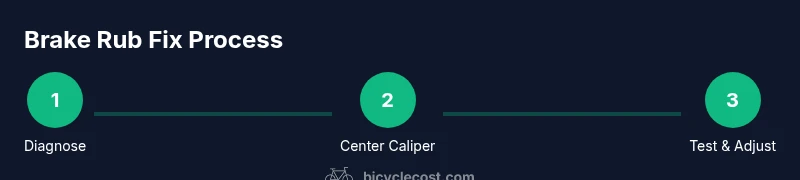
You can stop bicycle brakes from rubbing by trueing the wheel, adjusting the brake pads, and aligning the brake calipers. Start by checking wheel tension, then loosen or center calipers, re-seat the wheel, and test with light spins. If rubbing persists, inspect the rotor or rim for damage, replace worn parts, and re-balance wheel tension. Regular maintenance prevents recurring rubbing.
Quick diagnostic checks
Before you reach for tools, perform a quick diagnostic to separate pad contact from wheel or rotor issues. According to BicycleCost, the easiest test is to spin the wheel in a stable stand and observe where contact happens. If the rubbing is constant even with no braking, the problem is likely alignment or wheel seating. If rubbing only occurs when braking, the pads or caliper alignment are the likely culprits. Note which side rubs more, as this guides targeted adjustments. Finally, wipe the rotor and pad faces with a clean rag to rule out dirt causing intermittent contact.
Common causes of brake rub
Brake rub can arise from several sources. Misalignment of calipers relative to the rotor or rim can cause uneven contact. A warped rotor or a rim that is out of true will also produce rubbing sensations. The wheel not seated fully in the dropout, dirty or glazed pads, or worn pad material are other frequent culprits. Loose caliper mounting bolts or incompatible pad sizes can exacerbate rubbing and require attention before riding.
Quick at-home fixes that often work
Many rubbing issues resolve with a few at‑home adjustments. Start by centering the calipers over the rotor or aligning the caliper with the rim brake surface, then reseat the wheel firmly in the dropout. Clean the rotor and pads to remove any dirt or glaze, and inspect pad wear. If necessary, replace worn pads and recheck alignment. After any adjustment, perform a gentle spin test to confirm even clearance on both sides.
How to inspect and adjust disc brakes (mechanical vs hydraulic)
Mechanical disc brakes rely on caliper alignment and pad position. Hydraulic systems depend on precise rotor runout and pad contact, but the principles are similar: ensure the rotor is true, the caliper is centered, and the pads are not rubbing the rotor when the lever is released. For both systems, small, incremental adjustments beat large changes. If rotor runout exceeds a mild tolerance, replace the rotor. Ensure brake fluid is not contaminated and that there are no air bubbles in hydraulic lines.
Maintenance routines to prevent rub long-term
Preventive maintenance reduces the likelihood of rubbing recurring. Regularly inspect pad wear, clean rotors, and check wheelTrue and hub bearings for play. Schedule a quick monthly brake check, especially after riding on rough terrain or after cleaning the chain and drivetrain. Use a torque wrench to tighten caliper bolts to manufacturer specifications and replace pads and rotors when wear indicators are reached. Keeping components dry and free of oil or grease on braking surfaces is essential.
Safety considerations when brakes rub
Brake rub can reduce braking performance and create uneven wear, which can be unsafe in traffic. Always test in a safe area before returning to roads or trails. If you hear grinding, feel excessive heat, or notice persistent rubbing after adjustments, stop riding and seek professional help. Do not ride with compromised braking.
Tools & Materials
- Bike stand or repair stand(Stability helps access brakes)
- Allen wrenches (4mm, 5mm, 6mm)(Caliper bolts and pad pins)
- Torx driver (if applicable)(Some calipers use Torx bolts)
- Replacement brake pads(Optional if wear is indicated)
- Rags or degreaser(Clean rotor/pads and remove oil)
- Lubricant or anti-seize (for bolts)(Only on bolts, not on braking surfaces)
- Torque wrench(Useful for precise bolt torque)
- Spoke wrench or wheel truing device(If wheel true requires adjustment)
Steps
Estimated time: 25-40 minutes
- 1
Inspect the rub and prepare
Place the bike on a stand and spin the wheel to observe where rubbing occurs. Note which side rubs and whether the issue is constant or braking-related. Clean rotors/pads to remove any contaminants.
Tip: Document findings before making adjustments; small changes add up. - 2
Loosen and center the caliper
Loosen caliper bolts slightly to allow lateral movement, then center the caliper so it sits evenly between pads. Retighten bolts to the correct torque.
Tip: Do not over-tighten; keep caliper centered for even contact. - 3
Reseat the wheel
Remove and reinstall the wheel, ensuring it sits fully in the dropout with proper hub bearings engagement. Spin to check clearance on both sides.
Tip: If using a quick-release, close it with even pressure without tilting the wheel. - 4
Inspect and replace pads if needed
Check pad thickness and material. Replace worn pads and confirm correct pad orientation in the caliper.
Tip: Always replace pads in pairs if they wear unevenly. - 5
Fine-tune rotor and pad alignment
For discs, ensure rotor is true and not contacting the caliper housing. Adjust pad position so each pad contacts the rotor evenly.
Tip: Small, incremental adjustments produce the best results. - 6
Test ride and verify
Take a short test ride in a safe area. Apply moderate braking to confirm rub is resolved. If rubbing returns, re-check wheel seating and rotor runout.
Tip: If rubbing persists after adjustments, consider professional servicing.
People Also Ask
What causes bicycle brakes to rub?
Brake rub commonly results from misaligned calipers, worn pads, dirty braking faces, or rims/rotors that are out of true. Identifying the specific cause helps target the fix effectively.
Brake rub is usually due to misalignment, worn pads, or dirt. Check alignment and wear to solve it quickly.
Can rotor rub indicate rotor warping?
Yes, rotor warp can cause rubbing. Spin the wheel to observe contact; if the rotor rocks or rubs consistently on one area, consider replacing the rotor or having it trued.
Rotor warp can cause rubbing. If spin tests show irregular contact, replace or true the rotor.
Is it safe to ride with brakes rubbing?
Riding with rubbing brakes is not ideal. It can wear pads unevenly and reduce braking efficiency. Resolve the issue before riding in traffic or rough terrain.
Not safe to ride with rubbing brakes. It can wear pads unevenly and reduce braking power.
How often should brake pads be replaced?
There is no universal interval. Inspect pad thickness and indicators; replace when the pad is near minimum thickness or when wear indicators appear.
Check pad thickness regularly and replace when they are thin.
Do rim brakes rub differently from disc brakes?
Rim brake rub usually relates to caliper alignment and rim surface, while disc brake rub involves rotor alignment and caliper centering. Both require careful alignment and clean surfaces.
Rim rub is about caliper alignment and rim cleanliness; disc rub is about rotor and caliper alignment.
When should I seek professional help?
If rubbing persists after basic adjustments, or if you notice rotor damage, fork or hub issues, seek a bike technician. They can safely true rotors or replace components.
If rubbing continues after attempts, or you see rotor damage, get a professional check.
Can cleaning products cause more rubbing?
Use degreaser or isopropyl alcohol on rotors and pads; avoid petroleum-based cleaners on braking surfaces to prevent glazing.
Stick to bike-safe cleaners on rotors and pads to avoid glazing.
Watch Video
Quick Summary
- Center calipers for even pad contact.
- Reseat the wheel firmly before riding.
- Inspect rotors and rims for damage.
- Replace worn pads to prevent rubbing.