How to Fix Bicycle Gear Shifter: A Step-by-Step Guide
Learn how to fix a bicycle gear shifter with a clear, step-by-step approach. From diagnosing cable wear to reindexing gears, this guide covers tools, safety, and maintenance tips for crisp shifting on any bike.


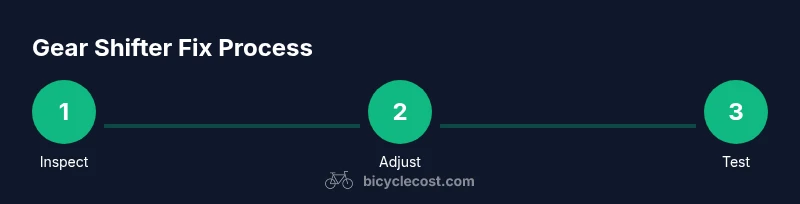
To fix bicycle gear shifter, start by inspecting the cables for wear, check for stretched housing, and adjust the cable tension with the barrel adjuster. If shifting remains sloppy, replace worn cables and reindex the derailleur. Make small, incremental barrel adjuster turns and test shifting after each adjustment. Keep the drivetrain clean to support accurate changes.
Symptoms and causes of a faulty shifter
A misbehaving gear shifter can feel sticky, skip gears, or fail to line up with the correct sprocket. In many bikes, symptoms come from cable stretch, worn housing, dirty or corroded components, or misadjusted indexing. According to BicycleCost, most shifting problems start with simple cable wear and neglect, which compounds as you ride. When the cable becomes loose or frayed, the derailleur can't move precisely enough to align with the selected gear, causing hesitation or deliberate mis-shifts. Additionally, an out-of-date chain or worn chainrings can amplify small misalignments, making it appear as if the shifter itself is at fault. Before you dive into parts, observe when shifting feels off: is it only under load, when you ride in larger gears, or after shifts under braking? These clues guide whether you need to adjust tension, replace a cable, or reindex the derailleur. BicycleCost analysis shows cable wear as a primary driver of shifting problems and a good first check when fixing a shifter.
Safety and prep before you begin
Working on a bicycle’s drivetrain requires attention to safety and cleanliness. Put the bike on a stable stand or prop it securely so wheels aren’t moving. Wear gloves to protect your hands, and lay down a rag to catch grease. Wipe away grime from the derailleur, cables, and shifter housing before you touch components. In BicycleCost’s experience, a clean starting point reduces the risk of snagging parts and helps you spot wear more clearly. Ensure you have good lighting and a clutter-free workspace. If you’re new to bike maintenance or feel uncertain, consider practicing with the chain removed or using a repair stand to minimize risk of injury. A calm, methodical setup pays off when you begin adjustments.
Essential tools and spare parts you may need
You’ll typically need a few common tools and spare parts for most gear-shifter fixes: a pair of cable cutters, replacement derailleur cables and housing, a barrel adjuster, appropriate Allen keys (Hex wrenches), a screwdriver (Philips or flat-head as required by your shifter), pliers, a bike lubricant, and clean rags. For some bikes, you may also need a new shifter cage or derailleur pulley. Keep a spare cable end installed with a crimp or end cap. Having everything organized in a parts tray helps you stay focused during the repair. If you’re unsure about the correct cable diameter (often 1.1–1.2 mm for MTB and road bikes), check your manufacturer specifications before buying.
Step 1: Inspect the derailleur and cables
Begin by visually inspecting the derailleur hanger alignment and the cable housing. Look for stretched or frayed cables, rust, or kinks in the housing. Check that the cable end peen is intact and that there’s no slack in the housing ferrules. A misaligned derailleur can mimic a bad shifter, so verify the derailleur moves smoothly when you manually pull the cable by hand. This step isolates whether the problem is cable wear, housing damage, or the derailleur itself. If the cable shows any signs of wear or corrosion, replace it before proceeding. A clean, properly routed cable path reduces friction and improves indexing.
Step 2: Check and adjust cable tension with the barrel adjuster
With the bike secured, shift to the smallest cog and observe the cable tension. Turn the barrel adjuster counterclockwise to increase tension or clockwise to reduce it, making small 1/4-turn adjustments at a time. After each small adjustment, shift through the gears to see if changes improve crispness. The barrel adjuster is the primary tuning knob for indexing—the set-up that tells the derailleur which cog to align with. If you notice consistent lag between handlebar shifter position and derailleur movement, you’re likely dealing with tension issues or housing compression that needs addressing. Re-check cable seating in the shifter and derailleur after every tweak.
Step 3: Inspect the shifter mechanism and housing
Open the shifter to inspect the internals if accessible. Look for loose screws, damaged cables, or a sticky mid-range mechanism. A quick spray of light lubricant on external parts can alleviate sticking, but avoid getting lubricant inside the shifting mechanism where it can attract dirt. If you see bent or split housing, replace the affected section to restore smooth operation. For many riders, simple cleaning and re-lubrication dramatically improve performance, especially on older shifters.
Step 4: Replace worn cables or housing
If the cable is stretched beyond 1–2% of its original length or shows visible wear, replace both the cable and the housing if it’s damaged. When installing, route the new cable correctly (through ferrules and along the same path) and leave a small amount of slack for smooth movement. Install the end cap securely to prevent fraying. After installing, retest the shifting to see if indexing improves. Replacing cables and housing is a common fix for many stubborn shifting problems and often yields immediate results.
Step 5: Reindex the gearing system
Reindexing ensures the derailleur aligns with each gear as you shift. Start with the small cog and gradually work up. If the derailleur won’t align after barrel adjustment, use the high- and low-limit screws to stop the cage from moving too far. Make small adjustments, then test across the full range to confirm every gear seats. A precise index makes every shift predictable and reduces the likelihood of chain slip or misalignment.
Step 6: Test and fine-tune across gears
Take the bike for a test ride or simulate shifting under light load while stationary. Shift through all gears in both directions and note any reluctance or hesitation. If certain gears still misbehave, revisit the barrel adjuster or re-check cable routing and housings. It’s common to re-tune a couple of times before the system is perfectly aligned. The goal is consistent, silent, and accurate gear changes in all conditions.
Step 7: Regular maintenance to prevent future issues
After achieving reliable shifting, establish a simple maintenance routine. Clean and lightly lubricate cables every few months, inspect housing for wear, and check the derailleur hanger alignment periodically. Keep the drivetrain clean and free of grit that can hinder movement. A well-maintained system reduces friction and prolongs component life, translating to smoother shifts and fewer roadside adjustments.
Tools & Materials
- Cable cutters(Sharp blades for clean cuts; replace blades if dull)
- Replacement derailleur cables(Match cable diameter to your model (usually 1.1–1.2 mm))
- Replacement derailleur housing(Only if housing is cracked or rusty)
- Barrel adjuster(s)(Keep a spare in your toolkit)
- Allen keys / hex wrenches(Common sizes: 4mm, 5mm, 6mm depending on shifter/derailleur)
- Screwdrivers(Flat or Phillips based on model)
- Lubricant (light), degreaser, rag(Use sparingly to avoid attracting dirt)
- Cable end caps / crimps(To secure the loose cable end)
- Bike stand or stable work surface(Prevents movement during setup)
Steps
Estimated time: 60-90 minutes
- 1
Inspect system and prepare
Position the bike securely, wear gloves, and clean the drivetrain. Identify symptoms (slippage, hesitation, or no response) and prepare your tools. Document observed issues so you can verify improvements after each step.
Tip: Take photos before you begin so you can compare later. - 2
Remove old cable and housing
Shift to the smallest cog to ease the cable removal. Loosen the housing ferrules and carefully extract the cable, ensuring not to bend the housing excessively. Use cut-cutters to cleanly remove and prepare for tracing the new cable.
Tip: Angle the cutter to avoid nicking the new cable. - 3
Install new cable (and housing if needed)
Feed the new cable through the housing and along the same route as the old one. Secure with end caps and ensure there’s a small amount of slack to allow smooth movement. Check routing to avoid snagging on frame components.
Tip: Leave a slight tail when centering the cable at the shifter; trim later after tensioning. - 4
Adjust tension with the barrel adjuster
Connect the derailleur cable and turn the barrel adjuster in small increments (1/4 turn). Test shift range after each adjustment to move toward precise alignment. Ensure the derailleur moves freely without binding.
Tip: Keep a log of turns so you can revert if needed. - 5
Reindex the derailleur
With the chain on the smallest cog, align the derailleur with the cog using indexing. Fine-tune by turning the barrel adjuster in small steps until each click lines up with a gear. Repeat across the full range to verify even shifts.
Tip: If you overshoot, back off a quarter turn and re-check. - 6
Check limit screws
Ensure the high- and low-limit screws prevent the derailleur from moving past the largest or smallest cog. Make tiny adjustments and re-test; this prevents overshifting and chain drop.
Tip: Only adjust limit screws after basic indexing is correct. - 7
Test ride and refine
Take a short test ride and shift through all gears under varying loads. Listen for rub or hesitation and look for consistent, crisp shifts. If any gear remains sticky, revisit tension or housing condition.
Tip: Shift through gears under pedal pressure to simulate real riding conditions. - 8
Finish with maintenance
Clean the drivetrain again and apply a light lubricant to the cables only. Wipe off excess to prevent dirt buildup. Store tools and re-check after a few rides to confirm stability.
Tip: Keep a simple maintenance schedule to catch wear early.
People Also Ask
What causes gears to skip or not shift properly?
Gears may skip due to stretched cables, worn housing, misadjusted indexing, or a bent derailleur. Start by replacing worn cables and reindexing, then check for housing damage. If problems persist, inspect the derailleur hanger alignment.
Gears skip when cables are stretched or the derailleur can’t line up with the gears. First replace worn cables and reindex, then inspect housing and the hanger alignment.
Can I fix a bent derailleur myself?
A bent derailleur can sometimes be straightened, but often requires a professional repair or replacement. Check for frame alignment and hanger integrity first; if misalignment remains after adjustments, seek assistance.
A bent derailleur might be fixable, but often needs professional care. Check hanger alignment and seek help if misalignment persists.
Do I need to replace the shifter if indexing is off?
Not necessarily. Most indexing issues are caused by cables, housing, or derailleur alignment. Replace worn cables and reindex first; only replace the shifter if it remains unresponsive after all adjustments.
Usually you don’t need to replace the shifter. Check the cables, housing, and derailleur, then reindex first.
How often should I lubricate cables?
Lubricate cables sparingly during routine maintenance, typically every few months depending on riding conditions. Wipe away excess lubricant to avoid attracting dirt.
Lubricate sparingly every few months and always wipe off extra to prevent dirt buildup.
Should I adjust the limit screws during fixes?
Limit screws prevent over-shifting beyond the smallest or largest cog. Adjust them after achieving good indexing to ensure safe, accurate shifting across the full range.
Yes—adjust limit screws after indexing to prevent overshifting.
Is it okay to ride with a temporary fix?
Temporary fixes can get you home, but they aren’t a substitute for proper maintenance. Plan a full inspection and replacement of worn parts as soon as possible.
Temporary fixes can help you get home, but you should do a proper repair soon.
Watch Video
Quick Summary
- Inspect cables and housing before replacing parts
- Make small barrel adjuster adjustments and test frequently
- Reindex carefully to restore accurate gear alignment
- Regular maintenance reduces future issues
- Know when to seek professional help