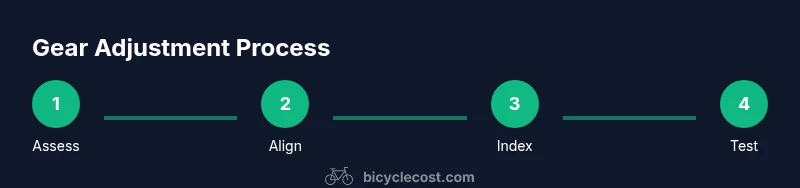
How to Adjust Bicycle Gears: A Practical Guide
Learn how to adjust bicycle gears with step-by-step instructions for front and rear derailleurs, indexing, cable tension, and safe road testing. Includes tools, tips, and troubleshooting for smooth shifting.


Learn how to adjust bicycle gears, covering front and rear derailleurs, indexing, cable tension, limit screws, and safe road testing. This guide helps you diagnose rubbing, misalignment, and shifting issues, and walk you through a clear, step-by-step tuning process with the right tools. With care, you’ll ride smoother, shift faster, and extend drivetrain life.
Why properly adjusted gears matter
A well-tuned gear train makes pedaling smoother, improves efficiency, and reduces chain wear. When gears shift cleanly, you can maintain cadence, climb hills with less effort, and stay in the correct gear under braking or acceleration. Poorly adjusted gears cause chain rub, dropped chains, misalignment, and abrupt shifts that can derail a ride. For cyclists of all levels, routine gear maintenance saves time and extends drivetrain life. According to BicycleCost, most daily riders experience smoother shifts after a systematic check that includes derailleur alignment, cable tension, and limit screw tuning. This is not just about comfort: correct gearing improves safety by ensuring predictable shifts when you need to downshift for traffic or uphill sections. In this section we’ll unpack how the derailleur system works and how to diagnose common faults before you reach for tools.
How the derailleur system works
A bicycle’s shifting is controlled by two derailleurs (front and rear) and the chain that travels between chainrings and cogs. The front derailleur pushes the chain between chainrings, while the rear derailleur guides the chain across the cassette. Each derailleur has limit screws that cap how far it can move, preventing the chain from dropping off the gears. The rear derailleur also uses a cable that, when tensioned, moves the pulley cage to line up with the selected cog. Good indexing means the chain shifts smoothly from one gear to the next without rubbing or skipping. If you hear rubbing, feel hesitation, or see the chain skip, one or more components likely require adjustment. In the coming sections we’ll cover exact techniques for front and rear derailleur alignment, tensioning, and troubleshooting.
Setting up your workspace and basic checks
Begin with a clean, dry workspace and a stable bike on a repair stand or a solid surface. Inspect the chain for wear, check the cassette for gouges or bent teeth, and examine the derailleur pulleys for dirt. Ensure the wheels are true and brakes function normally. Gather your tools: appropriate Allen keys, a screwdriver for limit screws, a torque wrench if available, and a chain lubricant suitable for your riding conditions. Before changing settings, shift to the smallest front chainring and smallest rear cog to establish a baseline. This setup makes it easier to observe how adjustments affect alignment and shifting in the most challenging gear range.
Front derailleur adjustment basics
Proper front derailleur height places the outer plate just clear of the largest chainring. If the inner or outer plates rub the chain during pedal stroke, adjust the height by loosening the clamp bolt and sliding the derailleur up or down in small increments. Then fix the position so the outer plate aligns with the outer edge of the chainring when in the big ring and the chain does not rub when shifting to the small ring. Set the high limit screw (H) so the derailleur doesn’t push the chain past the biggest chainring; set the low limit screw (L) so the chain doesn’t fall over the small ring. Finally, align the inner cage with the chain line to minimize rubbing across the shift. Pro-tip: use a bus stop technique to observe how the chain travels and adjust from the top down.
Rear derailleur indexing and limit screws
Indexing is the precise alignment of the derailleur with each step of the shifter. Start by shifting to the smallest rear cog and the smallest front chainring, then turn the barrel or pinch bolt to adjust cable tension so that when you click the shifter to the next cog, the chain smoothly lands on that cog without rubbing. Use the high (H) and low (L) limit screws to cap the derailleur travel; the high stop prevents the chain from overshifting toward the largest cog, and the low stop prevents overshifting toward the smallest cog. If the chain rubs on the inner plates when pedaling, reduce tension slightly; if it fails to reach the outermost cog, add more tension. Repeat this process across several gears to ensure consistent behavior. Tip: make small, incremental adjustments and test after each change; large changes can require re-indexing.
Cable tension and B-tension tuning
With the derailleur aligned, focus on cable tension so each shift lands precisely on the target cog. Loosen the housing ferrules if needed and adjust the rear derailleur cable using the barrel adjuster—turning clockwise increases tension, counterclockwise reduces tension. After each quarter-turn, test the shift from each cog to the next; the goal is a clean, quick shift with minimal delay. The B-tension screw controls the distance between the upper pulley and the cassette; if the upper pulley sits too close, shifts to the larger cogs may rub; if too far, shifts may skip. Adjust until the cage sits close enough to the cogs to improve shift cadence without rubbing.
Lubrication, maintenance and wear checks
Regular lubrication reduces friction and prolongs chain life. Apply a drivetrain-compatible lubricant to the chain while rotating the crank slowly; wipe off excess to prevent dirt attraction. Check cables for fraying or stiffness and replace as needed—cable wear can cause imprecise shifts even when derailleur alignment is correct. Inspect the pulleys for wear and replace if they display excessive play or missing teeth. Carry a spare chain link (master link) and basic tools to perform field repairs during long rides. Regular maintenance also includes cleaning the derailleur cages and ensuring the outer plates do not rub on chain links.
Common problems and quick fixes
Rubbing during shifts: recheck front derailleur height and alignment; mis-adjusted limit screws can cause rub on inner or outer plates. Slipping gears: index the rear derailleur by adjusting the cable tension. Sticking cables: clean and lubricate to restore smooth movement. Ghost shifting: ensure there are no burrs on cassette teeth and replace worn chain or cassette. Chain drops: verify limits and derailleur alignment; check if the derailleur hanger is bent and straight or replace if necessary. If symptoms persist after these steps, consider professional tune-up.
Safe testing and road-tuning procedure
After making adjustments, take a careful ride in a safe area to test shifts under light, moderate, and loaded cadences. Focus on smooth transitions between gears; avoid shifting under heavy load or sprint efforts until you’re confident in the setup. If you hear grinding or catch on the chain, halt, re-check alignment and tension, and repeat the adjustments. Use a light spray of lubricant on the chain after the ride and re-check the limits and indexing. A final road test is recommended to confirm reliability before long rides.
Maintenance cadence and when to seek professional help
Establish a regular cadence to inspect the drivetrain every 500-1000 miles or quarterly, depending on riding conditions. If you ride in dirty, wet, or mixed terrain, check more often and consider a full derailleur service at least once per season. While most riders can tune gears at home, persistent issues—unusual noises, chain skips, or misalignment after cautious attempts—warrant a professional bike shop tune-up. An expert service can realign derailleur hangers and verify cable routing to prevent future problems and extend drivetrain life.
Tools & Materials
- Bike stand or repair stand(Stability while adjusting)
- Allen wrench set (4mm, 5mm, 6mm)(Common for derailleur bolts)
- Derailleur cable cutters (optional)(Useful for clean cable ends)
- Screwdrivers (Phillips and flat-head)(Limit screws and accessories)
- Chain lubricant (appropriate for conditions)(Apply sparingly to chain while turning crank)
- Clean rag or shop towel(Wipe excess lubricant and dirt)
- Chain wear gauge (optional)(Check chain wear to prevent cassette damage)
- Replacement derailleur cable (optional)(Keep a spare in your toolbox)
Steps
Estimated time: 60-90 minutes
- 1
Secure bike and prep workspace
Place the bike on a stable stand and clear your area. Inspect the drivetrain visually and verify the brakes work. This initial setup prevents accidents and ensures you can observe every adjustment clearly.
Tip: Make sure brakes are released and the shifter is easily accessible. - 2
Shift to smallest chainring and smallest rear cog
Shift to the inner position on both derailleurs to establish baseline alignment. If the chain rubs, you’ll know early which adjustments affect outer limits and cage alignment.
Tip: Take a photo of current alignment for reference. - 3
Check front derailleur height and alignment
Position the outer plate just clear of the largest chainring. If rubbing occurs, adjust the height by loosening the clamp bolt and moving in small increments.
Tip: Use a ruler or caliper to measure the gap precisely. - 4
Set front high-limit screw (H)
Turn the H-screw until the derailleur cannot push the chain beyond the largest chainring. Ensure no chain contact with the inner plate when in big ring.
Tip: Small, incremental turns prevent overshoot. - 5
Set front low-limit screw (L)
Tune the L-screw so the chain cannot fall off the inner ring when shifting to the smallest chainring. Verify smoothness through the full range.
Tip: Avoid over-tightening; the limit should just stop travel. - 6
Align front derailleur cage with chainline
Ensure the derailleur cage aligns with the chain path to the outer edges of the chainrings. Misalignment causes cross-chaining and rubbing on multiple gears.
Tip: Check from behind the bike with a light to observe the chain path. - 7
Check rear derailleur hanger alignment
A bent hanger shifts the whole indexing. If needed, straighten carefully or replace the derailleur hanger to restore accurate indexing.
Tip: Use a derailleur hanger alignment tool if available. - 8
Index rear derailleur by tuning cable tension
Shift to the smallest rear cog and adjust tension with the barrel adjuster until the chain lands on each cog when clicked. Make small, incremental turns and test after each adjustment.
Tip: Test across multiple gears before finalizing. - 9
Tune B-tension and test across gears
Adjust the B-tension so the upper pulley maintains proper distance to the cassette across the range. Too close or too far affects shifting on larger cogs.
Tip: A typical distance is just a few millimeters; adjust slowly. - 10
Lubricate chain and conduct road test
Apply a light coat of chain lubricant after ensuring the drivetrain is clean. Take a short ride, shifting through all gears, and make final tweaks if any gear hesitates or rubs.
Tip: Carry a small bottle of lube for on-the-go adjustments.
People Also Ask
What tools do I need to adjust bicycle gears?
Essential tools include a bike stand, hex wrenches, a screwdriver for limit screws, and a chain lubricant. You may also want cable cutters and a spare cable for field repairs.
You’ll need a bike stand, hex keys, a screwdriver, and chain lubricant; optional cable cutters and spare cable help for field fixes.
Why does my chain rub when shifting?
Rubbing typically indicates incorrect front derailleur height, misaligned cage, or improper limit screw settings. Recheck front derailleur alignment and adjust the limit screws as needed.
Chain rub usually means the front derailleur height or limits are off; recheck alignment and limits.
Can I adjust gears without a stand?
A stand makes the job easier by providing stable support. You can adjust on a solid floor, but be careful to keep the bike steady and avoid bending components.
Yes, you can, but a stand helps a lot with stability and precise adjustments.
How often should I adjust gears?
Check shifts after every long ride or season change, and inspect the drivetrain every few months depending on riding conditions. More frequent riders should tune gear systems sooner.
Check shifts after long rides or seasonal changes; ride conditions determine how often you should tune.
What signs indicate professional service is needed?
Persistent rubbing, skipping gears after careful adjustments, or misalignment after deliberate tuning indicate a professional tune-up may be required.
If problems persist after careful home tuning, seek a professional tune-up.
Is it safe to ride during adjustments?
Only ride briefly to test shifts if they’re smooth and reliable. If you feel uncertain about any gear engagement, stop and re-check.
Ride cautiously; if shifts feel uncertain, stop and re-check before continuing.
Watch Video
Quick Summary
- Inspect drivetrain before adjusting to identify issue patterns.
- Tune derailleurs in a logical sequence from front to rear.
- Indexing requires precise cable tension and correctly set limit screws.
- Always test across all gears and conditions before concluding.
- Regular maintenance reduces future shifting problems and wear.