How to Check Bicycle Chain Wear
Learn how to check bicycle chain wear with simple tools and proven techniques. This BicycleCost guide covers gauges, rulers, visual cues, and when to replace.


You will learn how to check bicycle chain wear using a chain wear gauge and a ruler, identify stretch and worn links, and decide when to replace. This guide covers setup, measurement techniques, and practical tips for home maintenance. You’ll need a chain wear gauge, a ruler, a clean rag, and a bike stand or stable support.
Why Checking Chain Wear Matters
A bicycle drivetrain runs best when every link is functioning within design tolerance. Regularly checking chain wear helps you avoid dropped chains, poor shifting, and accelerated wear on gears. When a chain elongates, it can fail to engage the sprockets properly, leading to skipped gears and noise under load. According to BicycleCost, proactive chain maintenance saves money and keeps you riding smoothly by reducing unintended gear changes and limiting wear to cassette and chainrings. In practice, the most reliable way to detect wear is to combine visual inspection with simple measurement tools. This guide explains why you should check chain wear and what to look for before you ride again. It also covers the difference between a chain that’s just dirty and one that is worn enough to require replacement. By understanding the signs and knowing the right tools, you can plan maintenance before you’re stranded on a ride. Beyond performance, a worn chain can lead to safety risks: a chain that snaps or derails mid-ride can cause a serious fall. The goal is to replace in time, not to overreact, while protecting your cassette and chainrings. The rest of this article shares practical steps you can perform at home with minimal equipment.
To keep you on the road, this section blends practical tips with clear thresholds you can validate with a gauge, a ruler, and a quick visual check. The approach is designed for riders of all levels, from casual commuters to weekend enthusiasts. The BicycleCost team emphasizes a steady, repeatable process so you can build a simple habit around maintenance that pays dividends in reliability.
Understanding Chain Wear: What It Is and How It Happens
Chain wear occurs when the metal pins and plates in a bicycle chain start to deform and the chain elongates slightly under load. Over time, the engaging teeth on the cassette and chainrings also wear, which magnifies shifting slack and spurting noises. A worn chain does not necessarily break immediately, but its interaction with gears becomes imperfect. This misalignment can accelerate wear on the cassette and chainrings, creating a domino effect that reduces overall drivetrain life. Visual signs include stiff links, kinks, and a chain that appears longer or looser than a new chain. Functionally, even a small elongation can cause skipped shifts or rough engagement, especially when climbing or accelerating. Understanding wear helps riders choose the right time to replace and to protect expensive drivetrain components. The key takeaway is that wear is cumulative: neglecting a worn chain will hasten gear wear and reduce performance. Regular checks help you act before costly repairs are needed.
Visual Indicators of Worn Chain
Not all wear is obvious at first glance. A quick visual inspection can reveal early signs that your chain needs closer measurement:
- Regarded as “stretched,” a chain that looks longer than a new one even after accounting for perspective.
- Chains that skip or slip under load, especially when power is applied in hills or sprints.
- Chains with stiff links, kinks, or rough movement when moved by hand.
- Teeth on the cassette that show hooked or shark-fin shapes, which indicate the chain is no longer meshing correctly.
- Uneven wear between front and rear gears, where one area of the gear set looks worn while others look normal.
If you notice any of these indicators, don’t rely on visual cues alone. Use a measurement tool to confirm whether wear is within acceptable limits. Early detection helps you plan a maintenance window that minimizes downtime and ensures your safety on the road.
Tools and Setup for Checking Wear
To accurately assess chain wear, set up a clean, well-lit workspace. A stable stand or a bike stand is ideal, but you can also flip the bike upside down on a soft surface. Ensure the drivetrain is in a relaxed position so the chain can settle into its natural alignment. Gather the tools you’ll use: a chain wear gauge (a dedicated tool designed to measure chain elongation), a ruler or caliper for additional checks, a clean rag to wipe grime, and optional lubricant for aftercare. Prepare a replacement plan in case wear is detected, including whether the cassette and chainrings should be inspected or replaced along with the chain. A tidy, organized workstation reduces mistakes and makes the process quicker. If the chain is dirty, a light cleaning with a degreaser followed by a wipe-down helps ensure that measurement readings reflect actual wear rather than accumulated grime. While some riders skip tools to save time, having the gauge and a ruler provides objective wear data you can rely on for maintenance decisions.
Using a Chain Wear Gauge: How to Read It
A dedicated chain wear gauge is a simple, reliable way to quantify elongation. Install the gauge per the manufacturer’s instructions, usually by placing the gauge across a short segment of chain and pressing it into the chain’s pitch. The gauge will indicate whether the chain is still within tolerance or if wear is excessive. Follow the reading exactly, then interpret the result in the context of your drivetrain and riding conditions. If the device shows wear consistent with the manufacturer’s acceptance, you can plan your next ride with confidence. If it indicates excessive wear, prepare to replace the chain and inspect gearing for wear. Remember to read both sides or all relevant markings if your gauge has multiple scales. A gauge serves as a quick, repeatable test that reduces guesswork and helps you track wear over time.
The Ruler Method: Measuring 12 Links
In addition to a gauge, a ruler method gives a tactile and visual sense of elongation. Shift the chain to an easy gear and place a ruler across 12 consecutive links, then compare the measurement to a newly installed chain. While not as precise as a dedicated gauge, the ruler method is a practical fallback when a gauge isn’t available. If your measured length exceeds the length of a new 12-link segment, it suggests wear beyond the acceptable limit for many chains. Use the ruler method to corroborate gauge readings, especially when you’re troubleshooting a shifting issue. Take multiple measurements in different parts of the chain for a more accurate assessment.
This process keeps your maintenance consistent and teaches you how to interpret subtle differences that might otherwise be missed.
Cross-Checking with Front/Rear Gears and Chainrings
Worn chains don’t exist in isolation. If a chain shows wear, inspect the cassette cogs and chainrings for hooked teeth and mismatched wear patterns. A worn chain can wear gear teeth faster, leading to poor shifting and accelerated gear life loss. If you notice a mismatch—such as a chain that feels loose but the cassette teeth look worn—it’s time to assess whether to replace the chain alone or to consider replacing the cassette as well. Budget-conscious riders often replace the chain early to preserve the gears, particularly on newer drivetrains. If the cassette has visible wear, replacing it along with the chain can save you from repeated chain wear and poor shifting in the near term.
When to Replace and What It Means for Your Drivetrain
There isn’t a universal “one-size-fits-all” threshold for chain replacement, as wear depends on riding style, terrain, and chain type. A practical approach is to replace the chain when measurements or gauge readings indicate the chain has exceeded its recommended tolerance. Replacing earlier often saves money by protecting the cassette and chainrings from accelerated wear. If you ride in extreme conditions (mud, dust, rain), inspect more often because debris accelerates chain wear. After replacement, re-check alignment and shifting, then clean and lubricate the new chain to maximize life. If you’re unsure, seek a local bike shop’s opinion; they can assess cassette wear and advise on combined replacements.
Maintenance Practices to Extend Chain Life
To extend chain life and keep performance steady, practice regular cleaning and lubrication, avoid cross-chaining, and anticipate wear with a simple maintenance schedule. Clean the chain and drivetrain regularly to prevent build-up that masks wear, then lubricate with a light, appropriate bike lubricant. Wipe off excess lubricant to prevent dirt adhesion. Shift through gears smoothly after lubrication to distribute lubricant evenly. In dry conditions, you can space out maintenance a bit more; in wet or dusty conditions, more frequent checks are wise. A consistent routine—paired with a visual and gauge-based wear assessment—makes wear detection a predictable habit rather than a reactive task. Store your bike in a dry, clean place to slow corrosion and grime buildup that accelerates wear. Regular inspections also extend the life of your drivetrain and help you plan cost-efficient replacements.
Troubleshooting Common Scenarios
If you notice unusual chain tension, sudden shifts, or chain slip, double-check that you’re measuring correctly and that your drivetrain isn’t misaligned. Sometimes a misadjusted derailleur or a bent derailleur hanger can mimic wear symptoms. In such cases, correct the derailleur alignment and retest. If wear signs persist after realignment, replace the chain and re-evaluate the cassette. Keep in mind that older drivetrains may require more frequent maintenance, so adjust your schedule accordingly. When in doubt, a quick consult with a professional mechanic provides tailored guidance based on your bike model and riding style.
Tools & Materials
- Chain wear gauge(Locking jaw gauge or 0.5% gauge)
- Ruler or caliper(At least 6 inches / 15 cm long)
- Clean rag(Lint-free to wipe residue)
- Lubricant(Light oil for aftercare)
- Bike stand(Helpful but not mandatory)
Steps
Estimated time: 30-45 minutes
- 1
Prepare the bike
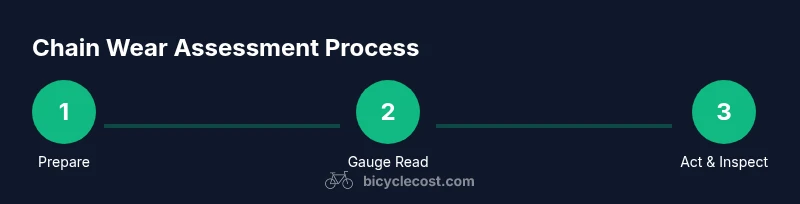
Place the bike on a stand or flip it gently. Shift to the smallest chainring and smallest rear cog to expose the chain. Wipe the chain clean with a rag so measurements reflect wear rather than dirt. A clean setup gives you the most accurate results.
Tip: A clean surface reduces measurement error. - 2
Inspect visually for obvious wear
Rotate the pedals slowly and look for stiff links, kinks, or bent pins. If any link doesn’t move smoothly, note the location and test with a gauge for confirmation. Visual cues alone can miss subtle wear that a gauge will catch.
Tip: If you feel resistance in any link, inspect that area more closely. - 3
Use a chain wear gauge
Attach or slide the gauge per the manufacturer’s instructions. Compare the reading to the gauge’s scale to determine whether the chain is within tolerance or worn beyond it. Record the result for future checks.
Tip: Follow the gauge instructions exactly for reliability. - 4
Cross-check with a ruler
Measure the length of a 12-link segment and compare with a new chain’s length. If the segment is longer, wear is present. Take multiple measurements along the chain to ensure consistency.
Tip: Measure twice to reduce human error. - 5
Check cassette and chainrings
Examine teeth for hooked shapes and uneven wear that aligns with elongated chain. Worn gears can worsen performance even if the chain isn’t severely stretched.
Tip: Even if the gauge shows tolerance, worn gears may still need attention. - 6
Decide on replacement
If wear is confirmed, plan to replace the chain. Inspect the cassette and chainrings and consider replacement if gear wear is evident. Replacing the chain early can protect the rest of the drivetrain.
Tip: Don’t delay if the gauge or ruler indicates wear. - 7
Lubricate and reassemble
Apply a thin layer of lubricant to the chain after cleaning and reassembly. Wipe off excess to avoid attracting dirt. Spin the crank and switch through gears to ensure smooth operation.
Tip: Avoid over-lubrication; excess attracts grime. - 8
Document the maintenance
Record the date and mileage of the check, and note whether you replaced the chain. Track future wear so you know when to recheck and how often to service the drivetrain.
Tip: A simple log simplifies long-term maintenance. - 9
Safety check before ride
Before riding, ensure the chain is seated properly, the derailleur is aligned, and shifting is smooth. If anything feels off, recheck or seek professional help.
Tip: A quick safety check saves time and trouble on the road.
People Also Ask
What causes chain wear?
Chain wear is caused by metal fatigue and elongation under load, along with gearing interaction. Regular cleaning and lubrication reduce buildup and prolong life.
Chain wear comes from normal riding wear; keeping it clean and lubricated helps.
How often should I check chain wear?
Check chain wear at regular intervals based on riding, weather, and mileage. More frequent checks during wet or dusty seasons can catch wear early.
Check wear regularly, especially in wet or dusty riding conditions.
Can a worn chain damage the cassette?
Yes. A stretched chain can wear the cassette sprockets more quickly, producing poor shifts and accelerated wear. Inspect the cassette if the chain is worn.
A worn chain can wear the cassette; inspect the gears too.
Is a chain wear gauge essential?
A chain wear gauge provides a quick, objective read on elongation and helps you decide when to replace. It’s a valuable tool for consistency.
A gauge helps you measure wear consistently.
What should I do if the wear reading is high?
If wear is high, replace the chain and inspect cassette and chainrings for wear. In many cases, early replacement saves gear life.
Replace the chain and check the gears.
Can I reuse an old chain after reading wear?
Reusing a chain after wear is not recommended because wear accelerates when the chain re-enters the drivetrain. Replace and check components.
Better to replace and inspect components rather than reuse.
Watch Video
Quick Summary
- Learn to identify chain wear with a gauge and ruler
- Use proper tools to avoid inaccurate readings
- Replace chain promptly to protect gears
- Regular maintenance extends drivetrain life
- Consult a bike shop if unsure