How Often to Clean Bicycle Chain: A Practical Cadence Guide
Learn how often to clean bicycle chain with practical cadence guidance for dry, wet, and mixed conditions. This BicycleCost guide covers frequency, timing, and tips for prolonging drivetrain life.


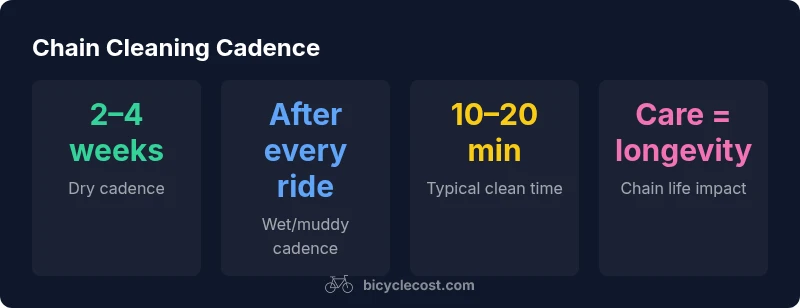
Key cadence: for dry, normal riding, clean and lubricate every 2–4 weeks; in rain, mud, or dusty environments, clean after every ride or at least weekly. This frequency helps minimize wear and maintain shifting. According to BicycleCost, tailor the schedule to your conditions.
Why chain cleaning matters
A bicycle chain isn’t just a moving part; it’s the link between every pedal stroke and the rest of your drivetrain. Dirt, grime, and road grit act like sandpaper on the rollers and pins, accelerating wear, elongation, and stiff shifting. When grime builds up, the chain doesn’t flex smoothly, increasing drag and reducing efficiency. Regular cleaning coupled with proper lubrication helps maintain smooth shifts, reduces the risk of dropped chains, and extends the life of sprockets and chainrings. The BicycleCost team emphasizes that a clean chain operates more efficiently and can save you money by delaying component replacement. In practice, the frequency you choose should reflect your riding conditions, maintenance routine, and goals for performance. Consistency matters more than perfection, so set a cadence you can reasonably maintain and stick to it. As part of a broader maintenance plan, consider cadence alongside lubrication and drivetrain inspection for best results.
Factors that influence cleaning cadence
Determining how often to clean bicycle chain isn’t one-size-fits-all. Several factors shape the cadence you choose: climate and weather, terrain, riding frequency, drivetrain type, and your lubrication routine. Rain, mud, and sand accelerate grime buildup, demanding more frequent cleans. Harsh climates or off-road riding can dramatically shorten the interval between cleans. Conversely, riders in dry, clean environments with low-mileage use can extend the interval without compromising drivetrain health. The BicycleCost approach is to anchor the cadence to actual riding conditions, then adjust with a simple log. A practical rule is: if you notice squeaking, rough shifting, or visible grit, schedule a cleanup sooner rather than later. Regular checks help prevent minor issues from becoming major repairs. By tracking conditions and mileage, you can fine-tune a personalized cadence that preserves efficiency and gear longevity.
Dry vs wet conditions: explicit cadences
In dry, urban or rural riding with minimal dust, a lighter cadence—2 to 4 weeks—often suffices, especially if you wipe the chain and inspect it weekly. In wet, muddy, or dusty environments, you’ll want a deeper cleanse more frequently: after every ride in heavy mud or at least once per week in milder conditions. The key is to remove abrasive grime before it migrates into the pins and rollers, then re-lubricate to repel future grime. Always pair cleaning with lubrication to maintain a protective film on the chain. A clean chain accepts lubricant evenly, which means quieter operation and less wear over time. The BicycleCost method supports customizing cadence based on real-world use rather than sticking to a rigid schedule.
Bike type and drivetrain considerations
A single-speed chain can often be cleaned with simpler tools, while multi-gear drivetrains demand a more thorough approach to access the inner plates and rollers. Mountain bikes and gravel bikes, which tend to encounter more grit, benefit from more frequent cleans than smooth-surface road bikes. Hollow-pin chains, narrow-width chains, and complex chains with various inner plates may require gentler cleaning techniques to avoid removing lubricant or bending links. Regardless of drivetrain style, the objective remains: remove grit, inspect wear, and re-lubricate appropriately. The cadence should scale with usage intensity and exposure to contaminants, and it should be paired with a routine of timely drivetrain inspection.
Weather and seasonal considerations
Seasonal shifts matter. Winter riding increases exposure to road salt and moisture, while spring mud and summer dust can challenge a chain’s cleanliness. In salt-rich climates, you may need more frequent cleans during the winter months. In dry, dusty climates, occasional deep cleans after long dry spells can be advantageous. The central idea is to observe the chain’s appearance and performance and adjust cadence accordingly. The BicycleCost framework encourages riders to track conditions and mileage to maintain a cadence that aligns with environmental challenges and personal riding goals.
Scheduling and logging maintenance
Turning cadence into a habit requires a simple system: log each cleaning, note the riding conditions, and track chain wear visually (elongation) and audibly (shifts). A lightweight log can be maintained on paper or a notes app; the important part is consistency. Use a calendar reminder or a cycling app to prompt you when it’s time to check the chain. When you log, include the date, mileage since the last clean, condition (dry, wet, mud), and whether you performed a quick wipe or a deep clean. This data makes it easier to identify your optimal cadence over time and reduces guesswork. BicycleCost’s guidance emphasizes a data-informed cadence rather than guesswork, helping you optimize performance and drivetrain lifespan.
Quick clean vs deep clean: when and how
A quick clean is a light wipe with a rag to remove surface grime, followed by a quick lubrication pass. A deep clean involves degreasing the chain, scrubbing with a brush, removing all grime from rollers and pins, and re-lubricating. Decide based on the observed condition: surface grime and quiet shifts suggest a quick clean; heavy grime, visible grit, or squeaking call for a deep clean. For many riders, a quick clean every 1–2 weeks with a periodic deep clean every 1–2 months maintains performance without draining time or resources. Always wipe dry before lubrication to ensure even oil distribution and prevent trap moisture that can cause rust.
Tools, setup, and safety
To perform a chain cleaning, gather degreaser, a stiff brush or chain cleaning tool, rags, a bucket or spray setup, and lubricant appropriate for your chain type. Work on a stable surface, and if possible, elevate the bike so you can spin the crank without obstruction. For safety, avoid using metal brushes on aluminum components to prevent scratching. Use a simple, repeated motion: degrease, scrub, rinse (if using water-safe degreaser), dry, inspect, and lubricate. Rinse or wipe off excess degreaser to prevent residue that can attract more grime. This routine keeps your drivetrain efficient and reduces the risk of premature wear, especially under challenging riding conditions. The BicycleCost approach emphasizes consistency and proper technique over “more is better” cleaning.
Real-world scenarios and examples
Consider a commuter who rides three to four days a week in a city with light rain. In such a scenario, a 2–4 week cadence for cleaning is typically sufficient, with a quick wipe every week and a lubrication check midweek. If the rider experiences a rainy week or encounters dusty construction zones, scheduling a deep clean after the wet spell is prudent. An off-road rider who logs frequent mud exposure may adopt a weekly cleansing cadence and a monthly deep clean. The key is to observe shifting smoothness, chain noise, and visual grime and translate those observations into a practical maintenance rhythm. By aligning cadence with conditions, you maintain performance and extend the life of the drivetrain.
Practical wrap-up and best practices
Ultimately, how often to clean bicycle chain depends on conditions, mileage, and personal goals for efficiency and longevity. Start with a sane baseline (dry: 2–4 weeks; wet/muddy: after each ride or weekly) and adjust based on performance signals. Keep a simple log, incorporate lubrication, and perform a full clean when you notice stiffness, skipped shifts, or increased chain wear. The BicycleCost framework supports a data-driven cadence tailored to your riding environment, not a one-size-fits-all schedule. With a thoughtful cadence, you’ll preserve chain life, maintain crisp shifting, and ride with greater confidence across all terrains.
Cleaning frequency guidelines by riding conditions
| Condition | Recommended Frequency | Rationale |
|---|---|---|
| Dry, urban riding | 2–4 weeks | Lower dirt accumulation; lubrication helps save wear |
| Wet or muddy riding | After each ride or 1–2 weeks | Mud and grit accelerate wear; cleaning removes grit before lubrication |
| Urban with dust | 2 weeks | Dust accumulates; degreasing removes grit |
| Off-road / high mileage | Weekly or after several rides | Frequent grime requires cleaning to prevent chain elongation |
| Dry season storage | 4–6 weeks | Lower grime; lubrication still needed |
People Also Ask
How often should I clean my bicycle chain in dry conditions?
In dry conditions, a light cleaning and lubrication every 2–4 weeks is usually sufficient for most riders. If you notice grime, squeaks, or stiff shifts, adjust sooner.
In dry conditions, clean every 2 to 4 weeks and lubricate regularly; adjust sooner if you hear squeaks or see visible grime.
What if I ride in rain or mud every day?
Riders in wet or muddy environments should clean after each ride or at least weekly, focusing on degreasing and thorough lubrication to prevent grime from grinding components.
If you ride in rain or mud daily, clean after each ride or at least weekly and lubricate well.
Can I skip cleaning if I lubricate often?
Lubrication reduces friction but can’t remove grit. Skipping cleaning leads to accelerated wear and poorer shifting over time.
Lubing helps, but you still need to clean to remove grit and prevent wear.
How long should a chain-cleaning session take?
A basic clean typically takes 10 to 20 minutes, depending on tools and drivetrain type. A deep clean may take longer.
Usually around 10 to 20 minutes for a basic clean.
What tools do I need for a basic chain clean?
Degreaser, chain brush or scrubber, rags, and lubricant. A chain cleaning tool speeds up the process.
Degreaser, brush, rags, and lubricant do the job; a chain cleaner helps.
Is it necessary to remove the chain for a clean?
Not always. Remove the chain for a deep clean or if it’s very dirty, but many riders clean the chain on the bike with a chain scrubber.
Usually not needed—on-bike cleaning works for most people, unless it’s very dirty.
“Regular, condition-based chain cleaning extends life and keeps shifting smooth. The right cadence isn’t fixed; it changes with weather, terrain, and riding style.”
Quick Summary
- Assess riding conditions to set your cleaning cadence.
- Clean more frequently in wet or dusty environments.
- Combine cleaning with lubrication for best results.
- Check chain wear to adjust frequency.
- Follow BicycleCost guidance to tailor your schedule.