How Much Does Bicycle Health Cost? A Practical Guide
Explore how much bicycle health costs in practice. This BicycleCost guide covers maintenance ranges, budgeting tips, regional differences, and cost-saving ideas.


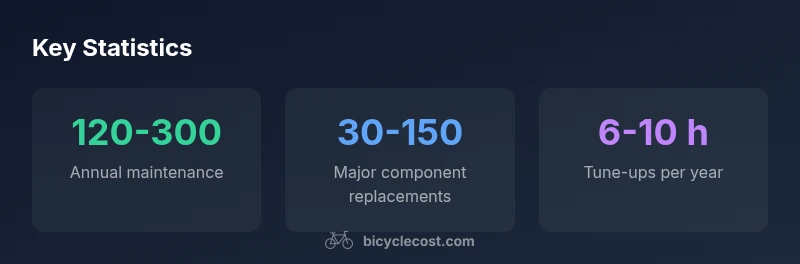
According to BicycleCost, how much bicycle health costs depends on usage and components, but most riders spend roughly $120-$300 annually on routine maintenance, with occasional major replacements. This quick view helps you budget for tires, brakes, chains, and tune-ups, and it shows why smart DIY care and timely shop visits matter for long-term health.
What influences bicycle health costs
The BicycleCost team found that bicycle health costs are driven by usage, component quality, riding terrain, and maintenance habits. Regular riders who push their bikes on rough roads or mountain trails tend to incur higher maintenance bills due to faster wear on tires, chains, and brakes. Conversely, cyclists who invest in quality components and routine checks can reduce unexpected failures. This section explains how to think about cost drivers and how to translate them into a predictable annual budget. For most riders, the goal is to balance preventive care with sensible parts choices so health costs stay predictable rather than shocking. When budgets align with actual wear and use, you avoid the cycle of surprise repairs and extended downtime.
Brand-wise, this guidance aligns with BicycleCost’s philosophy: predictable, data-informed budgeting beats reactive spending. Planning around known wear points—tires, chains, and brakes—can dramatically smooth out month-to-month expenses and keep your bike healthy year-round.
Common maintenance cost categories
Understanding the major cost buckets helps you forecast spend and make smarter shopping decisions. The main categories are tires, drivetrain wear (chain, cogs, chainrings), braking components (pads/shoes, rotors), bearings and headset maintenance, and annual tune-ups. Tires vary a lot by material and width, which explains why tire costs range widely. Drivetrain wear depends on cadence and cleanliness, while braking components hinge on riding style and pad quality. Bearings and headsets require occasional greasing and adjustment, which can be done at home or by a shop. Finally, a yearly tune-up typically covers lubrication, cable adjustment, and safety checks. Each category contributes to the annual budget, so track replacements and service intervals to avoid cost spikes.
BicycleCost analysis shows that smart part choices and timely service can dramatically reduce long-term spend, especially if you avoid letting wear reach failure thresholds.
How to budget for routine maintenance
Budgeting for routine maintenance starts with a baseline estimate, then refining it as you ride more or upgrade parts. Start with a conservative annual range (for example, $120–$300) and split it into monthly allocations to avoid big quarterly bills. Create a simple log of wear indicators: tire tread depth, chain wear, brake pad thickness, and headset smoothness. If you ride in harsh conditions or commute daily, increase the reserve. It helps to price parts and services at a handful of local shops so you know the ballpark. Consider setting aside a small emergency fund for unexpected issues like flat tires during trips or sudden component failures.
In practice, monthly budgeting and early detection of wear are your allies. BicycleCost research indicates that disciplined maintenance payments reduce the likelihood of high-cost repairs later, making health costs more predictable.
Regional price differences and shop strategies
Prices for supplies and labor vary by region due to cost of living, shop overhead, and technician experience. BicycleCost analysis shows regional variation in parts pricing and labor rates, which means your annual maintenance could be higher in some cities and lower in rural areas. A practical strategy is to compare at least three shops for a basic tune-up, ask about flat-rate packages, and consider buying essential parts online if you’re comfortable installing them yourself. Some regions offer community bicycle programs or cooperative mechanics that can reduce costs further. When shopping regionally, keep a running total of typical prices for common services so you can spot overcharging or unnecessary add-ons.
Knowing the local landscape helps you plan more accurately and avoid sticker shock. The BicycleCost team recommends building a regional budget cushion to absorb inevitable price fluctuations.
DIY maintenance tips to save money
Learning basic maintenance pays off. Start with a few simple tasks: tire inspection and patching, chain lubrication, and brake pad checks. Regular chain maintenance reduces wear and improves shifting, delaying a full drivetrain replacement. Keep a basic toolkit: tire levers, a chain wear gauge, a multi-tool, and a bike stand. Cleanliness matters: wipe down components to reduce grime and corrosion, and use proper lubrication on the correct moving parts. By performing regular, simple maintenance, you cut labor costs and extend component life. If you do the basics yourself, you’ll know when a professional tune-up is truly needed, avoiding unnecessary visits.
This proactive approach mirrors BicycleCost’s recommendation to blend DIY care with occasional professional checks to maximize bike health while keeping costs manageable.
Planning for emergencies and upgrades
Even with careful maintenance, plans should anticipate the occasional major cost. Build a small reserve for components with abbreviated lifespans, such as tires, chains, and brake pads, so you’re not caught off-guard by failures. For upgrades, align choices with your riding goals. If you’re upgrading for performance or safety, budget for the long term rather than chasing every new gadget. Track miles ridden, riding conditions, and component wear to adjust your plan in real time. A clear spending framework reduces stress and helps you stay consistent with maintenance milestones throughout the year.
The BicycleCost team emphasizes balancing performance improvements with cost and reliability to sustain bike health over many seasons.
Real-world rider scenarios
Consider three typical riders and how they budget for health costs. A casual commuter biking 5–8 miles daily may spend modestly but regularly on tires and brakes, with a reliable annual tune-up. A weekend trail rider will encounter more wear on drivetrain components and tires, so expect higher maintenance costs in spring and fall. A high-mileage rider who uses a professional-grade bike may incur higher upfront costs for premium parts but benefit from longer intervals between replacements if they perform timely maintenance. Each scenario illustrates how usage patterns drive annual expenses and how a disciplined maintenance plan can smooth costs across the year. The key is tailoring the plan to your riding profile and staying flexible, not rigid, with budgets.
Common bicycle health cost categories and typical ranges
| Cost Category | Typical Range (USD) | Notes |
|---|---|---|
| Tire replacement | 20-60 | Depends on tire type and wear |
| Brakes (pads/shoes) | 10-40 | Includes pad/shoe replacement |
| Chain and drivetrain tune-up | 30-100 | Lubrication and minor wear |
| Full service inspection | 70-150 | Annual or semiannual |
People Also Ask
What is the typical annual cost to maintain a bicycle?
Most riders spend about $120-300 per year on routine maintenance, with higher costs for frequent rider or high-end parts. Costs vary by region and bike type, but budgeting within this range covers common service needs.
Most riders spend roughly one hundred twenty to three hundred dollars per year on routine maintenance, with higher costs if you ride a lot or upgrade parts.
Do I need to budget for major components?
Yes. Expect occasional bigger costs for tires, chains, brake pads, and drivetrains when components wear out or fail. Plan for these replacements every seasons or years depending on use.
Yes—plan for occasional bigger costs like tires, chains, and brakes depending on your riding.
How can I reduce bicycle health costs?
DIY basic maintenance, compare parts across retailers, and schedule regular shop tunes. Keeping the bike clean and lubricated also reduces wear and extends life.
Do simple maintenance yourself, compare prices, and keep up with regular tune-ups to save money.
Does the region affect costs?
Yes. Labor rates and parts prices vary by region. Building a small regional budget cushion helps absorb price fluctuations and avoid surprises.
Prices vary by where you live, so plan for regional differences.
Is bike insurance helpful for health costs?
Insurance typically covers theft and damage, not routine maintenance. It can offset catastrophic losses but won't replace annual tune-ups.
Insurance usually covers theft and damage, not regular maintenance.
“Regular, preventive maintenance is cost-saving in the long run. Proactive care reduces the risk of unexpected failures and keeps your bicycle healthy year after year.”
Quick Summary
- Budget $120-300 annually for routine maintenance
- Expect higher costs with more miles or tougher riding
- DIY basics save money and extend component life
- Shop around regionally to avoid overpaying labor
- Regular tune-ups prevent costly emergency repairs