How to Safely Ride a Bike: A Practical Guide 2026
Learn practical steps to ride a bike safely, from gear and fit to traffic awareness and maintenance. A comprehensive guide for 2026, designed for cyclists and bike owners seeking actionable safety guidance.


You will learn how to safely ride a bike, covering essential gear, proper bike fit, riding techniques, traffic awareness, and maintenance basics. This guide outlines concrete steps, what to check before every ride, and how to progressively build safety skills on varied road and path conditions.
Why Safe Riding Matters
Safe riding is about reducing risk for you and others on shared roads and bike paths. According to BicycleCost, adopting a structured safety routine—from gear choices to street-smart riding habits—helps build confidence and consistency on every ride. The BicycleCost team found that riders who treat safety as a system rather than a one-off check are more likely to experience fewer flats, fewer close calls, and more enjoyable miles. In this section, we explore the broader reasons safety matters: predictability to others, personal control over speed and stopping, and clear signals to pedestrians and drivers. By establishing a safety baseline, you set yourself up for longer, more comfortable rides and fewer interruptions along the way.
Essential Gear and Visibility
Gear is the first line of defense in a safe ride. You should always wear a properly fitted helmet that meets local safety standards. Front and rear lights, plus reflective clothing or accessories, dramatically improve visibility in dawn, dusk, and low-light conditions. BicycleCost analysis shows that visibility gear, when used consistently, increases the likelihood that others notice you in time to react. Beyond lights and helmet, carry a compact repair kit, spare tube, and a pump so you’re prepared for common mechanical issues. A bell or horn helps alert pedestrians and other riders in busy areas. This section also covers how to choose gear that fits your climate and riding style while keeping you comfortable.
Bike Fit and Pre-Ride Checks
A proper bike fit prevents overuse injuries and enhances control. Start with seat height so your leg has a slight bend at the bottom of the pedal stroke, and adjust the saddle and handlebars for a comfortable reach. Check brakes for solid stopping power and smooth gear shifting before you ride. Tire condition and pressure affect handling and efficiency; underinflated tires can feel squishy and increase pinch-flat risk, while overinflated tires reduce traction. Perform a quick walk-around to inspect chain lubrication, quick-release skewers, and wheel true. These checks set the stage for safe, confident riding from the first pedal stroke.
Safe Riding Techniques
Body position and motion control are central to safe riding. Keep a relaxed grip, eyes up, and shoulders square to the direction of travel. Use smooth, predictable braking, and avoid abrupt throttle-like inputs in busy areas. Practice scanning for hazards—decked-out potholes, gravel, and parked car doors—and choose routes with smoother surfaces when possible. When turning, look through the turn and position your body over the bike’s center, leaning only as much as needed to maintain balance. Regular practice in a safe area builds the muscle memory needed for real-world streets.
Urban Riding: Intersections and Traffic
Urban riding demands heightened awareness and precise signaling. Position yourself where drivers expect to see you, typically in the left part of a lane when traveling straight or turning left, and use clear hand signals before turns or lane changes. Predictable movements, steady pace, and obeying traffic signals reduce conflict with motorized traffic. When riding near parked cars, be prepared for opening doors and dooring risk by keeping a buffer zone. Remember to yield to pedestrians and give bikes priority where laws specify; our guidelines emphasize courtesy and clarity to everyone on the road.
Weather, Lighting, and Night Riding
Weather and light levels impact visibility and traction. In rain, reduce speed, avoid deep puddles, and increase following distances. Use lights and reflective gear as daylight fades; ensure you’re visible to cyclists and drivers from a distance. Worn or misted lenses impair vision; clean and adjust eyewear as needed and carry an extra set of batteries for lights. Night riding requires extra caution: plan routes with well-lit streets and known bike lanes, and use brighter, properly aimed front lights for yourself and reflectors for others. Safety in adverse conditions hinges on planning, visibility, and conservative riding decisions.
Maintenance Habits for Safety
A safe ride depends on reliable bikes. Regularly inspect tires for wear, balance brake pads, and confirm that the chain runs smoothly. Keep tires at recommended pressure to optimize grip and efficiency; check for cuts or embedded debris that could lead to flats. Lubricate the chain and drivetrain at appropriate intervals and wipe away dirt after rides to prevent buildup. Small maintenance routines prevent larger failures and extend your bike’s life while keeping performance predictable. The maintenance mindset is a core part of safe riding, not an afterthought.
Progressive Training and Practice Plan
Safe riding is a skill set that grows with practice and purpose. Start in a quiet, flat area to master braking, signaling, and gear changes, then gradually move to low-traffic streets before tackling heavier traffic. Create a weekly progression: week one focuses on control and balance, week two adds route planning, week three introduces short commutes with light intersections, and week four tests your skills on more complex routes. The BicycleCost team recommends documenting your progress and seeking feedback from experienced riders or local clubs. Consistent, incremental practice builds confidence and reduces risk over time.
Tools & Materials
- Bike(Any road, mountain, or city bike in good working order)
- Helmet(Certified helmet that fits securely)
- Front light(Bright white light for visibility)
- Rear light(Red light, ideally flashing)
- Reflective clothing/accessories(High-visibility vest or reflective tape)
- Pump or CO2 inflator(Maintain proper tire pressure)
- Tire levers and patch kit(For quick flats on the go)
- Spare tube(Carry an appropriately sized tube)
- Multi-tool(At minimum includes hex keys and screwdriver)
- Water bottle and cage(Hydration during longer rides)
- Bell or horn(Audible alert in shared spaces)
- Lock(If you’ll park in unsecured areas)
Steps
Estimated time: 60-90 minutes
- 1
Inspect bike and gear
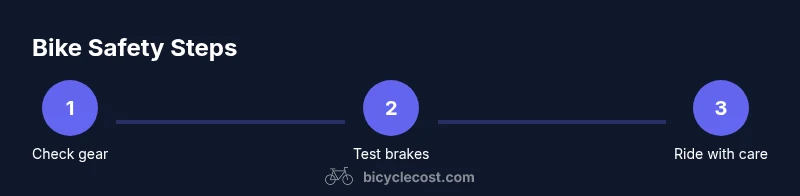
Do a quick visual and functional check of tires, brakes, chains, and quick releases. Confirm lights and reflectors work, and that your helmet is snug and properly strapped. This check should take about 2–5 minutes and prevents common on-ride failures.
Tip: If you notice any abnormal noise or wobble, don’t ride—correct the issue or seek a bike mechanic. - 2
Test brakes and gears
In a safe, flat area, gently test both brakes and shift through all gears. Ensure braking power is even and that the lever travel feels normal. Address sticky gears or poor stopping power before heading into traffic.
Tip: Test brakes at low speed to avoid locking wheels; if brakes squeal, inspect pads and discs for wear. - 3
Check tire pressure and condition
Use a gauge to confirm tires are within the recommended range printed on the sidewall. Look for cuts, bulges, or embedded objects. Inflate to the correct pressure for your weight and riding style.
Tip: Underinflated tires grip better but wear faster and increase puncture risk; overinflated tires reduce grip and comfort. - 4
Mount and adjust fit
Sit on the saddle, adjust height for a slight knee bend at the bottom of the pedal stroke, and ensure handlebars are comfortable. Check that your position allows full control of brakes and handlebars.
Tip: A proper reach reduces shoulder tension and improves steering precision on busy streets. - 5
Start in a safe area
Begin in a quiet, flat space to practice starting, stopping, signaling, and lane positioning. Build confidence with short rides before moving to mixed-traffic environments.
Tip: Keep a predictable cadence and avoid sudden lane changes in unfamiliar areas. - 6
Practice braking and turning
Practice controlled braking, scanning for hazards, and timing turns. Use hand signals early and clearly to communicate your intentions to others.
Tip: Look where you want to go, not directly at obstacles—your body will follow your gaze and balance.
People Also Ask
What is the most important safety gear for new riders?
A properly fitted helmet is essential, followed by lights and high-visibility clothing. These items improve protection and visibility, reducing the risk of injury in common riding scenarios.
Always wear a certified helmet and use lights and bright clothing to stay visible to others.
How should I test my brakes before riding?
Test both brakes in a safe area at low speed. Ensure even braking power and check for any rubbing or noise that indicates worn pads or misalignment.
Test your brakes in a safe space, and replace worn pads or fix misalignment before riding.
Is it safe to ride in the rain?
Riding in rain is possible with lower speeds, wider braking distances, and more careful line choice. Use lights, wear waterproof gear, and inspect tires for adequate tread.
Riding in rain is doable with extra caution and proper gear.
What should I do at busy intersections?
Position yourself predictably, signal early, and make eye contact with drivers when possible. Reduce speed and scan for turning vehicles and door openings.
Be visible, signal early, and scan for hazards at intersections.
How often should my bike be serviced?
Regularly inspect components and schedule professional servicing according to manufacturer guidelines or riding frequency. Address wear items like brakes and tires promptly.
Keep to a maintenance schedule and address wear early.
Can I ride with low tire pressure?
Riding with low pressure increases pinch flats and reduces efficiency; check pressure before rides and inflate to recommended values.
Don’t ride on underinflated tires; inflate to the recommended pressure.
Watch Video
Quick Summary
- Prioritize visibility and predictability on every ride.
- Do a pre-ride check for gear, brakes, and tires.
- Progress gradually from safe areas to traffic environments.
- Maintain your bike regularly to prevent breakdowns.
- Practice deliberate, controlled braking and signaling.