How to Get Started Cycling: A Practical Beginner Guide
Learn how to get started cycling with a practical, safety-first plan for beginners. Pick a comfortable bike, ensure a proper fit, gear up, and build a sustainable starter routine with expert tips from BicycleCost.


Starting a cycling habit is easier than you might think. This guide shows how to get started cycling with a safe, simple plan: pick a comfortable bike, ensure a proper fit, gear up, and adopt a light, progressive routine. Use these steps to build confidence, enjoy fresh air, and make cycling a sustainable part of your week.
Why Start Cycling?
According to BicycleCost, starting a cycling habit is more about consistency than intensity. Regular, enjoyable rides create long-term habits that pay off in health, mood, and daily mobility. For many people, cycling replaces short car trips, delivering immediate benefits like fresher air in the lungs, better sleep, and reduced stress. Even modest achievements—like a 15-minute ride after work or a weekend loop around a park—build momentum that translates into a stronger routine over time. In this section we explore how cycling fits into a busy life, why beginners succeed, and how to set up a plan that feels doable from day one. By focusing on enjoyment, safety, and gradual progress, you’ll be more likely to stick with cycling for weeks, months, and years. The BicycleCost team emphasizes practical, beginner-friendly strategies that minimize barriers and maximize consistency. If you’re new to cycling, you don’t need perfect gear or a perfect bike—just a clear starting point and a route you actually want to ride.
Getting Your Baseline: Assess Your Readiness
Before you ride, take stock of where you’re starting from. Clarify your goals (daily errands, a 5-mile weekend loop, or gym-style cardio), and assess any medical or safety considerations with a healthcare provider if needed. A simple baseline helps you measure progress and stay motivated. Start with short, manageable sessions to test your comfort with balance, propulsion, and braking. This stage isn’t about speed or endurance; it’s about building confidence and establishing a safe framework. If you have any balance challenges, vision concerns, or joint pain, tailor your plan to your body’s signals and seek professional guidance when necessary. The goal is to create a sustainable routine you can repeat weekly. As you proceed, log your rides, note what felt easy, and adjust to prevent burnout or injury.
Essential Gear and Setup
Gear isn’t about having the latest model; it’s about safety, visibility, and comfort. A properly fitted helmet is non-negotiable, and a reliable front and rear light improves visibility in all conditions. A sturdy lock helps protect your investment, while a portable pump and spare tube reduce frustration during pinch flats. Wear comfortable clothing and consider padded shorts for longer rides, but avoid loose fabrics that could catch on components. A basic repair kit with tire patches and a multi-tool makes minor maintenance doable on the go. Finally, lightweight gloves, a reflective vest, and a bike bell add safety and comfort. Investing in a few essentials now pays dividends in fewer ride-time interruptions and more confidence on new routes.
How to Choose Your First Bike
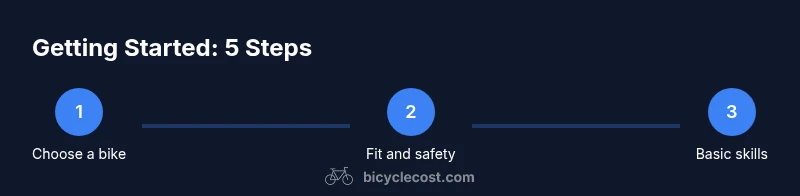
For beginners, a versatile hybrid or a lightweight road bike is usually the most forgiving choice. Assess frame size by standing over the top tube; you should have 1–2 inches of clearance on a road bike and 2–4 inches on a mountain bike for control. Test ride multiple bikes to compare comfort, shifting, and braking responsiveness. If you ride mainly on paved surfaces, a hybrid offers a comfortable position and stable handling; if you expect longer, faster rides, a light road bike may suit you better. Ensure the saddle height allows a slight knee bend at the bottom of the pedal stroke, and check reach so you’re not overreaching the handlebars. Your local bike shop can help with sizing, fit adjustments, and basic setup tips. Based on BicycleCost research, getting a bike that fits you well reduces knee and back strain and shortens the learning curve.
Basic Skills to Build Confidence
Start with the basics: smooth starting and stopping, predictable braking, and keeping a straight line. Practice shifting gears smoothly to maintain a steady cadence, which reduces fatigue. Learn to look through turns, scan for hazards, and use hand signals when riding in traffic or on shared paths. Balance practice in a safe, flat area builds confidence for longer rides. As you gain comfort, practice cornering at a moderate speed, and practice stopping quickly with a safe, controlled motion. These skills form the foundation for longer, safer rides and less road anxiety.
Crafting a Simple, Sustainable Ride Plan
Create a 4-week plan that starts with shorter, gentle rides and gradually increases duration and intensity. For beginners, a twice-weekly cadence suffices to build habit without overload. Schedule one route that’s flat and familiar, and another that introduces gentle hills as you gain confidence. Use a log to track distance, time, and how you felt during each ride, then adjust your plan every 2 weeks based on progress and any warning signals from your body. Consistency is more important than speed in the early stages, so aim for dependable routine rather than heroic distances. Over time, you’ll naturally increase your endurance, strength, and enjoyment.
Authority Sources
To support safe, healthy cycling, see these reputable sources on physical activity guidelines and cycling safety:
- https://health.gov/our-work/physical-activity/current-guidelines
- https://www.cdc.gov/physicalactivity/basics/adults/index.html
- https://www.nhtsa.gov/road-safety/bicycle-safety
Tools & Materials
- Bike(Choose a comfortable size (frame) and type aligned with riding goals)
- Helmet(Certified, properly fitted to prevent injury)
- Lock(U-lock or heavy chain for secure storage)
- Front and Rear Lights(Visible in daylight and low-light conditions)
- Repair Kit (patch kit, spare tube, pump)(Essential for roadside fixes)
- Tire Pump(Portable and compatible with tubed tires)
- Multi-Tool(Crucial for minor adjustments on trail or road)
- Gloves(Adds comfort and grip on longer rides)
Steps
Estimated time: 60-90 minutes
- 1
Choose a starting route
Scan nearby streets and bike paths that are flat and low-traffic. Pick a 10–15 minute ride to begin, and plan a clear turnaround point. This keeps early rides short and enjoyable while building confidence.
Tip: Start with a familiar, low-stress route to reinforce positive cues and reduce anxiety. - 2
Check bike fit
Stand over the frame and verify sufficient clearance. Adjust saddle height so your knee has a slight bend when the foot is at the bottom of the pedal stroke. Ensure the handlebars reach you without shrugging your shoulders.
Tip: A pro fit at a local shop can save weeks of trial-and-error and prevent injuries. - 3
Put on safety gear
Wear a properly fitted helmet, gloves for grip, and lights or reflective gear for visibility. If riding at dusk or dawn, add reflective clothing or bands.
Tip: Always carry a whistle or bell to alert pedestrians and other riders. - 4
Perform a quick pre-ride check
Inspect tires for wear and proper inflation, test brakes at a slow speed, and confirm the chain moves smoothly. Ensure quick-release skewers (if present) are secure.
Tip: If anything feels off, postpone the ride and seek mechanical help. - 5
Ride with a steady cadence
Pedal at a comfortable, sustainable pace and aim for a smooth pedal stroke. Keep shoulders relaxed and your hands light on the bars.
Tip: Cadence-focused riding reduces fatigue and improves control. - 6
Cool down and assess
Slow down gradually, stretch calves and hamstrings, and hydrate. Note any discomfort, and adjust future rides accordingly.
Tip: Log how you felt after each ride to identify patterns and plan improvements. - 7
Log your ride
Record distance, time, route, and how you felt. A simple log helps you track progress and set achievable targets.
Tip: Review your log every two weeks to identify consistent gains or plateaus. - 8
Plan the next ride
Increase duration or distance by a small amount (e.g., 5–10 minutes) and try a slightly different route. This keeps momentum while avoiding overload.
Tip: Progression beats speed; small, steady increments build confidence.
People Also Ask
What size bike should a beginner get?
A beginner should start with a bike that fits their height and riding style. Get properly measured at a local shop to confirm frame size and seat height before purchasing or renting. A comfortable fit reduces knee and back strain and accelerates the learning curve.
Begin with a bike that fits your height and riding style. Visit a shop for an accurate frame size and seat adjustment.
Do I need to ride every day to improve?
No. For most beginners, 2–3 rides per week with a gradual increase in time or distance yields better long-term adherence and less burnout. Consistency matters more than frequency.
You don't have to ride daily. A couple of steady rides each week builds habit and progress over time.
What is a safe pace for beginners?
Aim for a pace where you can hold a conversation without gasping. This ensures you stay in an aerobic zone, building endurance without overexertion.
Cycle at a pace where you can talk; that keeps you in a sustainable zone while building stamina.
How can I stay motivated to cycle regularly?
Set small, achievable targets and track progress. Pair cycles with social rides or errands to make cycling a habit rather than an event.
Set tiny goals and track them; ride with friends or run errands on your bike to keep it fun.
Is cycling safe for older adults or those with prior injuries?
Cycling can be safe with proper fit, slower progression, and professional guidance as needed. If you have injuries or medical concerns, consult a healthcare professional before starting.
Cycling can be safe with sensible progression and a fit that suits you; talk to a clinician if you have health concerns.
What basic maintenance should a beginner learn?
Learn how to check tire pressure, inspect brakes, and fix a flat using a patch kit and pump. A quick pre-ride check prevents many common issues.
Know how to check tires, brakes, and the chain; carry a patch kit and pump for quick fixes.
Should I start with a road bike or a hybrid?
Hybrids are often the best starting point because of their comfortable position and stability on mixed surfaces. Road bikes are lighter and faster but may be less forgiving for beginners.
A hybrid is usually the best starter choice for comfort and versatility; road bikes are great later as you gain experience.
Watch Video
Quick Summary
- Start small and build gradually.
- Prioritize safety and proper bike fit.
- Consistency beats intensity in the early weeks.
- Log progress and adjust weekly to stay motivated.