Is Cycling the Same as Getting Steps in? A Compare-and-Contrast Guide
A rigorous, analytical comparison showing how cycling and step-tracking differ, with practical guidance for tracking progress, setting goals, and balancing workouts between daily steps and cycling activity.


No. Is cycling the same as getting steps in? Not exactly. Step counts track footfalls, while cycling tracks pedal revolutions and cadence. This difference matters for health metrics, daily goals, and how devices measure activity. Use multiple measures—steps, active minutes, cycling distance, and heart rate—for a complete picture.
Is cycling the same as getting steps in? A Nuanced View
According to BicycleCost, the short answer is no: cycling and stepping counts measure different dimensions of movement, and using one metric alone will miss important aspects of fitness. For most people, the question isn't whether cycling equals walking; it's how to reconcile multiple activity signals to track progress and health. In this article we compare the two, explain what each metric captures, and offer practical guidelines for cyclists and non-cyclists alike. The BicycleCost team emphasizes that a well-rounded approach combines cadence, distance, heart rate, and, where relevant, step counts to create a complete activity picture. This is not about choosing one over the other; it's about understanding where each metric shines and where it falls short. If your goals include fat loss, endurance, or general well-being, you will benefit from a multi-metric framework that respects the strengths of both walking-based steps and cycling-based metrics. Throughout, we’ll provide real-world examples, fitness scenarios, and device-tuning tips so you can tailor your tracking to your routine. By the end, you’ll have a clearer sense of when cycling can substitute, when it cannot, and how to design a balanced program.
How Step Counts Work vs. Cycling Metrics
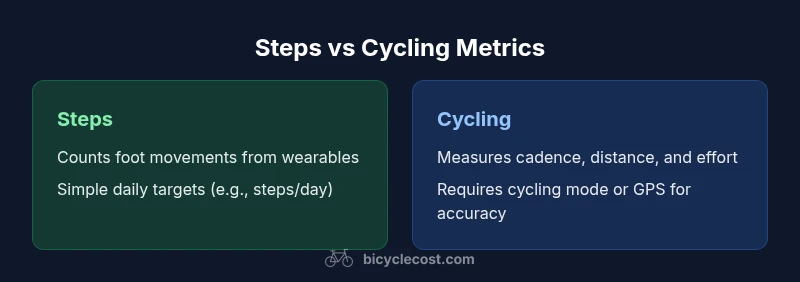
Steps are a discrete event: each foot strike can register as a 'step' by many wearables, creating a simple, intuitive daily target. Cycling, however, relies on pedal revolutions (cadence) and distance, with effort captured through speed, resistance, and heart rate. This difference matters because someone can ride for 30 minutes and accumulate few steps, yet burn substantial energy and improve cardiovascular fitness. Health guidance often uses a blend of metrics rather than steps alone, especially for people who favor cycling. According to BicycleCost, step-count data sometimes underestimates cycling activity, whereas cadence-based metrics may overemphasize light rides if not contextualized with intensity. For a fair comparison, include duration, intensity, and total energy expenditure alongside steps. This broader view helps set realistic goals and avoids penalizing cyclists when their pedometer numbers lag behind their actual effort. The key is to understand that both metrics have valid roles in a comprehensive activity plan.
Energy expenditure and intensity: what changes with cycling
Energy expenditure in cycling depends heavily on cadence, resistance, terrain, and wind; in walking, it hinges on pace and terrain. A brisk cycle on hilly terrain can elevate cardiovascular demand substantially, while a slow urban ride may log modest energy burn even if it lasts longer. The practical takeaway is that cycling can deliver meaningful training stimuli without producing a high step count on a typical wearable. This nuance matters for people balancing daily movement goals with structured cycling workouts. The BicycleCost team emphasizes that understanding intensity in context—distance, cadence, and heart rate zones—helps align expectations with outcomes.
Tracking reality: common device behaviors and how to read them
Most wearables log steps through accelerometer data tied to foot movement, but cycling often requires the device to be set to a cycling mode or logged via a connected GPS. In practice, step counts may underreport cycling activity, and cadence metrics may not fully capture endurance if heart rate data isn’t considered. Based on BicycleCost Analysis, 2026, many devices log indoor ergometer sessions differently from outdoor rides, and some users see inconsistent metrics when switching between activities. The takeaway is to verify that your device understands cycling motions and to cross-reference with ride duration, distance, and heart rate for a fair assessment. Consistency in how you log activities across days matters for trend accuracy.
Practical implications for daily goals and training plans
If your daily goal is steps, cycling alone may not meet that target, especially on long rides with low foot movement. Conversely, cycling can deliver substantial cardiovascular benefit even when step counts are low. A practical approach is to combine daily steps with planned bike sessions, and to incorporate alternate metrics such as active minutes, distance, elevation gain, and average cadence. By doing so, you retain a healthy blend of mobility and endurance training. The BicycleCost team recommends mapping goals to a multifactor scorecard—steps for daily movement, distance and cadence for cycling quality, and heart rate data for intensity. This ensures progress is measured across modalities rather than relying on a single number.
Scenarios: when cycling can contribute to your goals but not fully replace steps
Several real-world scenarios illustrate the nuance: a commuter who bikes 20 minutes each day might log substantial energy output but few steps; a recreational rider could accumulate steps outdoors while not meeting cycling-specific endurance targets; a mixed routine often yields the best overall health outcomes. In all cases, it helps to track both the steps and cycling metrics alongside heart rate and perceived exertion. This broader approach is especially important for weight management and cardiovascular goals, where the combination of movement types supports more resilient progress. The BicycleCost team highlights that goals should reflect personal preferences and constraints, and that flexibility across metrics can sustain long-term motivation.
How to reconcile different metrics: best-practice tracking approach
A robust tracking strategy blends steps, cycling metrics, and physiological signals. Start by setting separate targets for steps per day and cycling duration or distance per week. Use heart rate zones to gauge effort during rides, and review weekly averages to monitor improvements. Many apps offer dashboards that integrate multiple data streams; customize yours to show steps, ride time, cadence, distance, and active minutes in a single view. Consistency matters more than chasing a single metric. Education on how your devices interpret activities is essential to avoid misinterpretation—read the definitions, calibrate as needed, and adjust goals as fitness evolves.
The BicycleCost recommendation for cyclists and non-cyclists
For cyclists and non-cyclists alike, the optimal approach is a balanced, multi-metric strategy. The BicycleCost Team recommends embracing both step counts and cycling metrics, recognizing their complementary roles in a comprehensive fitness plan. If you primarily ride, ensure your wearable is configured to capture cycling data and consider supplementing with distance, cadence, and heart rate metrics to gauge endurance and intensity. If you primarily walk, maintain daily step targets but integrate occasional cycling as a cross-training stimulus to boost cardiovascular health and leg strength. The key is to design goals that reflect your lifestyle and to use a blended metric set for an accurate, motivating picture of progress.
Comparison
| Feature | Steps-focused daily goal | Cycling-focused activity |
|---|---|---|
| Measurement method | Step count on wearable | Cadence + distance + energy indicators (heart rate, speed) |
| Best for | Daily movement targets and general activity | Cardio endurance and cycling-specific training |
| Impact on calories | Moderate impact if walking predominates | Often higher impact due to cadence, resistance, and terrain |
| Best for daily goals | Primarily step-based goals | Primarily cycling or endurance goals |
| Common tracking caveats | Underreporting if steps log is low | Cycling mode or GPS setting required for accuracy |
Pros
- Encourages a multi-maceted view of activity
- Supports personalized goal-setting across modalities
- Improves long-term adherence by variety
- Reduces reliance on a single metric
Downsides
- Can complicate goal setting with multiple metrics
- Requires device setup and cross-checking across apps
- Potential for metric overemphasis if not contextualized
A balanced, multi-metric approach beats relying on a single metric
Cycling and steps measure different activity aspects. Use both to form a complete picture of fitness and daily movement; tailor goals to your routine and verify device settings for accuracy.
People Also Ask
Is walking steps equivalent to cycling for calories?
Calories burned depend on intensity and duration. Cycling can burn more calories per minute at higher intensities, while steps capture general activity volume. Use both metrics to understand overall energy expenditure and progress.
Calories depend on how hard you work. Cycling can burn more per minute at higher effort, but steps show daily movement. Track both to understand energy burn.
Can I meet a 10,000-step goal by cycling?
Cycling may not log steps in many devices, so it might not count toward a step target alone. You can still meet daily science-based activity recommendations by combining cycling with walking or by using a multi-metric goal.
Cycling might not count toward steps, but you can still meet total activity goals by mixing cycling and walking.
Should I enable cycling tracking on my device?
Yes. Enable cycling or ride mode in your fitness device to capture cadence, distance, and energy-related metrics, and consider syncing with GPS data for accuracy.
Yes—enable cycling tracking so your rides are properly logged.
How can I set goals that include both steps and cycling?
Set separate targets for steps and for ride duration or distance. Track weekly totals for each metric and review them together to assess overall activity.
Set two goals—steps and rides—and check both weekly progress.
Do indoor cycling sessions count the same as outdoor rides?
Most devices log indoor cycling similarly if you log it as cycling activity. Differences can come from wind resistance and terrain in outdoor rides, which affect effort and energy expenditure.
Indoor and outdoor cycling count similarly if you log them as cycling.
What metrics should I monitor for cardio fitness?
Core metrics include duration, cadence, heart rate zones, and perceived exertion. Pair these with steps or ride distance to understand cardio improvements.
Focus on duration, cadence, heart rate, and how hard you feel you’re working.
Quick Summary
- Use multiple metrics for accurate progress
- Enable cycling tracking on wearables to avoid undercounting
- Combine steps, duration, distance, and heart rate for best insights
- Set daily and weekly goals across modalities for balanced fitness