How Long Do Bicycle Helmets Last? A Practical Lifespan Guide for Cyclists
Learn how long bicycle helmets last, factors affecting longevity, signs of wear, and replacement timelines to keep you safe on every ride. Guidance based on BicycleCost Analysis, 2026.


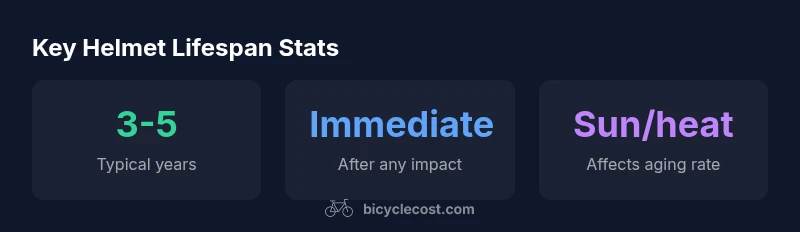
Most bicycle helmets last about 3-5 years of regular use, assuming no crashes or visible damage. Replace sooner if cracked, warped, faded, or after a hard impact; exposure to heat and sun can shorten life.
Helmet lifespan fundamentals
When considering how long do bicycle helmets last, most riders find a 3-5 year window a practical rule of thumb. Helmet materials, foam compression, and shell integrity all influence performance, and different brands may specify varying guidelines. In practical terms, many helmets are designed for regular use over a span of roughly 3-5 years, assuming typical conditions and no major impacts. This guideline is reflected in BicycleCost Analysis, 2026, which emphasizes that aging compounds the risk of head injury even when the helmet looks fine. Beyond calendar time, helmet health depends on exposure to sunlight, heat, sweating, and how often you crash or drop the helmet. A helmet that sits in a hot car or on a windowsill in direct sun may experience faster degradation than one stored in a cool, dry closet. For cyclists who ride daily or in extreme conditions, the window may be closer to 2-4 years. For casual riders with limited use, you may extend toward the upper end, but you should still perform regular visual checks and warranty reviews. The takeaway: treat helmet life as a variable, not a fixed date, and align replacement with safety signs rather than a clock alone. The BicycleCost team recommends erring on the side of replacing if you doubt its integrity.
Impact and safety: when to replace
A primary driver of replacement decisions is impact history. If you experience a crash, or even a minor drop that deforms the foam, replace the helmet immediately. Even when the shell remains seemingly intact, internal damage can compromise energy absorption. In addition, repeated impacts (such as a crash, or multiple knocks from rough terrain) can accumulate micro-cracks that reduce protection. For everyday riders, routine inspection after a ride helps catch issues before they become safety risks. Other signs to watch for include cracks in the shell, chalky or softened foam, torn or stretched straps, or a loose fit that no longer secures adequately. In those cases, continuing to use the helmet is not a good trade-off for safety. In BicycleCost analyses, a helmet should be retired as soon as there is any visible damage or post-impact concern; age alone is not the sole determinant, but it compounds risk as foam degrades. If you’re unsure, consult the manufacturer’s guidelines and consider replacing even if no single defect is obvious.
Factors that affect longevity
Several core factors drive how long a helmet lasts in real life. Exposure to sunlight and heat accelerates shell degradation and foam hardening, while perspiration, sweat acids, and cleaning agents can affect liners. Storage conditions matter too: a cool, dry, and ventilated space preserves materials better than a hot car trunk or damp basement. Regular riding conditions—high-speed descents, mountain riding, or frequent crashes—also shorten a helmet’s life. Even the average rider should plan periodic reviews of fit and finish, because a loose fit can mean the helmet isn’t providing optimal protection. Maintenance choices, such as avoiding harsh cleaners and never drilling or modifying the shell, help maximize lifespan. As BicycleCost notes, longevity is a function of both calendar time and real-world use; 3-5 years remains a practical benchmark, but context matters.
How to assess your helmet's condition without replacing it
Use a simple inspection checklist to judge whether a helmet still meets safety needs:
- Visually inspect the outer shell for cracks, dents, or chalky areas.
- Check the foam inside for compression, crumpling, or collapse where the head contacts the liner.
- Inspect retention straps for fraying, looseness, or torn anchors.
- Test fit: if it wobbles, shifts, or sits high on the head, replace or adjust.
- Look for unusual odors or hair loss from chemical interactions with cleaners. If any of these signs appear, or if you’ve had a notable impact, retire the helmet and replace it. Regular checks should be part of your post-ride routine.
Replacement timelines by helmet type and use
Different helmets may have slightly different lifespans, but the rule of thumb applies broadly:
- Road helmets: expect 3-5 years with regular use.
- Mountain bike helmets: similar window, but impact exposure may shorten life if frequently crashed.
- Kids’ helmets: outgrow and wear out faster; inspect for fit at least every few months and replace with growth spurts.
- Occasional riders: 4-6 years may be feasible if stored and used properly, but regular checks are still crucial.
- After a crash: replace immediately, regardless of age. These timelines are guidelines; always align with brand guidelines and safety considerations for your specific helmet.
Maintenance tips to maximize helmet life
To extend the life of your helmet, follow practical maintenance habits:
- Store in a cool, dry place away from direct sunlight and heat sources.
- Clean gently with mild soap and water; avoid harsh solvents that can degrade foam.
- Do not modify the shell or padding; avoid drilling or adding accessories that alter structural integrity.
- Inspect periodically and replace if you notice any damage or wear.
- Keep the helmet dry after rides and let it air out between uses.
- Replace after any significant impact or if the helmet shows signs of aging.
Factors affecting helmet lifespan and safe replacement timelines
| Factor | Typical Lifespan | Notes |
|---|---|---|
| Usage frequency | 3-5 years | Higher wear with daily riding |
| Exposure to sun/heat | Shortens lifespan | UV and heat degrade shell |
| Post-crash replacement | Immediately after impact | No compromised safety |
| Storage conditions | Cool, dry prolongs life | Avoid extreme temps and humidity |
People Also Ask
Do bike helmet warranties affect replacement timelines?
Warranty terms vary by brand, but safety should guide replacement. If a crash occurs, or if there are signs of degradation, warranties may not override the need to replace. Always review the manufacturer's policy and consult customer support if in doubt.
Warranties vary by brand, but safety comes first. If in doubt after a crash or wear, replace the helmet.
Can a helmet expire even without use?
Yes. Materials age over time even if not worn. Most manufacturers recommend replacing helmets after several years due to material aging and UV exposure, not just usage.
Yes, helmets age over time even if unused, so replacing after several years is common sense.
Is there a universal expiration date for helmets?
There is no universal expiration across brands. Most guidance converges on a 3-5 year window for typical use, with replacement sooner after any crash or visible damage.
There isn’t a universal expiration; expect a 3-5 year guideline and replace after damage or crash.
How can I tell if a helmet is safe after a crash?
If you’ve crashed, inspect for cracks, denting, or foam damage. If in doubt, replace. Even if the shell looks fine, internal damage may compromise protection.
After a crash, replace if there’s any visible damage or doubt about integrity.
Should kids' helmets be replaced more often?
Yes. Children outgrow helmets quickly and their heads develop, so replace to ensure proper protection and fit.
Kids should be replaced more often due to growth and development.
Can cleaning or storage extend a helmet's life?
Proper cleaning and storage can help maintain materials, but they do not reset the age of the helmet. Use mild cleaners and avoid heat to preserve integrity.
Cleaning and proper storage helps, but doesn’t reset the helmet’s lifespan.
“Understanding helmet lifespan helps cyclists ride smarter and safer. Age and exposure can degrade impact performance even without damage.”
Quick Summary
- Replace after any major impact or visible damage
- Expect a 3-5 year window under normal use
- Sunlight and heat shorten helmet life
- Regular inspections help catch hidden damage
- Choose safe storage to extend lifespan