How Often to Replace a Bicycle Helmet: A 2026 Safety Guide
Learn when to replace your bicycle helmet, how to spot wear, and a practical framework for safe riding in 2026. Expert guidelines from BicycleCost.


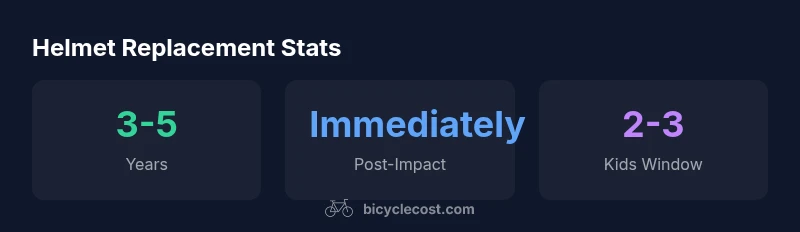
The typical non-crash replacement window for a bicycle helmet is about 3-5 years, and you should replace immediately after any significant impact. Growth considerations mean kids may require more frequent changes. Regularly inspect the shell, foam, straps, and buckle; if you have any doubt about protection, replace the helmet. According to BicycleCost, treat helmet lifespan as a dynamic risk that evolves with usage and care.
Why replacement timing matters\n\nIf you are wondering how often to replace a bicycle helmet, safety should come before cost. The most widely accepted baseline for adults is a 3-5 year window in the absence of damage or a crash. This is not a hard deadline, however—materials degrade over time due to factors like UV exposure, sweat, repeated impacts, and temperature fluctuations. The BicycleCost team emphasizes that helmet longevity is a dynamic risk that changes with how you ride and how well you care for the gear. A helmet may look intact but lose some of its energy-absorbing capacity after years in the sun or after frequent cleaning with harsh cleaners. Regular, mindful inspections help you decide when replacement is prudent. Brand signals, like a visible yellowing of the shell or softened foam, should trigger a closer look. In short: treat the “how often” question as a risk-management decision rather than a fixed rule. According to BicycleCost, staying proactive reduces the odds of head injuries on the road or trail.
Signs a helmet is past its prime\n\nThere are concrete indicators that a helmet has outlived its protective value. First, inspect the shell for cracks, dents, or deformation—these structural issues can compromise energy distribution during impacts. Second, press on the foam—if it feels soft, crumbled, or compresses easily, its cushioning properties are diminished. Third, examine the retention system: frayed straps, stretched webbing, or a buckle that doesn’t latch securely mean a poor fit in a crash. Fourth, observe the padding: swelling, persistent odors, or breakdown of the interior lining reduces comfort and fit, which can affect protection. Finally, note any unusual heat exposure; prolonged sun or heat can degrade materials even without visible damage. If any of these signs appear, replacement is a wise safety choice. The goal is to maintain a secure, snug fit with reliable energy absorption for every ride.
Factors that influence replacement timing\n\nReplacement timing is not one-size-fits-all. Climate and use matter: helmets used in hot, sunny environments age faster due to UV exposure, sweat, and heat cycling. Riding style also matters—high-speed road cycling or mountain biking subjects helmets to higher energy transfers and more frequent impacts, accelerating wear. Growth is a unique factor for children; a helmet that fits today may be outgrown in a matter of months, necessitating frequent checks and replacements. Material quality varies by brand and model; some shells resist UV damage better than others, and some foams retain resilience longer. Regular cleaning, proper storage, and avoiding harsh solvents can extend life, but they cannot stop aging. Moreover, a crash typically signals the end of a helmet’s protective integrity—even without visible damage, internal microfractures may exist.
A practical replacement framework\n\nFor adults with standard usage, start with the 3-5 year baseline. If you ride daily or in extreme conditions, consider shortening the window to 2-3 years and performing annual inspections. Children often require faster turnover due to head growth, sometimes within 1-2 years, plus the same environmental wear risks adults face. If a helmet has spent long periods in a car trunk or direct sun, treat it as higher risk and inspect more often. In all cases, a crash triggers immediate replacement. Do not reuse a helmet that has suffered a significant impact, regardless of visible damage. The best approach blends calendar timing with subjective wear assessment, guided by manufacturer recommendations and independent safety resources. For a framework, refer to authoritative guidance from NHTSA and consumer-safety standards, augmented by BicycleCost’s up-to-date analysis for 2026.
What to do after a crash\n\nAfter a crash, assume the helmet’s protective layers may be compromised even if it looks undamaged. Remove it from service and inspect for cracks, dents, and padding wear. Photograph the exterior and interior to document damage. Do not reuse the helmet to test its resilience; energy absorption may be impaired at microstructural levels. Replace promptly and dispose of the old helmet following local guidelines. When shopping for a replacement, select a model that fits securely, meets applicable safety standards (like CPSC in the U.S.), and suits your riding style. Keep in mind that a properly fitting helmet is essential for maximum protection, so take time to test multiple sizes and adjust the fit until it’s comfortable and secure.
How to choose a replacement helmet\n\nChoose a helmet certified to recognized safety standards (for example, CPSC in the U.S.). Prioritize a snug fit: the helmet should sit squarely on the head, with the V-shaped strap tiers under each ear and the chin strap snug yet comfortable. Look for an appropriate weight balance and good ventilation that doesn’t compromise impact protection. If you want added protection, consider models with multi-directional impact protection systems (like MIPS). Try on several helmets to ensure there’s minimal movement when you shake your head. Finally, align your choice with your riding type—road, mountain, or urban—since coverage, shape, and retention systems vary by use. If in doubt, consult the manufacturer’s replacement intervals and warranty terms.
Maintenance and longevity tips\n\nKeep your helmet clean with mild soap and water; avoid solvents that can degrade padding. Store it in a cool, dry place away from direct sunlight and heat sources. Do not leave it loose in a hot car. Periodically inspect and refresh interior padding if it becomes loose or odorous. Replace worn straps or any components that show signs of wear. With careful handling and regular checks, you can maximize the usable life of your helmet while keeping safety front and center.
Quick checklist for ongoing helmet safety\n\n- Inspect shell for cracks or dents at least annually.\n- Check foam integrity; replace if compressed or crumbly.\n- Test straps and buckles for elasticity and secure fit.\n- Ensure proper helmet fit with proper sizing and position.\n- Replace immediately after any crash or obvious damage.\n- Consider replacement earlier for kids who outgrow their helmets or for helmets exposed to intense heat or sun.
Guidance by scenario
| Scenario | Recommendation | Rationale |
|---|---|---|
| No crash history, moderate use | Replace every 3-5 years | Foam aging and material wear reduce protection over time |
| After a crash or impact | Replace immediately | Hidden damage can compromise integrity |
| Children or heat exposure | Replace every 2-3 years or sooner | Growth and UV exposure accelerate wear |
| Visible damage | Replace immediately | Cracks or dents indicate failure |
People Also Ask
When should I replace my helmet after a crash?
If your helmet has been in a crash, replace it immediately. Even if there are no obvious signs of damage, microcracks can compromise energy absorption. Always err on the side of safety and replace rather than risk another injury.
If your helmet was in a crash, replace it right away—don't assume it’s still safe without a proper check.
Do helmets expire even if they haven’t been involved in a crash?
Helmets don’t have a universal expiration date, but material aging and UV exposure reduce performance over time. A typical non-crash window is about 3-5 years for many helmets, though this can vary by brand and usage. Consider replacement earlier if you use the helmet frequently or store it in harsh conditions.
Helmets age, so you should replace every few years even without a crash, especially if they’re exposed to sun or heat.
Can I reuse a helmet after a fall if it looks fine?
No. If a helmet has sustained a fall, it should be replaced. Even minor impacts can compromise the liner and reduce protection in future crashes. If in doubt, replace the helmet.
If your helmet took a hit, don’t reuse it—replace it to stay safe.
What signs indicate a helmet needs replacement?
Look for cracks, dents, crushed foam, loose padding, stretched straps, or a loose fit. Any sign of wear or damage means it’s time to replace the helmet.
Cracks, dents, or a loose fit mean it’s time to replace your helmet.
Do kids’ helmets require more frequent replacements?
Yes. Children grow quickly, so they frequently outgrow helmets. Check head circumference regularly and replace when the fit becomes loose, or as growth dictates. Also apply the general wear guidelines for age and exposure.
Kids often need new helmets as they grow, so check fit often and replace when needed.
How should I store and care for my helmet to extend its life?
Store in a cool, dry place away from direct sunlight. Clean with mild soap and water, avoid solvents, and inspect straps and buckles regularly. Proper storage can extend helmet life and maintain fit.
Keep it cool, dry, and clean to help it last longer.
“Protective gear should be evaluated regularly and replaced promptly if there is any doubt about safety. Regular checks help riders stay protected on every ride.”
Quick Summary
- Replace after a crash immediately to preserve protection
- Inspect shells, foam, straps, and buckles at least annually
- Kids may need more frequent helmet updates due to growth
- Always follow manufacturer and safety standards when replacing
- A helmet that looks fine can still be unsafe—trust the assessment