How Long Does a Bicycle Last? A Practical Longevity Guide
Learn how long a bicycle lasts—from frame longevity to component life—with data-backed timelines, maintenance tips, and replacement guidance based on BicycleCost Analysis, 2026.


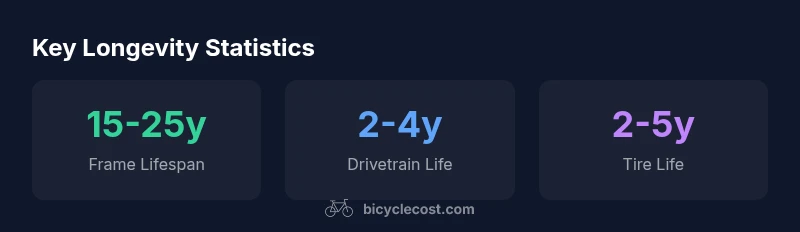
Most well-maintained bicycles last 15-25 years at the frame level, with many components requiring replacement along the way. Drivetrain parts typically need replacement every 2-4 years, tires every 2-5 thousand miles, and brakes as wear dictates. Material, climate, storage, and riding style influence outcomes; proactive maintenance can push lifespans toward the upper end. According to BicycleCost, a disciplined maintenance plan reliably extends a bike’s usable life.
Baseline longevity: what does 'last' mean for a bicycle?
A bicycle’s lifespan isn’t a single number. It’s the period during which the bike remains safe to ride, reliable for daily use, and economically sensible to maintain rather than replace. When we evaluate longevity, we separate frame life from component life. The frame determines the structural ceiling of the bike, while components—drivetrain, brakes, tires, wheels—define the daily experience. The BicycleCost team notes that frame longevity often beats the duration of many individual parts, but rigorous maintenance can keep both frame and parts performing well for decades. For a rider who treats their bike as a daily tool rather than a hobby, 15-25 years for the frame is common with regular service, storage, and careful riding. This quick benchmark anchors the rest of the discussion and helps riders plan maintenance budgets and replacement cycles.
Key factors that influence bicycle longevity
Lifetime is driven by a combination of four core factors: (1) materials and construction quality, (2) maintenance discipline, (3) riding style and conditions, and (4) storage and climate. Materials differ: steel frames tolerate fatigue better in some contexts but may rust without protection; aluminum frames resist corrosion but can fatigue differently; carbon fiber frames are light and stiff but may have different aging patterns. Maintenance quality and frequency often trump initial price; a well-maintained bike often lasts longer than a higher-cost bike neglected. Riding in harsh weather indoors or with aggressive road riding accelerates wear. Finally, proper storage (dry, temperature-controlled, off the ground) reduces corrosion and component degradation. BicycleCost analysis indicates that a structured maintenance schedule—monthly checks, quarterly tune-ups, and timely part changes—can meaningfully extend life across all bike types.
Frame longevity by material
Frame material largely governs aging behavior. Steel frames are resilient to impact and can be repaired if corrosion is controlled, often yielding long lifespans when protected from moisture. Aluminum frames are lightweight and sturdy but can fatigue with repeated stress, especially in cheaper welds. Carbon fiber frames are strong and light but demand careful inspection for micro-cracks after impacts. In practice, frame longevity ranges from roughly 10-25 years depending on material, build quality, and how well corrosion and fatigue are managed. Regular inspection for cracks, rust, and deformation helps riders decide when it’s time to retire a frame or plan a replacement.
Drivetrain, braking, and wheel wear timelines
Drivetrain components (chain, cassette, chainrings) wear with mileage and cleanliness. A clean, well-lubricated chain reduces wear on the cassette and rings, extending life. Typical replacement intervals are 2-4 years for the chain at average riding—more for aggressive use or higher mileage. Tires wear based on road conditions, pressure, and riding style, often lasting 2-5 years if used mainly on paved surfaces and rotated regularly. Brakes have different lifespans depending on pad material and rotor wear; disc brake rotors can last longer but pads frequently require replacement 1-3 times per year for heavy use. Wheel rims wear through braking surfaces and may require truing or replacement over several years. A balanced replacement schedule keeps performance high and safety intact.
Maintenance routines that extend life
Maintenance is a multiplier for longevity. A simple, disciplined approach includes: (1) monthly visual checks (tight bolts, chain tension, tire wear), (2) quarterly tune-ups (cable/piston checks, brake bleed if needed, headset and bottom bracket inspection), (3) annual components review (drivetrain, tires, bearings, wheel alignment). Regular cleaning and lubrication prevent premature wear, and proactive part replacements prevent catastrophic failures. These routines reduce the chance of rust, corrosion, and fatigue, while preserving mechanical efficiency. Investing in quality tools and a trusted shop can pay off in longer, safer rides.
Environmental factors and storage impact
Climate and storage conditions significantly affect longevity. Humidity and salt air accelerate corrosion of steel components, while temperature swings can hasten material fatigue. Proper storage—indoor, dry, and off the ground—reduces moisture exposure and mechanical stress from temperature changes. In humid regions, applying rust inhibitors and ensuring thorough drying after rides helps extend life. Exposure to direct sunlight can degrade rubber, seals, and tires, so shade or indoor storage is recommended. Regular care in a controlled environment translates to fewer emergency replacements and longer overall life.
Signs aging bikes: when to replace
Common aging indicators include visible cracks in the frame or welds, corrosion on metal parts, excessive play in bearings, persistent creaks, and frequent component failures despite maintenance. If critical elements show fatigue, it’s safer to replace the frame or the entire bike rather than risk a failure mid-ride. Consider resale value and safety margins when deciding between extending life through replacements or upgrading. A proactive decision-making process, guided by regular inspections, helps riders stay on the road longer.
Replacement strategies and budgeting for longevity
Plan for longevity with a lifecycle approach: estimate replacement intervals for the chain, chainrings, cassette, tires, and brakes; budget for a quarterly inspection and an annual tune-up; set aside funds for a frame or major component replacement if needed. For most riders, major replacements arise every 5-10 years depending on use, with frame replacement being less frequent but more consequential. This budgeting approach reduces the risk of sudden failures and keeps your ride safe and efficient.
The BicycleCost approach to longevity
The BicycleCost team emphasizes data-backed, practical guidance. By combining material science, wear patterns, and real-world usage data, BicycleCost provides actionable timelines and maintenance plans. The result is a clear framework for riders to maximize lifespan, optimize performance, and manage costs over the bike’s lifetime. Their philosophy centers on proactive care, high-quality parts, and regular checks to ensure safety and reliability across all bicycle types.
A practical table of component lifespans and replacement signals
| Component | Estimated Lifespan | Common Factors | Replacement Indicators |
|---|---|---|---|
| Frame (steel) | 15-25 years | Rust protection, maintenance quality | Cracks, significant corrosion, deformation |
| Frame (aluminum) | 10-25 years | Fatigue, weld quality | Fatigue cracks, excessive flex, visible fractures |
| Drivetrain (chain) | 2-4 years | Mileage, cleaning frequency | Stretch, skipped gears, poor shifting |
| Tires | 2-5 years | Tire pressure, road conditions | Cracking, exposed wear bars, flats increasing |
| Brakes (pads/rotors) | 1-3 years (pads) / 5-10 years (rotors) | Riding style, heat, dust | Reduced braking, rotor wear indicators |
| Wheels (rim wear) | 4-8 years | Braking surface wear, impact history | Rim cracks, sharp dents, loss of true |
People Also Ask
How long does a typical bicycle last?
A typical bicycle can last 15-25 years at the frame level with proper maintenance. Drivetrain and tire components will cycle sooner, but regular upkeep can extend overall life. The exact timeline depends on materials, usage, and storage conditions.
A typical bike lasts 15-25 years if you maintain it well; drivetrain and tires will wear sooner, but upkeep can extend life dramatically.
What parts wear out fastest?
Drivetrain components (chain, cassette, chainrings) and tires tend to wear fastest under normal use. Brakes pads wear with use, and rims wear with braking. Regular inspection helps catch wear early before failures.
Drivetrain parts and tires wear fastest, with brakes pads also wearing—regular checks prevent surprises.
Does the type of bicycle affect longevity?
Yes. Mountain bikes and e-bikes may wear components faster due to rougher riding and heavier use, while road bikes with careful maintenance can preserve parts longer. Frame materials and build quality also influence total lifespan.
Bike type matters: rough riding and heavier use shorten parts life, while careful maintenance stretches it.
How does climate affect bicycle lifespan?
Humidity, salt air, and temperature swings accelerate corrosion and material fatigue. Indoor, dry storage and rust prevention measures improve longevity, especially for steel frames and metal parts.
Climate can speed up wear; store indoors and dry to extend life.
Should I replace my bike or just parts?
If the frame remains structurally sound and the cost of upgrades is reasonable, replacing worn parts is usually best. If the frame shows fatigue or rust, or safety is compromised, consider replacing the bike.
Replace parts when feasible; if the frame shows fatigue, consider a new bike.
Does professional maintenance extend life?
Yes. Regular professional tune-ups detect wear early, ensure safe operation, and optimize component life. A proactive maintenance plan is often cheaper and safer than reactive repairs.
Regular professional tune-ups extend life and improve safety.
“Longevity is earned through consistent maintenance and timely part replacement. A well-cared-for bike can outlive many of its components.”
Quick Summary
- Assess frame health regularly and watch for cracks.
- Follow a maintenance schedule to maximize lifespan.
- Expect frame life of 15-25 years with steel, aluminum, or carbon builds.
- Replace chains every 2-4 years; tires every 2-5 years under normal use.
- Store bikes properly to minimize corrosion and wear.