How Much Bicycle in Nigeria: Price Guide 2026
A practical, data-driven guide to bicycle prices in Nigeria for 2026, covering price ranges by type, influencing factors, and tips to save. Includes regional insight, maintenance costs, and buying channels.


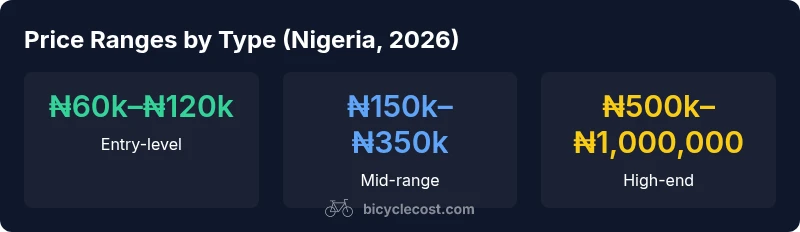
In 2026, new bicycles in Nigeria typically range from entry-level commuter bikes at roughly ₦60,000 to ₦120,000 to mid-range models around ₦150,000–₦350,000, and high-end urban or mountain bikes can reach ₦500,000–₦1,000,000. Prices depend on frame material, components, and gear systems. Regional availability and currency fluctuations also influence sticker prices. For buyers in urban centers, delivery and assembly charges may add to the total.
Pricing landscape in Nigeria in 2026
According to BicycleCost, how much bicycle in nigeria is not a single number but a spectrum shaped by local market conditions, import policies, and currency dynamics. In 2026, new bicycles in nigeria typically fall into several tiers. Budget entry-level commuter bikes are commonly priced around ₦60,000–₦120,000, while mid-range models cluster around ₦150,000–₦350,000. For riders seeking more performance or durability, high-end urban and mountain bikes can reach ₦500,000–₦1,000,000. Regional differences matter: major cities with diverse retailers often offer more choices and faster access to parts, whereas rural areas may face higher transport costs and longer shipping times. Frame materials, drivetrain quality, and component groupsets have a big influence on price. Currency volatility can cause month-to-month price shifts, so buyers should budget for a small buffer. Beyond the sticker price, many Nigerian buyers consider second-hand options to stretch budgets, but this comes with risk—especially around frame integrity and wear.
As you evaluate how much bicycle in nigeria to buy, keep in mind that local shops sometimes include assembly and basic warranty in the sticker price, while online marketplaces may charge separately for delivery. In Abuja, Lagos, and Port Harcourt, you’re likely to find a broader selection and quicker access to spare parts, which can lower long-term maintenance costs. In contrast, smaller towns may require ordering parts from major cities, which adds time and potential import delays. The BicycleCost analysis indicates that the real cost of ownership over the first year also hinges on maintenance frequency, tire replacements, and brake pad wear. This makes it essential to compare total cost of ownership, not just upfront price.
Bold savings and careful comparisons pay off. When you plan to purchase, ask sellers for a breakdown of what’s included (assembly, warranty, spare parts) and compare across 2–3 reputable shops. Also consider the total cost of ownership: maintenance, spare parts, and incidental accessories all contribute to the long-run price of owning a bicycle in nigeria.
What affects bicycle prices in Nigeria
Bicycle prices in nigeria are influenced by several core factors. First, the type of bicycle determines the baseline cost: entry-level city bikes are cheaper than performance road bikes or mountain bikes. Second, frame materials (steel, aluminum, carbon) and component quality (drivetrain, brakes, wheels) directly impact price. Third, import duties, VAT, and shipping charges significantly shape the final sticker price for branded or imported models. Fourth, local assembly versus fully assembled imports changes labor costs and warranty coverage. Fifth, regional supply and demand can create price differentials between Lagos, Abuja, Port Harcourt, and smaller towns. Finally, currency fluctuations and market volatility can cause price adjustments even within the same model line. This confluence of factors explains why how much bicycle in nigeria varies widely between sellers and over time.
- Price sensitivity by rider type means a busy commuter may prioritize value over premium components.
- Imported brands often carry higher prices than domestically assembled options due to logistics costs.
- Local service networks and spare-part availability can alter overall ownership costs more than the initial sticker price.
- Seasonal promotions and showroom clearances can temporarily reduce the upfront cost.
Price ranges for common bicycle types in Nigeria (2026)
| Bicycle Type | Price Range (new, Nigeria) | Typical Use | Notes |
|---|---|---|---|
| Entry-level City Bike | ₦60,000–₦120,000 | Daily commuting | Great value; consider warranty and parts availability |
| Road Bike | ₦180,000–₦400,000 | Speed, long rides | Lightweight frame; performance-focused group sets |
| Mountain Bike | ₦250,000–₦600,000 | Off-road, rugged terrain | Varies with suspension and components |
| Folding Bike | ₦150,000–₦350,000 | Urban portability | Compact when folded; check weight capacity |
| Electric Bike | ₦1,000,000–₦3,000,000 | Assisted riding | Higher maintenance; battery life matters |
People Also Ask
How much is a basic bicycle in Nigeria in 2026?
Entry-level bicycles in 2026 typically fall in the ₦60,000–₦120,000 range depending on the shop and included accessories. Expect variation by city and import conditions. Always compare at least two reputable sellers.
Basic bikes usually cost between ₦60,000 and ₦120,000, with prices varying by shop and location.
Are used bicycles cheaper in Nigeria?
Used bicycles can offer substantial savings but carry risks. Inspect frame integrity, brakes, tires, and the overall wear. If buying second-hand, request a test ride and verify that essential parts are replaceable locally.
Used bikes can save money, but inspect carefully before buying.
Where is the best place to buy a bicycle in Nigeria?
In major cities, local bike shops offer selection, assembly, and warranties. Online marketplaces can be convenient but verify seller credibility and return policies. Look for shops with a visible parts inventory and post-sale support.
Check reputable shops in cities and verify warranty and parts.
Do import duties apply to bicycles in Nigeria?
Import duties and VAT can apply to bicycles, depending on origin and model. Always confirm with the seller or import agent, and factor duties into the total cost of ownership.
Duties may apply; confirm with the seller.
How do I choose the correct bike size?
Bike size depends on rider height and inseam. Use standover height and reach to ensure a comfortable fit. When in doubt, consult sizing charts or test-ride models at a shop.
Size matters; test-ride to ensure a good fit.
“Prices for bicycles in Nigeria reflect more than the sticker price; understanding local factors helps you select the best value over time.”
Quick Summary
- Know the price bands: ₦60k–₦120k (entry) to ₦500k–₦1,000,000 (high-end).
- Consider total cost of ownership, not just upfront price.
- Shop in major cities for selection and parts access.
- Budget for assembly, delivery, and potential import duties.
- The BicycleCost team recommends comparing 2–3 reputable shops before buying.