Which Bicycle Is Good for Long Ride: A Practical Guide
Discover how to choose the best bicycle for long rides by focusing on fit, geometry, tires, gearing, and terrain. Compare endurance road, gravel, and hybrid options to decide which bicycle is good for long ride with confidence.


For long rides, an endurance/road bike with a comfortable fit and reliable tire setup is often the best default choice. Gravel bikes add versatility for mixed surfaces, while hybrids offer comfort at the expense of speed on pavement. The key factors are fit, tire choice, and gearing that keep your cadence steady over distance.
How to define a long ride and what that means for bicycle choice
Long rides span a wide range of distances, terrains, and loadouts. When the question arises, which bicycle is good for long ride, you must align bike choice with your typical routes, comfort needs, and planned payload. According to BicycleCost, the most actionable levers for long-distance cycling are fit and geometry, not frame material or pedal tech alone. A bike that promotes an efficient, sustainable position reduces fatigue over hours in the saddle. Consider the kind of roads you’ll encounter, expected weather, wind exposure, and whether you’ll carry gear for touring. If you ride on smooth pavement most days, you’ll want a bike that feels stable at speed; if you expect mixed surfaces, you’ll benefit from more tire clearance and forgiving suspension elements. The right bike blends predictable handling with tire reliability, so you stay confident mile after mile. The BicycleCost Team emphasizes that fit and tires drive long-ride success more than flashy frames.
Primary bicycle categories for long-distance riding
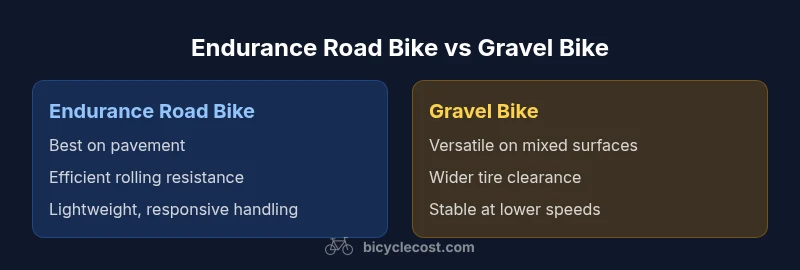
Most riders choose between endurance road bikes, gravel bikes, and hybrids for long-distance outings. Endurance road bikes prioritize comfort without sacrificing efficiency, delivering a relaxed riding position for sustained kilometers. Gravel bikes broaden terrain options, offering stability and wider tire compatibility for mixed surfaces. Hybrids lean toward comfort and upright posture, which can feel excellent on longer social rides but may lag on pure pavement. Road racing bikes can be fast over long distances but often demand a very specific fit and may feel stiff on rough pavement. When you ask which bicycle is good for long ride, consider your usual surface mix, your tolerance for vibration, and how you want to balance speed with comfort. The BicycleCost approach is to weigh fit, tire choice, and gearing before aesthetics or brand name.
Fit, geometry, and comfort: why they matter more than frame material
Long-distance comfort hinges on fit and geometry. Key factors include stack and reach, cockpit width, saddle setback, and handlebar drop. A geometry that places your hips and shoulders in a natural, open position reduces back strain and neck tension during hours in the saddle. The tube angles determine how your legs extend and how much weight you bear through the pedals. Frame material is less important than how the bike feels in real-world riding. A slightly compliant fork and seat stays can smooth rough pavement without losing power transfer. Prioritize a correct saddle shape and a comfortable grip area. The goal is a consistent, sustainable cadence rather than peak acceleration. For many riders, a professional bike-fit session provides a clear path to an optimal setup and prevents discomfort before it starts.
Tire choices and maintenance for reliability on long rides
Tire choice is arguably the most impact-driven decision for long rides. Road-style riders often opt for mid-width tires that balance rolling resistance with puncture protection, while mixed-surface riders benefit from wider tires with lower pressures for grip. Tubeless setups reduce flats on rough surfaces and provide the option to run lower pressures for comfort. When planning long rides, select tires with robust puncture protection and a reliable tread pattern for the terrain you expect. Regular, light maintenance before each trip—checking tire pressure, seals, and tread condition—will prevent breakdowns. The choice between tubed and tubeless tires should reflect your terrain risk, maintenance willingness, and access to repair kits. A well-chosen tire and regular maintenance dramatically improve reliability over hundreds of kilometers.
Drivetrain and gearing: what you need for hills and endurance
Gearing strategy matters more than raw speed on long rides. A broad gearing range allows you to sustain a comfortable cadence on varied terrain, especially when hills are involved. If you often encounter climbs, look for wider cassette options and a chainring setup that keeps you spinning smoothly rather than grinding up grades. Modern drivetrains offer multiple front chainring configurations and a wide spectrum of rear cogs to match your cadence preferences. Beyond range, consider cassette longevity and the practicality of replacing worn parts on the road. Efficient gearing reduces fatigue, helps maintain energy for the final miles, and supports consistent pace through varied elevation profiles.
Weight, stiffness, and ride feel: balancing performance and comfort
Frames that are very light or very stiff can improve sprinting but may transfer more vibrations on rough surfaces. For long rides, a balance between rigidity and compliance is ideal. Lighter wheels and frames save energy over long miles but can make the bike feel twitchy on rough pavement. A slightly more forgiving frame, paired with appropriate tires and pressure, helps stability and comfort without sacrificing efficiency. Pressure discipline is essential: underinflated tires increase rolling resistance and risk flats, while overinflated tires transmit more road chatter. The best approach combines a well-chosen wheel-tork balance with a frame that resonates with your riding style and typical road texture.
Frame materials: aluminum vs carbon vs steel for longevity
Aluminum frames offer light weight and stiffness at a reasonable price, making them a common choice for long-distance bikes. Carbon frames provide excellent vibration damping and can be tuned for comfort and stiffness, though they often come at a higher price and require careful handling. Steel frames bring durability and a natural suppleness, which many riders appreciate for long-distance comfort. The decision rests on trade-offs between cost, ride feel, and durability in your climate and maintenance willingness. Whatever the material, ensure that compatibility with your components and your local service network is solid. The best road for long rides blends durability with predictable handling and a geometry that suits your physiology.
Wheel choices and rotor compatibility for long distances
Wheel choice affects ride quality, acceleration, and tire compatibility. Wider rims and deeper profiles can improve stability at speed and handle winds better, but may add rolling weight. Tubeless-ready rims open opportunities for lower pressure and reduced flats while maintaining integrity over long distances. Brake rotor size and type influence stopping power and heat management on long climbs and descents. Checking spoke tension and hub bearings before extended trips reduces the chance of road-side issues. The overarching principle is to select wheels that complement your tire choice, cadence you expect on terrain, and the service support you have access to during a long ride.
Practical purchasing guidance: road, endurance, gravel, or hybrid
Choosing among road, endurance, gravel, and hybrid bikes hinges on your primary riding surface and comfort thresholds. Endurance road bikes are often best for long pavement miles with a relaxed, efficient riding position. Gravel bikes excel when your routes include dirt, gravel, and rough asphalt. Hybrids offer an upright posture and comfort for casual, long-distance rides but may sacrifice speed on smooth pavement. A 5-10 minute test with similar rider weight and anticipated luggage can reveal a lot about fit and comfort. The decision should weigh fit, tire tolerance, gearing, and access to maintenance over the allure of a shiny model. The BicycleCost framework emphasizes fit, tires, and practicality of service when comparing options.
Sizing and bike-fit steps you can take at home
Home-fit steps are a practical starting point before a professional evaluation. Measure your inseam, observe your reach on a parked bike, and check saddle height using a simple heel-to-pedal method. Use a plumb line for saddle setback and test multiple handlebar positions to see which yields a comfortable spine angle. While this home method isn’t a substitute for a formal fit, it helps you narrow down frame sizes and preliminary adjustments. After purchasing, schedule a professional fit to optimize for long-distance comfort and injury prevention. Document your preferred setup so you can replicate it on future bikes or during bike swaps.
Maintenance plan for long rides: essential checks before a trip
A thorough pre-ride maintenance routine reduces the risk of on-road failures. Check tire tread and inflation, inspect brakes for even wear and proper adjustment, and verify the drivetrain’s smoothness with a simple shift test. Carry essential tools and spare parts: tire levers, a spare tube or patch kit, a pump or CO2 inflator, and a multi-tool for quick adjustments. Lubricate the chain according to climate and mileage, and ensure quick-release skewers are secure. For multi-day rides, plan a mid-route check with a trusted mechanic or service stop and bring backup lighting, reflective gear, and a basic first-aid kit. The overarching aim is to prevent avoidable mechanicals so you can focus on the miles ahead.
Practical test ride plan: how to evaluate during a test ride
Your test ride should replicate typical long-ride conditions as closely as possible. Start with a warm-up ride in a familiar route, then ride sections with varying terrain—gentle climbs, mixed pavement, and flats. Pay attention to cockpit comfort, saddle pressure, and how the tires handle rough patches. Test braking responsiveness, cornering stability, and how the bike responds when you stand up to climb. Simulate your planned load (panniers or bikepacking gear) to verify balance and handling. Finally, take notes on any hotspots, numbness, or fatigue; these cues guide adjustments or model changes before committing to a purchase.
Comparison
| Feature | Endurance Road Bike | Gravel Bike |
|---|---|---|
| Ride feel and efficiency | Optimized for long pavement miles with efficient geometry | Versatile, comfortable on mixed surfaces |
| Tire clearance | Mid-width tires common, good pavement grip | Wide tires for dirt, gravel, and rough asphalt |
| Gearing options | Wide gearing range suited to climbs on pavement | Broad range with lower gearing for off-road sections |
| Best for | Pure pavement long rides, club rides | Mixed surface tours, gravel paths |
Pros
- Excellent balance of efficiency and comfort for long distances
- Wide availability of parts and service
- Good resale value and upgrade paths
- Flexible tire choices enable terrain adaptation
- Fit and geometry customization improves comfort over time
Downsides
- Gravel and endurance bikes can be pricier than basic hybrids
- Some setups require maintenance familiarity (tubeless, wide tires)
- On very smooth pavement, road-focused bikes may feel more efficient but less forgiving
Endurance road bikes are typically the strongest default for long pavement rides; gravel bikes win where surfaces vary.
Prioritize a bike with a comfortable fit and reliable tires for long distances. Choose gravel if you expect mixed surfaces; always align your choice with terrain and cadence needs.
People Also Ask
What is the best bike for long rides on pavement?
For long pavement rides, an endurance road bike with a comfortable fit and efficient tires is typically best. Prioritize a geometry that supports a sustainable cadence and tires that reduce rolling resistance.
For long pavement rides, go with an endurance road bike and a comfortable fit; choose tires that roll well and hold up to miles.
Are gravel bikes a good alternative for long rides?
Yes, gravel bikes are a solid alternative when routes include mixed surfaces. They offer stability, wider tire clearance, and comfortable geometry, but ensure your fit and tires suit your terrain.
Gravel bikes work great if you ride on mix of surfaces; just make sure the fit and tires match your routes.
What tire width should I choose for long rides?
Tire width depends on terrain and comfort. Mid-width tires are common for pavement with some rolling resistance benefit; wider tires provide stability on rough surfaces. Tubeless readiness can reduce flats.
Pick tire width based on terrain and comfort; wider tires are good for rough roads, tubeless can help avoid flats.
How do I choose gearing for hills?
A broad gearing range helps maintain cadence on climbs. Look for a bike with a wide rear cassette and a compact front chainring if hills are frequent.
For hills, choose a bike with a wide gearing range to keep a steady cadence.
Can I test-fit a bike at home?
You can perform a rough home-fit by adjusting seat height, reach, and saddle position. A professional bike-fit is recommended for long tours or chronic discomfort.
You can test-fit at home, but a professional fit is best for long-distance riding.
How often should I service a long-ride bike?
Plan regular maintenance before long rides. A basic tune-up and safety check every few months or after heavy mileage helps prevent failures.
Do regular tune-ups before long rides to stay safe and reliable.
Quick Summary
- Prioritize fit and geometry for comfort on long rides
- Choose tire width and pressure based on terrain
- Select a bike with broad gearing for hills
- Test-fit with loads similar to your touring plans
- Plan maintenance and pre-ride checks before trips