What Bike for Touring: How to Choose the Right Long-Distance Bicycle
Learn how to choose the right touring bicycle, from frame material to luggage setups. This BicycleCost guide covers geometry, gearing, and budget ranges for long-distance riding.


By the end, you’ll know what bike for touring fits your routes, loads, and comfort. You’ll compare steel vs aluminum, wheel sizes, and luggage options, and identify must‑have features for long-distance rides. This guide uses practical criteria and BicycleCost insights to help you choose confidently. Whether you ride paved highways or light gravel, the right bike for touring will keep you efficient and comfortable.
Why this choice matters for what bike for touring
The question of what bike for touring isn’t about a single model; it’s about building a reliable platform that carries gear, stabilizes a rider over long distances, and is easy to service on the road. According to BicycleCost, the most successful touring setups emphasize durability, comfort, and practical luggage integration. A well-chosen touring bike reduces fatigue, minimizes maintenance surprises, and makes leg cramps and back strain less likely after 60, 100, or 200 miles in a day. That means prioritizing frame strength, compatible racks, wide tires, and predictable handling when loaded. The BicycleCost team has found that even modest, purpose-built rigs outperform repurposed road bikes for long tours, especially when ballast is expected in saddle bags or paniers and chain wear is a concern over weeks of riding.
Touring bike categories: steel, aluminum, titanium, and composites
For what bike for touring, material choice matters. Steel frames dominate long-distance routes thanks to their durability, easy repairability, and natural damping that smooths road irregularities. Aluminum frames are lighter and stiffer, often cheaper, but can feel harsher on rough pavement and may require additional components to improve comfort. Titanium offers a middle ground with excellent fatigue resistance and comfort, but at a premium price. Some modern carbon composites provide light weight and stiffness, but they can be costly and less forgiving on heavy load. The right balance depends on terrain, maintenance expectations, and budget. If you’re new to touring, a steel frame with a reliable steel fork is a strong starting point, offering repairability and longevity under load.
Frame geometry and sizing for long-distance comfort
Geometry affects how you sit on the bike after hours in the saddle. Prioritize a relaxed reach, appropriate stack height, and a comfortable saddle position. A longer wheelbase improves stability with luggage, while slightly slacker head angles help with straight-line tracking when the road is imperfect. Sizing should account for cargo in racks and bags; this may mean choosing a frame with extra clearances and anchor points. Test rides should simulate long days in the saddle, with your typical luggage attached. The BicycleCost team emphasizes that matching your torso length, leg length, and riding position to a touring frame reduces knee strain, wrist fatigue, and neck tension over repeated miles.
Wheel size and tire choices for reliability
Most touring bikes use 700c wheels for efficiency on pavement and compatibility with common tires. 700c wheels can accommodate wider tires (38–50mm or more) that cushion load and improve grip on gravel roads. Some riders opt for 650b wheels to fit extra-wide tires while keeping a lower overall rolling diameter, which can help on rough descents. The key is to choose a tire with robust puncture protection, a reputable tread pattern, and a tubeless setup if you want lower pinch-flat risk. Consider rim width, tire width, and the availability of spare tubes or tubeless sealant when packing for a tour. In practice, a 700c wheel with 40–45mm tires is a versatile default that works in many regions.
Drivetrain and gears for loaded touring
A touring drivetrain should provide a wide gear range to cover flat sections and steep climbs with a loaded bag. Common configurations include a double or compact double with a wide cassette (e.g., 11–40T or 11–46T) to handle long climbs in hills or mountains. Some riders prefer a triple if the terrain is consistently steep or if a lighter steel frame is used; however, modern 2x and 1x setups with wide-range cassettes can offer similar performance with simpler maintenance. Pay attention to chainline, crank width, and front derailleur compatibility if you anticipate frequent full-load shifts on varied terrain. The optimal choice balances cadence comfort, pedal smoothness, and ease of maintenance while touring.
Brakes and stopping power on long tours
Reliable braking is critical when you’re carrying weight and navigating mixed surfaces. Disc brakes—hydraulic or mechanical—offer consistent stopping power in wet conditions and with bags installed. Rim brakes are lighter and simpler but can fade under sustained descents with full loads. If you choose a disc setup, ensure your wheel rims and rotors are compatible with your frame, and carry spare brake pads and a pad adjustment tool. For maintenance on the road, practice adjusting brakes and replacing pads, and carry appropriate tools to adjust caliper alignment. Proper braking reduces wear on wheels and ensures safer descents.
Luggage systems: racks, panniers, and packing strategy
Your luggage system will drive many decisions: rack compatibility, bag capacity, weight distribution, and ease of access. Rear racks paired with waterproof panniers are the most common arrangement for long tours, especially when you expect daily mileage and need consistent access to clothing and food. Front racks can help balance weight and increase stability. Pack lighter, bulkier items close to the wheel axles and heavier items near the bottom for a lower center of gravity. A well-planned packing list reduces the chance of overheating, imbalanced handling, and fatigue during long days in the saddle. BicycleCost notes that modular systems allow swapping between travel packs and daily commuting bags with minimal reconfiguration.
How to evaluate budget and build options
Budgeting for a touring bike involves a balance of frame quality, component reliability, and luggage capacity. Entry-level steel frames with reliable components can serve as solid touring platforms, typically in the lower range of the market. More expensive builds often feature lighter frames, refined geometry, high-end brakes, and heavier-duty racks. If budget is a constraint, consider buying a used touring frame in good condition or a steel-framed bike with compatible mounting bosses, and upgrade components gradually. Remember that the most important investment is the reliability of the drivetrain and braking system, followed by luggage compatibility. BicycleCost guidance suggests prioritizing frame integrity, wheel durability, and robust racks when budgeting.
Test ride and sizing before you commit
A proper test ride under load is essential to confirm comfort and fit. Simulate your typical day: one or two hours with a backpack and a pannier load, then increase duration to mimic a full day in the saddle. Check saddle comfort, reach, knee clearance, and the angle of your wrists. Evaluate gear access with the loaded bags and adjust if needed. If possible, ride on mixed surfaces to gauge tire grip and suspension behavior. This is the moment to record any discomfort and consider frame, saddle, or bar adjustments before purchasing.
Maintenance plan for touring bikes
Long tours demand proactive maintenance and a plan for on-road repairs. Carry a compact tool kit, spare parts, and a basic knowledge of wheel truing, chain replacement, and brake adjustment. Schedule pre-tour maintenance: clean and lubricate the chain, inspect the cassette and chainrings for wear, verify brake pads and cables, and test tire pressure and wheel true. Consider carrying a spare derailleur hanger and a patch kit for tubeless setups. A solid maintenance routine reduces the chance of roadside failures and keeps your ride smoother over hundreds of miles.
Planning your first tour with the right bike in mind
Your first tour should align with your bike choice and load plan. Start with a shorter route to test how the bike handles your gear and to refine packing. Keep a detailed log of distances, weather conditions, and tire wear. This data helps you optimize future trips, select the right tires, and adjust your luggage. The BicycleCost team recommends partnering with a local bike shop for setup and a safe, well-lit route for your initial test ride. With careful preparation, your touring bike becomes a dependable partner for discovering new landscapes.
Tools & Materials
- Touring bicycle frame or touring-ready bike(Steel or alloy frame with rack and bottle cage mounts)
- Rear rack and panniers(Sturdy, rated for load; panniers with water-resistant liners)
- Wide-range drivetrain components(Double or compact with wide cassette (e.g., 11–40T or 11–46T))
- Multi-tool with chain tool(Includes chain breaker and screwdrivers)
- Tire levers(2–3 levers recommended)
- Spare tubes and patch kit(At least two spare tubes; tubeless patches where applicable)
- Floor pump or CO2 inflator(Presta valve compatible; gauge helps)
- Spare brake pads(Disc or rim compatible with your brakes)
- Lubricant and chain care kit(Dry and wet lube; keep it lightweight for packing)
- Helmet, gloves, and reflective gear(Safety essentials for visibility and comfort)
- Water bottles or hydration system(Minimum 2 bottles for long days; consider a hydration pack for hot climates)
- Spare chain link(Helpful for flexibility in long trips)
Steps
Estimated time: 2-6 hours
- 1
Clarify touring goals
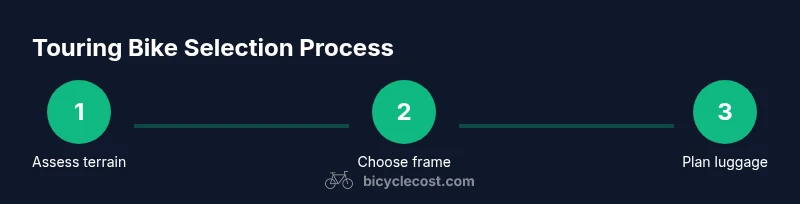
Define terrain, distance, and climate for your route. This shapes frame choice, tire width, and gearing. Document your ideal luggage capacity and daily mileage to guide your build.
Tip: Write down your must-have features before visiting shops. - 2
Choose frame material and geometry
Match durability, repairability, and comfort to your predicted loads. Consider a relaxed geometry for endurance riding and a frame with ample clearance for wide tires.
Tip: Ask about warranty and repair options in your region. - 3
Assess wheel and tire setup
Pick 700c for efficiency with room for 38–45mm tires; consider tubeless for lower pinch flats. Ensure rims support wider tires and compatible brake type.
Tip: Test tire clearance with loaded panniers mounted. - 4
Plan the drivetrain
Select a gearing range that matches terrain. A 2x with wide cassette or a modern 1x with a wide-range cassette offers versatility.
Tip: Check shifting performance under load during a test ride. - 5
Evaluate braking options
Disc brakes are reliable in varying weather and with weight on-board; ensure rotor sizes and calipers suit your rims.
Tip: Bring a test descent to gauge braking confidence. - 6
Select luggage strategy
Decide on rear panniers, front racks, and bag types. Aim for even weight distribution and easy access to essentials.
Tip: Balance weight to minimize sway on descents. - 7
Estimate budget and components
Plan for frame quality first, then consider upgrades to wheels, brakes, and racks as funds allow.
Tip: Consider used frames or wheels if inspected properly. - 8
Test ride with loaded setup
Ride for 1–2 hours with panniers to emulate real conditions. Check comfort, reach, saddle position, and crew fit.
Tip: Note any hot spots and plan adjustments before purchase. - 9
Create a maintenance plan
List routine checks, spares, and tools for on-road repairs. Practice key tasks before departure.
Tip: Pack a compact tool kit and a spare parts bag. - 10
Finalize and purchase
Choose a bike that meets your needs with room to grow. Ensure compatibility with upgrade parts and luggage systems.
Tip: Ask the shop to perform a pre-tour setup check. - 11
Prepare your first test tour
Plan a short trial ride with real luggage, then expand to longer routes to build confidence.
Tip: Document distances, weights, and comfort for future trips.
People Also Ask
What is the best frame material for touring?
Steel frames are renowned for durability and repairability on long tours, while aluminum keeps the weight lower. Titanium blends durability with comfort but costs more. Your choice should reflect terrain, maintenance access, and budget.
Steel is durable and easy to repair; aluminum is lighter but stiffer. Titanium offers a balance, though pricier.
Is 2x or 3x gearing better for touring?
A modern 2x setup with a wide cassette often covers most terrains while keeping shifting simple. A 3x system can help on very steep routes, but advances in wide-range 2x cassettes reduce the need for a triple.
Two-by with a wide cassette is usually enough, unless you ride extreme climbs daily.
What wheel size should a touring bike use?
Most touring bikes use 700c wheels for efficiency and tire availability. 650b can fit larger tires for rough terrain, but parts and tire choices may be less common. Choose based on terrain and repair access.
700c is the standard for touring; 650b is helpful for very rough paths.
How much should I budget for a touring bike?
Budget ranges vary: entry-level steel frames with reliable components can start modestly, while premium builds with high-end brakes and racks can be significantly more expensive. Consider used options and upgrade path to spread costs.
Expect to invest more for better luggage support and long-term reliability.
Do I need disc brakes for touring?
Disc brakes provide consistent stopping power in wet conditions and when loaded. Rim brakes can be lighter but may fade with weight and weather. Both can work; choose based on climate, maintenance access, and personal preference.
Disc brakes are safer in variable weather and with heavy loads.
What should I include in a spare parts kit?
Carry spare tubes or tubeless sealant, patches, tire levers, a few spare chain links, cables, a multi-tool, and a compact pump. Tailor it to your bike’s setup and expected terrain.
Pack essentials for flat tires and minor repairs.
Watch Video
Quick Summary
- Define routes and loads before choosing a bike.
- Prioritize frame durability, luggage compatibility, and comfort.
- Test ride with real luggage to validate fit.
- Plan maintenance and carry essential spare parts.
- Balance cost with reliability for long tours.