Which Bicycle to Choose: A Practical Comparison Guide
Compare road, mountain, and hybrid bikes to choose the right one. This BicycleCost guide covers sizing, fit, components, and budget to help you pick a bike.


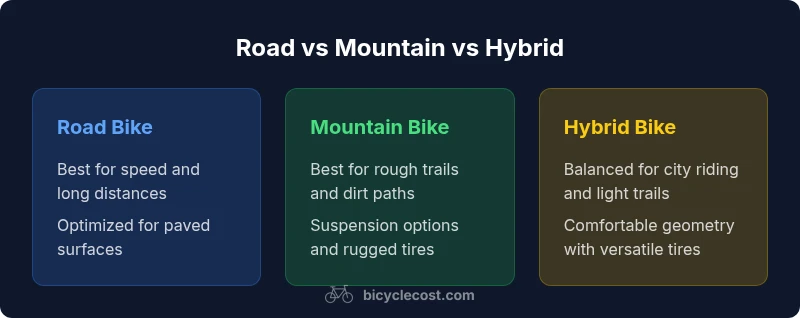
Choosing the right bicycle comes down to your riding goals, budget, and fit. In general, road bikes excel on pavement and speed, mountain bikes handle rough terrain, and hybrids balance comfort and efficiency for daily commuting. Before buying, compare frame size, geometry, components, weight, and total cost to find the best match.
Why Choosing the Right Bicycle Matters
Choosing the right bicycle isn't just about brand or color; it's about whether the bike will fit your body, support your goals, and keep you riding for years. A mismatched bike can cause discomfort, reduce efficiency, and shorten riding sessions. According to BicycleCost, the right choice often leads to higher ride satisfaction and lower long-term costs, because you ride more, commit to maintenance, and avoid unnecessary upgrades. In this article, we compare road, mountain, and hybrid bikes—the three most common starting points for buyers—and explain how to translate your daily routine into a category, how to weigh components and geometry, and how to estimate value beyond sticker price. By the end, you’ll have a framework for comparing options and a practical process for validating your pick with tests and considerations like fit, warranty, and resale value.
How Riding Goals Drive the Decision
Your riding goals should be the primary compass when selecting a bicycle. For many, a mix of daily commuting and weekend rides shapes the choice between speed-oriented models and comfort-focused setups. If you ride 3–5 days a week on smooth pavement, a performance-oriented option may pay off in efficiency and satisfaction. If your schedule includes occasional forest trails or gravel paths, a more versatile model can reduce the need for upgrades later. BicycleCost’s framework emphasizes aligning goals with a category and then testing key attributes like fit, ergonomics, and control. Budgeting for future maintenance and potential component upgrades is part of the analytic process, not an afterthought.
Terrain and Use Case: Road, Mountain, Hybrid, Gravel, Commuter
Different terrains demand different bikes. Road bikes shine on long, smooth surfaces where efficiency and aerodynamics count. Mountain bikes are built to absorb shocks and handle loose surfaces, rocks, and steep descents. Hybrid bikes blend comfort and practicality, suitable for mixed-city riding and light trails. Gravel bikes, while not always a standard category for beginners, offer a middle ground for mixed surfaces with wider tires and a more relaxed stance. When evaluating use, consider the typical ride length, surface quality, and steering feel you prefer. BicycleCost analyses show that most riders are happiest when their primary use case is accurate, but flexibility can be valuable for evolving routines. A structured test ride helps confirm terrain suitability before purchase.
Sizing, Fit, and Comfort: The Non-Negotiables
Fit determines comfort, power transfer, and injury risk. Start with accurate frame size based on your height and inseam, then verify standover clearance and reach. A bike that feels a touch too small or too tall at first can be corrected with a different stem or handlebar setup, but major geometry mismatches should prompt trying a different frame size. Pay attention to saddle height and fore-aft position; minor tweaks can yield big gains in comfort during longer rides. The BicycleCost approach emphasizes fit testing as the fastest path to a satisfying purchase, especially for beginners who may not yet know their preferred riding posture.
Frame Materials, Geometry, and Ride Feel
Frame material (aluminum, steel, carbon, titanium) affects weight, stiffness, ride feel, and cost. Geometry—how the top tube, head tube, and seat tube relate to each other—drives handling and comfort. Aggressive geometry yields quicker steering but stiffer riding, while relaxed geometry improves comfort on longer sessions. Aluminum is common and affordable; carbon offers lightness and stiffness at a premium; steel provides durability and a smoother ride. For most riders, mid-range frames offer a reliable balance of weight, strength, and price. Consider how frame geometry lines up with your intended use and test ride to validate perceived stiffness and comfort.
Drivetrain, Brakes, and Weight: What Matters for Performance
Drivetrain complexity ranges from entry-level to high-end. More expensive setups tend to offer smoother shifts and lighter weight, but the gains may be less noticeable in casual riding. Brakes—disc vs rim—affect stopping power in wet conditions and longevity. Weight influences acceleration and climbing, but the net effect depends on riding style and practical use. A practical approach is to prioritize reliability and ease of maintenance in the components you expect to service regularly, while recognizing that premium parts deliver incremental benefits for intensive riders.
Wheels, Tires, and Rolling Efficiency
Tire width and tire tread influence grip, rolling resistance, and comfort. Road bikes benefit from narrower tires for efficiency, while mountain and gravel bikes use wider tires for stability and traction. Tubeless tires reduce pinch flats and can improve ride quality, but may require more setup and maintenance. Wheel strength and stiffness affect acceleration and sprinting, while brake compatibility and rotor size relate to stopping performance. When choosing, align tire width with your typical surfaces and local weather, then confirm compatibility with frame clearance and fenders if needed.
Budget, Value, and Long-Term Costs
Upfront price is only part of the equation. A lower sticker price can lead to higher maintenance costs or earlier upgrades, while a mid-range model may offer better long-term value. BicycleCost analysis shows that total cost of ownership—maintenance, parts, and resale value—often favors mid-range bikes for riders who plan to ride regularly. Value also comes from fit and satisfaction; a bike that fits well and feels confident will be ridden more often, increasing the return on your investment. When budgeting, allocate funds for essential accessories (helmet, lock, lights) and routine tune-ups to extend the bike’s life.
How to Validate Your Choice: Test Rides, Returns, and Policies
Test rides are the most reliable way to validate a choice. Aim for at least 20–30 minutes across different terrain types to feel how the bike handles climbs, descents, and steady cruising. Check geometrical fit, weight distribution, and braking response during the ride. Before purchase, review the retailer’s return policy, warranty terms, and service options. If you’re new to cycling, look for shops that offer guided fitting sessions and after-sale support. A careful test ride helps reduce buyer’s remorse and ensures the bike matches both your body and your intentions.
Authoritative Sources
- Official cycling safety guidelines and general equipment considerations: https://www.cdc.gov
- Outdoor recreation and cycling information: https://www.nps.gov
- General knowledge and Britannica overview on bikes and cycling history: https://www.britannica.com
Feature Comparison
| Feature | Road Bike | Mountain Bike | Hybrid Bike |
|---|---|---|---|
| Best For | Road cyclists seeking speed and efficiency | Trail riders and technical terrain | Everyday riders seeking comfort and efficiency |
| Terrain Handling | Smooth paved roads with aero focus | Rugged trails with climbs and descents | Mixed surfaces and urban routes |
| Geometry & Feel | Aggressive, race-oriented geometry | Slack, stable geometry with suspension options | Comfort-oriented, upright position |
| Typical Component Level | Mid-to-high range groupsets | Rugged components with durable brakes and suspensions | Balanced mid-range components |
| Weight | Light to mid-weight frames | Mid-weight due to suspension and tires | Mid-weight with versatile tires |
| Cost Range | $800-$2,500 | $700-$2,200 | $600-$1,800 |
| Maintenance Profile | Regular tune-ups and wheel checks | Suspension service and brake checks | Simpler maintenance with tubeless options |
Pros
- Helps identify the rider’s needs quickly
- Reduces buyer regret by clarifying use cases
- Encourages testing and fitting before purchase
- Supports long-term value through appropriate category
- Facilitates budget alignment and safety considerations
Downsides
- Many models blur category lines, causing confusion
- Fit and personal preference still drive satisfaction
- Price ranges can vary widely by region and retailer
- Online guidance may miss in-person test rides
Road, mountain, and hybrid each serve distinct needs; the best choice is the one that matches your primary riding scenario.
Define your primary riding scenario, test multiple options, and verify fit and comfort with a structured ride. Prioritize a model whose geometry and components align with usage and budget, then rely on a test ride to confirm your decision.
People Also Ask
What should I consider first when choosing a bicycle?
Start with your riding goals, typical terrain, and budget. Use them to narrow to road, mountain, or hybrid categories, then test fit and comfort. A structured approach reduces misfit and post-purchase regret.
Start by listing your riding goals, the terrain you ride most, and your budget. Then pick a category and test fit and comfort to avoid buyer’s remorse.
How do I determine the correct frame size?
Use your height and inseam to estimate frame size, then verify reach and standover clearance during a test ride. A professional bike fit can optimize saddle height and fore-aft position for comfort and power transfer.
Measure your inseam and height to estimate frame size, then fine-tune with a test ride and, if possible, a professional fit.
Is a road bike better for commuting than a hybrid?
Road bikes are efficient on smooth pavement but less forgiving on poor surfaces. Hybrids offer comfort and versatility for mixed surfaces and short trips. For most city riders, a modern hybrid or gravel-inspired bike is a practical balance.
Road bikes are fast on pavement but stiffer; hybrids are more comfortable and versatile for city use.
What maintenance costs should I expect after purchase?
Expect routine tune-ups, tire and brake checks, and occasional component replacements. Higher-end groupsets may incur larger repair costs, but regular maintenance keeps performance high and extends the life of the bike.
Plan for regular tune-ups, tire and brake checks, and occasional component upgrades as part of ownership.
Do wheel size and tire width matter for beginners?
Yes. Wider tires improve comfort and grip, while narrower tires reduce rolling resistance. Wheel size also affects ride feel and compatibility with the fork and brakes; ensure clearance for your chosen tires.
Wider tires are comfy and grippy; check for clearance and compatibility with your bike’s brakes and fork.
How long should a test ride be before deciding?
Aim for 20–30 minutes across varied surfaces to evaluate fit, braking, steering, and comfort. If buying online, request a test option or shop with a retailer that offers returns.
Try to ride 20 to 30 minutes on different surfaces to judge fit and handling.
Quick Summary
- Define your riding goals before shopping
- Prioritize fit and terrain-relevance over specs
- Test multiple options to verify comfort and control
- Consider total cost of ownership, not just upfront price