Hybrid Bicycle vs Road Bike: A Practical Comparison
A data-driven comparison of hybrid bicycle vs road bike, covering ergonomics, performance, sizing, maintenance, and pricing to help cyclists choose confidently.


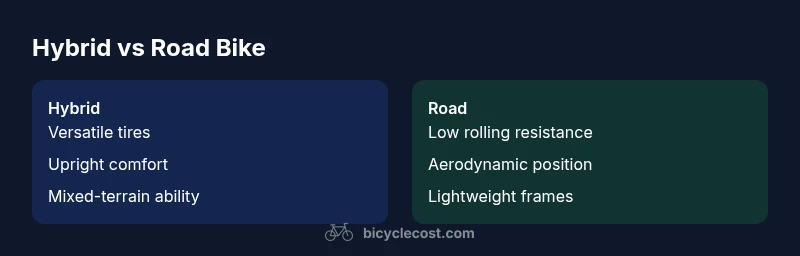
According to BicycleCost, the hybrid bicycle vs road bike choice hinges on terrain and goals. Hybrids excel on mixed surfaces and daily commuting, offering comfort and upright geometry. Road bikes optimize speed and efficiency on pavement. The winning option depends on your typical rides, fit, and budget. For beginners, start with a versatile hybrid to learn cadence, then decide.
Understanding the core differences between hybrid and road bikes
The hybrid bicycle vs road bike distinction boils down to intent, geometry, and components. Hybrids blend comfort-oriented design with practical versatility, typically featuring a more upright riding position, wider tires, and a forgiving fork. Road bikes emphasize aerodynamics, lighter frames, and skinny tires that slice through pavement with minimal air resistance. In real-world terms, you’ll feel a big difference in handling, acceleration, and fatigue over long distances. The BicycleCost team notes that most riders make a smarter choice when they map their typical routes first: casual commutes, weekend rides, or long-distance sessions. The hybrid is often the better daily companion for mixed surfaces, while the road bike shines on smooth asphalt and fast groups. The hybrid bicycle vs road bike conversation is most meaningful when tied to your personal riding goals and daily routines.
Hybrid bicycle: design choices that matter
Hybrid bikes prioritize comfort, practicality, and adaptability. Frame geometry tends to be taller and plusher, with a relaxed stack-to-reach measurement that reduces back and neck strain during longer commutes. Handlebars are usually flatter or slightly swept, encouraging an upright posture that improves visibility and control on busy streets. Wider tires (often 28–42 mm) cushion irregularities, absorb road buzz, and preserve grip on light gravel or wet surfaces. Drivetrains balance range and ease of use, often offering a wide gear spread to accommodate city hills and flat stretches alike. Weight is typically higher than a comparable road bike, but that extra mass translates into stability at lower speeds and subdues rider fatigue on long rides. In practical terms, hybrids excel for everyday errands and mixed-terrain adventures, where comfort and versatility trump marginal gains in speed.
Road bike: geometry and performance levers
Road bikes are designed for speed, efficiency, and long-distance endurance on pavement. The frame geometry emphasizes a forward-leaning position that reduces wind resistance and maximizes power transfer. Narrow tires (usually 23–28 mm) improve rolling efficiency, while lightweight materials like aluminum or carbon fiber contribute to snappier acceleration and climbing ability. Components are tuned for precise shifts and crisp braking, with attention to stiffness-to-weight ratios and aero integration. Although road bikes can feel twitchy to new riders and demand more skill to handle steep descents, the payoff in speed and endurance on smooth roads is substantial. The hybrid bicycle vs road bike choice often hinges on whether you value outright speed or overall versatility.
Tires, gearing, and drivetrain implications
Tire width and tread patterns directly influence comfort, rolling resistance, and grip. Hybrids typically ride on wider, more puncture-resistant tires in the 28–42 mm range, with mixed tread suitable for pavement and light off-road. Road bikes use narrow, high-pressure tires in the 23–28 mm range, designed for low rolling resistance on asphalt. Gearing on hybrids often prioritizes a broad range of low gears for hillier commutes, while road bikes optimize gearing for sustained high speeds on flat to rolling terrain. Drivetrain precision matters less in casual use but becomes critical for performance rides. Maintenance considerations differ too: hybrids may benefit from tougher tires and simpler setups, whereas road bikes demand attention to derailleur alignment and consistent brake performance to maintain peak efficiency on long miles.
Fit, sizing, and ergonomic setup
Sizing a hybrid bicycle vs road bike centers on rider height, inseam, flexibility, and comfort thresholds. A correct fit translates to better pedaling efficiency and reduced risk of overuse injuries. For hybrids, the aim is comfort and an upright reach that reduces hamstring and lower-back strain. Road bikes prioritize a more aggressive reach and saddle height tuned for power output. The handlebars, stem length, and seatpost must be dialed in to match your torso length and limb proportions. Accessory compatibility matters too: fenders, racks, and a wider pedal clearance on hybrids; aero bars and light components on road bikes. In practice, many riders first optimize saddle height and cleat position, then fine-tune the reach and stack for a balanced, pain-free ride.
Real-world riding scenarios: commuting, fitness, touring
If your routine combines city commutes with weekend rides on mixed surfaces, the hybrid bicycle vs road bike question becomes a lifestyle choice. Hybrids accommodate varied terrains, weather, and cargo with ease, making them reliable daily machines. Road bikes are best for riders who value speed and efficiency on predictable pavement, such as group rides or long-distance training. Consider your typical mileage, terrain mix, and your comfort with faster speeds. A hybrid is often the smarter entry point for beginners, while a road bike appeals to enthusiasts who crave performance gains and efficient climbing on asphalt.
Maintenance and longevity considerations
Maintenance patterns reflect the design priorities of each bike type. Hybrids use sturdier tires and components that survive urban hazards, with service intervals tied to daily use and city grime. Road bikes demand precision alignment, careful drivetrain setup, and attention to brake wear, especially if you ride at higher speeds or in variable conditions. Durability depends on material choices (steel, aluminum, or carbon) and components (shifters, derailleurs, brake types). Regular cleaning, proper lubrication, and timely replacement of worn parts extend the life of both bikes. The hybrid bicycle vs road bike decision should factor in your willingness and ability to perform routine maintenance.
Cost and value considerations
Budgeting for a hybrid bicycle vs road bike requires understanding upfront cost, component quality, and expected durability. Hybrids generally offer strong value for commuters, with widely available parts and a broader selection of accessories. Road bikes can command higher sticker prices for lighter frames and precision components, but long-term efficiency can translate into lower energy costs for high-mileage riders. When evaluating value, consider not just the initial price but also the potential for upgrades and resale value. A well-fitted hybrid may deliver more year-after-year utility for mixed-use riders, while a road bike can be a smarter buy for those who consistently ride on pavement and seek performance gains.
Upgrades and future-proofing
Future-proofing your bike means anticipating evolving riding needs. Hybrids offer versatility upgrades like lightweight wheels, more efficient tires, and upgraded racks or fenders without sacrificing comfort. Road bikes benefit from aero wheelsets, higher-end groupsets, and carbon frames to sharpen performance. Both types benefit from a solid fit first; once geometry is optimized, component upgrades provide the most noticeable gains in comfort or speed. If you anticipate cycling for several years, prioritize a frame size that accommodates upgrades and a drivetrain compatible with modern shifting technology.
Decision framework: a quick checklist
- Define your primary riding environment (city streets, mixed terrain, or smooth pavement).
- Assess comfort preferences: upright posture vs aggressive position.
- Consider typical distances and cadence: leisure rides vs high-mileage training.
- Check compatibility with accessories (fenders, racks, or aero gear).
- Set a realistic budget and plan for future upgrades.
- Test ride both styles to feel the trade-offs in control, weight, and ride quality.
Common misconceptions debunked
A common myth is that hybrids are “toys” for beginners and road bikes are only for expert riders. In reality, modern hybrids can handle fast commuting, light trails, and touring, while road bikes can be comfortable with the right fit. Another misconception is that weight alone determines speed; aerodynamics, gearing, and rolling resistance play crucial roles too. Finally, there is a belief that you must pick one bike for everything; many riders adapt over time by upgrading components or adding a second bike for different purposes. The key is to align the bike with your most frequent rides and comfort level.
Practical next steps for buyers
- Visit a local shop or reputable rental program to test both styles.
- Bring your own gear, such as shoes and a helmet, to simulate real-world riding.
- Have a professional check your fit, including saddle height, handlebar reach, and cleat alignment.
- Implement a basic maintenance plan: tire inspection, drivetrain cleaning, and brake checks.
- Start with a sensible upgrade path: sturdier tires or lightweight wheels before chasing marginal gains in aerodynamics.
Comparison
| Feature | Hybrid bicycle | Road bike |
|---|---|---|
| Terrain focus | Versatile for mixed surfaces and urban commutes | Optimized for pavement and speed |
| Tire width | Typically 28–42 mm for comfort and grip | Typically 23–28 mm for rolling efficiency |
| Geometry | More upright, relaxed posture | Aggressive, aerodynamic posture |
| Gearing options | Broad range with easy climbs | High gears prioritizing speed on flats |
| Weight | Heavier frame due to comfort-oriented design | Lighter frame for efficiency and acceleration |
| Best for | Commuting, leisure, mixed terrain | Road racing, long-distance pavement rides |
| Maintenance considerations | Durable components; easier to replace tires and fenders | Precision setups; frequent derailleur tuning may be needed |
| Price range | Mid-range to high, depending on components | Mid-range to high; discounting on frames varies by model |
| Accessories & upgrades | Broad accessory ecosystem (fenders, racks) | Aerodynamics and weight-focused upgrades |
Pros
- Versatility for mixed surfaces and everyday use
- Comfort-oriented geometry reduces fatigue
- Wewer-friendly setup with accessories
- Solid value for commuting and casual rides
Downsides
- Heavier than many dedicated road bikes
- Less aerodynamic efficiency on pure pavement
- Not optimized for aggressive speed on flat routes
- Component choices can vary more, affecting resale
Road bike wins on speed; hybrid wins on versatility
Choose a road bike if you prioritize speed and efficiency on pavement. Opt for a hybrid if you ride mixed terrains, value comfort, and want more everyday practicality.
People Also Ask
What is the main difference between a hybrid bicycle and a road bike?
The hybrid emphasizes comfort and versatility for mixed terrain, while the road bike prioritizes speed and efficiency on pavement. The geometry and tire choices reflect these goals, influencing ride feel and handling. For most riders, the decision comes down to where they ride most often and how comfortable they want to be on longer distances.
Hybrid bikes focus on comfort for mixed surfaces, road bikes focus on speed on pavement. Your riding location and comfort level guide the choice.
Which bike is better for commuting?
If your commute includes mixed surfaces, hills, or weather challenges, a hybrid often provides better practical value. For strictly paved, predictable routes, a road bike can be more efficient and faster with less fatigue over long distances.
For mixed commutes, go with a hybrid; for steady pavement routes, a road bike may be quicker.
Can you convert a hybrid to a more road-focused performance setup?
Yes, you can upgrade components like wheels, tires, and groupsets to boost efficiency and speed. However, significant aerodynamic gains require careful frame and geometry alignment, which may not be feasible on all hybrids. Start with tires and gearing improvements for budget-friendly progress.
You can upgrade tires and wheels, but frame geometry limits true road-like performance on hybrids.
Are hybrid bicycles suitable for long road rides?
Hybrid bikes can handle long rides, especially on mixed terrain, but pure road endurance riders typically prefer a road bike for efficiency and lighter weight. Comfort and fit matter more than distance alone; many riders happily complete 100+ km on hybrids when adjusted properly.
Hybrid bikes work for long rides if they’re well-fitted, though road bikes are usually more efficient.
What should I consider when sizing for hybrid vs road bikes?
Start with frame size that matches your height and inseam, then adjust saddle height, handlebar reach, and stack. For hybrids, a slightly more upright position improves comfort; for road bikes, a more aggressive setup improves power transfer. Always test-ride before buying whenever possible.
Get the right frame size, then tweak saddle height and reach for comfort and efficiency.
Quick Summary
- Define your typical riding terrain first
- Choose fit and comfort to maximize performance
- Budget with upgrade paths in mind
- Test ride both styles to feel the trade-offs
- Consider future needs and accessories upfront