What Bicycle to Buy: A Practical Guide for 2026
Learn how to pick the right bicycle for your goals, terrain, and budget with a practical, step-by-step approach. This guide from BicycleCost covers bike types, sizing, test rides, and essential accessories.


To buy the right bicycle, start with your riding goals, terrain, and budget. Choose a bike type that fits your needs (hybrid for mixed roads, road for speed, mountain for rugged trails), then verify frame size and reach, and test ride several models. Budget ranges typically span entry to premium, with most riders finding value between $300 and $1500.
Understanding Your Riding Goals
Before you even look at bikes, define what you want to accomplish on two wheels. Are you commuting, exercising, or exploring scenic routes on weekends? Your answer will steer type, geometry, and components. For many riders, a hybrid bike offers a versatile balance, but your terrain and distance will determine the best fit. Consider how often you ride, the surfaces you’ll encounter, and whether you prioritize speed, durability, or comfort. According to BicycleCost, a clear goal reduces buyer’s remorse and helps you compare models with similar needs.
When documenting goals, write down distance per ride, typical riding surfaces, and whether you’ll carry cargo or ride with a partner. This helps you compare frame materials, brake systems, and wheel sizes later in the process.
Bike Types Explained
Bikes fall into several broad families, each optimized for different goals and terrains. Road bikes favor light weight and speed on paved surfaces, with narrow tires and aggressive geometry. Mountain bikes are built for grip and control over rough terrain, featuring wider tires, robust suspension, and durable components. Hybrid bikes blend characteristics of road and mountain models, offering comfortable riding positions and versatile performance for mixed surfaces. Gravel bikes straddle road and off-road use, with wider tires and relaxed geometry that smooths long rides. Electric bikes add pedal assist, extending range and accessibility for many riders. When choosing, map your typical routes, incline levels, and the kind of maintenance you’re comfortable with. BicycleCost’s guidance emphasizes narrowing down to two top types before evaluating fit and cost.
To help decide, imagine a typical week: daily commutes, a weekend cafe ride, and occasional trail detours. If that sounds like you, a versatile hybrid or gravel bike often provides the broadest value. If you mostly ride on pavement with long distances, consider a road bike or a drop-bar variant for efficiency. If your routes include singletrack or steep grades, a mountain bike is usually the best fit.
Frame Geometry and Sizing Essentials
Frame geometry determines comfort, control, and power transfer. Key measurements include stack and reach (how tall your cockpit is), standover height (clearance when standing over the bike), and the effective top tube length (horizontal distance from the saddle to the handlebars). A bike that feels “long and low” may be unstable for relaxed riders, while a “short and upright” frame can feel nimble but might lack efficient pedaling geometry. To size correctly, start with your inseam and torso length, then translate those into a recommended frame size from the manufacturer. Always attempt a test ride to gauge reach and saddle height—your wrists, back, and neck should feel neutral, not strained. BicycleCost notes that proper sizing reduces fatigue and discourages corner-cutting when selecting components.
Drivetrain and Components: What to Prioritize
The drivetrain influences shifting precision, climbing ease, and maintenance needs. For casual riders, a 2x9 or 2x10 setup is common, offering a broad gear range without excessive complexity. Commit to reliable brakes first: hydraulic disc brakes provide consistent stopping power in varied conditions, while mechanical discs or rim brakes can suffice at lower budgets. Chainrings, cassettes, and derailleurs should be compatible with your riding style and maintenance capacity. Consider internal gear hubs for low-maintenance commuting bikes, though they add to initial cost. Your priority should be a drivetrain that remains easy to service in a local shop and provides predictable shifting across terrains. A well-chosen setup reduces future upgrades and helps you stay in the sweet spot of power delivery and efficiency, which BicycleCost highlights as a major source of long-term satisfaction.
When assessing wheels, look for corrosion resistance, tubeless compatibility if you want lower pressure flats, and a wheelset that suits your typical terrain. Tires should align with your climaTe and road surfaces; wider tires offer grip and cushioning on rough surfaces but roll slower on smooth pavement.
Budgeting Your Bike Purchase
Budget affects every decision from frame material to component quality. Entry-level bikes often live in the $300–$800 range and are suitable for casual riders or short commutes. Mid-range bikes typically fall in the $800–$1500 band, offering better components, lighter frames, and longer lifespans. High-end bikes exceed $1500, delivering advanced materials, precision fit, and top-tier groupsets. Don’t forget the total cost of ownership: maintenance tools, regular tune-ups, tires, tubes, and occasional part replacements. Set a target price range that includes essential upgrades you’ll need within the first year, such as a reliable lock, decent lights, a pump, and a comfortable saddle. BicycleCost encourages buyers to maximize value by prioritizing fit and shelling out for components that improve daily use rather than chasing the latest trend.
How to Test Ride Effectively
Test rides reveal fit, comfort, and ride feel that specs alone can’t show. Bring comfortable riding clothes, and if possible, ride in conditions similar to your daily use (hills, flats, and mixed surfaces). Check saddle height and fore-aft positioning by standing beside the bike with one pedal at its lowest point; your knee should be slightly bent at full extension when clipped in. While riding, assess braking responsiveness, gear shifts, and how easy it is to stand and pedal on varied terrain. Pay attention to cockpit reach and handlebar height; a cramped or overly stretched posture leads to neck and shoulder strain. If you ride with accessories, test with a loaded rack or bag to gauge stability. BicycleCost’s field tests emphasize that multiple test rides across two or three bikes provide clearer value than a single session.
Sizing and Fit: Adjustments That Matter
Fine-tuning fit is essential after purchase. Start with seat height—your leg should have a slight bend at the bottom of the pedal stroke. Then adjust saddle fore-aft position to align your knee with the pedal axle when the pedal is horizontal. Handlebar height should balance comfort with control; many riders start with handlebars about the same height as the saddle or a few centimeters higher for a relaxed posture. If the reach feels long, consider a shorter stem or a broader handlebar. Remember that small adjustments can unlock big gains in comfort and efficiency. If you’re between sizes, choose the smaller size and upgrade to a longer reach or adjust with a longer stem. BicycleCost notes that correct fit reduces the risk of injury and speeds up learning curves for new riders.
Accessories You Should Consider
A few essential accessories improve safety, reliability, and enjoyment. Helmet, lights, and a sturdy lock are non-negotiables for urban riding and commuting. A reliable pump and spare tubes prevent roadside flats from derailing your routine. A compact multitool and chain lubricant help you handle minor maintenance. If you flip your bike frequently (city riders), consider fenders for weather protection and a rack for cargo. For new riders, affordable reflectors and a bell contribute to visibility and confidence. High-quality tires suited to your terrain reduce punctures and improve ride quality. BicycleCost suggests prioritizing safety gear before nonessential upgrades to establish a solid riding foundation.
Where to Buy: Local Shops vs Online
Buying locally offers the benefit of real-time sizing, in-person test rides, and immediate post-purchase support. Local shops can provide expert fittings, parts guidance, and on-the-spot adjustments. Online purchases may offer broader selection and sometimes better prices, but you’ll lose the hands-on fitting experience and must manage sizing uncertainties from afar. If you choose online, ensure the seller offers a generous return window, precise frame geometry data, and transparent component specifications. In many cases, a hybrid approach works best: start by visiting a local shop for sizing and a few test rides, then supplement with online research for the exact model you want. BicycleCost encourages readers to balance convenience with the value of in-person expertise.
Maintenance Costs and Upkeep
Maintenance costs vary by rider, climate, and riding frequency. Basic routine upkeep includes tire inspections, chain lubrication, brake adjustments, and annual tune-ups. Expect to replace tires every 2,000–4,000 miles depending on terrain and tire compound, tubes when punctured, and occasional gear or brake adjustments as components wear. Budget for maintenance in your annual riding plan; investing in a mid-range bike with durable components can lower long-term maintenance costs. If you ride weekly, plan for at least one professional tune-up per year and a quarterly self-check routine. BicycleCost suggests keeping a simple maintenance log to track what was done and when, helping you anticipate future needs and preserve bike performance.
Quick-Start Shopping Checklist
- Define riding goals: commute, fitness, or recreation
- Decide on 1–2 bike types that fit your terrain
- Check frame size and reach with a test ride
- Prioritize a reliable drivetrain and brakes
- Set a realistic budget that includes essential accessories
- Visit local shops for sizing and initial fittings
- Plan for maintenance and future upgrades
Tools & Materials
- Measuring tape (inches/centimeters)(For inseam and frame sizing checks)
- Allen wrench set (various sizes)(Common sizes: 4, 5, 6, 8 mm for frame hardware)
- Notebook and pen(Record measurements, fit notes, and ride impressions)
- Saddle cover or old shorts(Comfort during long test rides)
- Bike fit calculator app or notebook(Helpful for basic sizing estimates)
Steps
Estimated time: 60-120 minutes
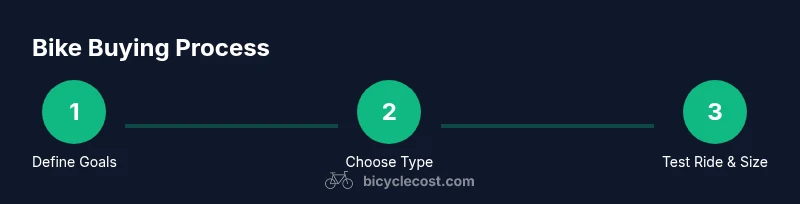
- 1
Define riding goals
Clarify how you’ll use the bike most often (commuting, fitness, weekend rides). This guides the bike type, transmission, and riding position. Write down typical distances, terrains, and weather you’ll encounter to anchor your search.
Tip: A precise goal shortlists two bike types and saves time during shopping. - 2
Choose 1–2 bike types
Select the top two bike families that match your goals (e.g., hybrid and gravel, or road and mountain for mixed terrain). Compare their geometry, weight, and durability. Remember, the goal is to maximize comfort and efficiency for your usual routes.
Tip: Don’t chase multiple trends at once; pick the best fit for your daily needs. - 3
Size the frame and test reach
Measure inseam and torso length, then translate to a frame size per manufacturer charts. During a test ride, ensure the saddle height allows a slight knee bend and that your reach isn’t excessive.
Tip: Ask the shop to help with a 5–10 minute test ride focusing on fit. - 4
Evaluate components and brakes
Prioritize a reliable drivetrain and dependable braking system. For beginners, a user-friendly 2x9/2x10 drivetrain or hydraulic discs offer a good balance of maintenance and performance.
Tip: If unsure, choose a bike with easier-to-find spare parts in your area. - 5
Budget for basics and safety
Set aside funds for essential gear: helmet, lights, lock, pump, and spare tube. These items dramatically increase safety and reliability.
Tip: Budget smartly by prioritizing safety gear before cosmetic upgrades. - 6
Plan a local test-ride strategy
Visit two or three shops to compare fit and feel. Ask for a longer test ride if possible to experience real-world riding conditions.
Tip: Take notes on fit, comfort, and any pinch points during the ride.
People Also Ask
What is the best bike type for a beginner?
For most new riders, a versatile hybrid or gravel bike offers balance between comfort and efficiency. If you mostly ride on pavement, a road bike could be an option, but hybrids tolerate mixed surfaces better for beginners.
For beginners, a versatile hybrid or gravel bike is usually the best starting point; it combines comfort with practical performance.
How do I know my frame size without trying every model?
Use your inseam and torso measurements to check the manufacturer’s size chart. A quick test ride helps confirm comfort and reach; sit on the saddle and ensure your knee has a slight bend at the bottom of the pedal stroke.
Start with the size chart, then test ride to confirm comfort and reach.
Should I buy a new bike or a used one?
New bikes come with warranties and latest components but at higher prices. Used bikes can save money if you buy from a reputable source and inspect for wear, rust, and hidden damage. Always get a pre-purchase inspection if possible.
Used bikes can be a good value if you inspect carefully, but new bikes give you warranty and the latest tech.
How much should I budget for maintenance?
Budget for annual tune-ups, tire replacements, and occasional parts. A practical approach is to set aside a small monthly amount for maintenance so you aren’t surprised by larger bills.
Plan for regular tune-ups and tire replacements as part of your yearly biking budget.
What accessories are essential for new riders?
Helmet, lights, a good lock, pump, spare tube, and a patch kit are essential. Consider fenders and a rack for city riding and commuting in poor weather.
Start with safety gear like a helmet and lights, then add a lock and pump for day-to-day riding.
Watch Video
Quick Summary
- Define your riding goals before shopping
- Choose top 1–2 bike types that fit terrain
- Prioritize fit, comfort, and drivetrain reliability
- Test ride with gear to simulate real use
- Budget for safety gear and essential maintenance