How to Deal with a Hard Bike Seat: A Practical Comfort Guide
Learn practical steps to relieve saddle discomfort. Diagnose causes, adjust height and tilt, test padding options, and refine your riding position for lasting comfort. This BicycleCost guide covers fit, padding, and safety for a smoother ride.


You’re looking to improve comfort when your ride feels harsh. This guide shows you how to deal with a hard bike seat by diagnosing fit, testing padding, and adjusting the saddle setup. You’ll learn hands-on tweaks you can try today plus when to seek a professional fit. From height and tilt to padding options and riding posture, these steps help you ride longer with less pain.
Why a hard bike seat happens
If you’re asking how to deal with a hard bike seat, you’re not alone. The reason most riders experience pain isn’t simply that the saddle is 'hard'; it’s that it isn’t supporting your sit bones or distributing pressure evenly. According to BicycleCost, persistent saddle discomfort often stems from a combination of fit, padding, and riding position rather than pure seat firmness. A mismatch between your sit bone width and the saddle width creates localized pressure that radiates into the thighs and lower back. Likewise, a seat that's too high forces your pelvis to rock, concentrating pressure on the perineal tissues or sit bones. A seat that's tilted too far forward can compress soft tissue; too far back shifts weight onto the tailbone and the rear of your thighs. Material matters, too: a stiff shell transfers shock more directly, while overly soft padding can create saddle sag that increases pressure in the wrong spots. Understanding these dynamics helps you pick concrete tweaks rather than vague hopes.
Quick fixes you can try right now
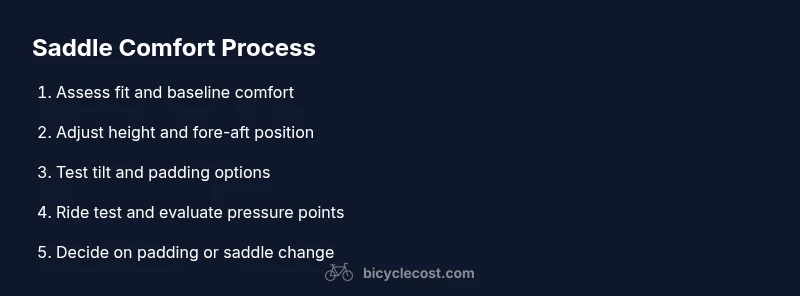
Here are immediate adjustments you can try during a ride or a training session. Start with a quick triage: re-check saddle height, adjust tilt, and test padding alternatives. If pain persists, document where you feel pressure to guide tweaks. Examples of practical tweaks:
- Check saddle height: a seat too high or too low shifts where pressure lands. Small changes (1–2 mm) can make a big difference. If you feel knee pain or hip rocking, reassess height first.
- Adjust tilt: a slight tilt backward can relieve front pressure; a forward tilt may worsen pressure on soft tissue. Make incremental changes and test for 10–15 minutes each.
- Explore padding options: gel inserts, memory foam saddles, or thin seat pads under cycling shorts can alter pressure distribution without changing the saddle itself. Try one option at a time to isolate effects.
If you ride aggressively or spend long hours in the saddle, consider experimenting with a combination of height, tilt, and padding over several rides to identify your optimal setup.
How to test saddle softness and padding
Testing padding and softness is about controlled trials. Start with a known-good shorts layer and a single padding insert. Ride for 15–20 minutes on varied terrain to feel how pressure shifts. Compare against your baseline: note if the sit bones feel evenly supported, if the perineal area remains comfortable, and whether numbness or tingling occurs. If padding causes hot spots, try a different density or a different location (under the sit bones rather than under the entire seating area). Remember that padding isn’t a cure-all; it’s a tool to modify pressure distribution and comfort during longer rides. Keep a simple log of pad densities tried and their effects on comfort.
Choosing the right saddle for your riding style
The saddle that feels comfortable on short spins might fail on longer rides. Start by considering your riding style: road, mountain, gravel, or commuting all demand different balance, support, and cutouts. A saddle should offer adequate width to support the sit bones, a shape that minimizes soft-tissue pressure, and rails and shell materials that suit your riding weight and stiffness tolerance. If you have a recent change in riding distance or posture, you may need a different saddle with a wider/narrower profile or increased rear support. When selecting, consider a sit-bone width measurement (via a professional fitter or DIY method) and compare it to saddle width recommendations. A good fit reduces the chance of ongoing pain and encourages consistent training miles.
Pad options: pros and cons
Pad options can dramatically influence comfort. Gel pads provide initial cushioning but can compress under long rides, which might lead to reduced support. Memory foam gives longer-lasting contouring but can feel firm for some riders. Foam inserts are lightweight and versatile but vary in density. For hot climates, breathable padding and moisture-wicking fabrics reduce skin irritation. A common strategy is to pair a saddle with a minimally padded cover or a moderate-density insert placed under the sit bones. Avoid stacking multiple pads that can raise the seat height and disrupt your alignment. Test pads one at a time and track how your sit bones and soft tissue respond during rides.
Saddle position and riding posture
Even a great saddle can feel harsh if your riding posture isn’t aligned. Ensure your saddle height allows a slight knee bend at the bottom of each pedal stroke, and that your hips aren’t tilting excessively forward or backward. A neutral pelvis helps distribute weight evenly and reduces hotspots. Adjust fore-aft position (setback) to align your knee over the pedal axle when the crank is horizontal. Small shifts—1–2 cm—can change pressure distribution. If you ride in aggressive aero positions, you may require a different saddle shape or a lower overall saddle height to avoid excessive pressure on soft tissues.
Shorts, chamois, and care
Quality cycling shorts with a properly sized chamois can significantly affect comfort, often more than padding alone. Ensure the chamois thickness matches your riding distance and riding style. Wash and dry shorts according to manufacturer guidance to preserve padding density. Avoid rough fabrics or abrasive seams that can cause chafing. For sensitive skin, consider fabrics with moisture-wicking properties and anti-microbial finishes. Regularly inspect padding for wear or compression, and replace worn chamois promptly. Proper laundry habits reduce friction and improve repeat comfort across rides.
When to seek professional fitting and what to expect
If discomfort persists after several tweaks, a professional bike fit can identify subtle misalignments in leg length, pelvic tilt, or saddle orientation that affect sit-bone pressure. A fitter may measure your sit-bone width, analyze your hip/knee alignment, and recommend a saddle model or a custom insert. Expect a staged process: initial assessment, dynamic riding analysis, adjustments to saddle height/position, and follow-up checks. A fit often reveals cues you wouldn’t notice on your own, such as a minor setback change that yields major comfort gains. If pain continues despite a good fit, a different saddle shape or a specialized fit with a pressure map may be warranted.
Maintenance and long-term comfort plan
Create a simple, recurring routine to maintain comfort: re-check saddle height, tilt, and fore-aft alignment every 1–2 weeks during training blocks; inspect padding density monthly; and document comfort levels after each ride block. Small, periodic tweaks can prevent gradual discomfort from turning into injury. If you switch saddles or padding, re-test for 2–3 rides to confirm the new setup works across different terrains and distances. A proactive approach keeps you riding longer with less pain.
Tools & Materials
- Allen wrench set (4mm, 5mm, 6mm)(For seat clamp bolts and rail adjustments)
- Measuring tape(For sit-bone width estimation and setback checks)
- Saddle padding options (gel, memory foam, foam insert)(Test densities without committing to a full replacement)
- Chamois shorts(Quality padding helps accurate testing)
- Saddle cover or thin pad(Temporary comfort layer for quick tests)
Steps
Estimated time: 60-120 minutes
- 1
Assess baseline comfort and setup
Record how the seat feels on a typical ride: areas of pressure, numbness, or pain. Note the duration and terrain. This baseline helps you measure improvement after adjustments.
Tip: Take notes on pain location to tailor tweaks later. - 2
Check saddle height
Ensure your leg has a slight bend at the bottom of the pedal stroke. A seat too high or too low shifts pressure away from the sit bones and can worsen discomfort.
Tip: Make micro-adjustments (1–2 mm) and test for 10–15 minutes each. - 3
Adjust saddle tilt
Tilt affects pressure distribution. Slight backward tilt reduces frontal pressure; forward tilt can help if you feel pressure in the perineal area. Make conservative changes.
Tip: Change tilt in small increments and ride briefly to gauge effect. - 4
Test fore-aft position (setback)
Move the saddle forward or backward to align your knee over the pedal axle and balance weight between sit bones. This can dramatically alter pressure points.
Tip: Only move small amounts (1 cm) at a time and ride to test impact. - 5
Try padding options
Introduce one padding option at a time (gel pad, memory foam, etc.) and evaluate comfort over 15–20 minutes of mixed riding.
Tip: Avoid stacking pads; this can raise height and worsen posture. - 6
Assess posture and core engagement
A strong core supports pelvis and reduces unwanted movement that increases pressure. Strengthen posture through drills and consistent core work.
Tip: Engage core without tensing shoulders; keep shoulders relaxed. - 7
Re-test with different shorts and chamois
Switch to a different chamois density and test again. Some riders respond better to specific densities or fabrics.
Tip: Choose moisture-wicking fabrics to reduce friction. - 8
Consider a saddle change
If adjustments fail to relieve pressure, explore saddle shapes and widths. A different silhouette can dramatically improve comfort.
Tip: Choose a few candidates and try them in-store or with a refundable online option. - 9
Schedule a professional fit if needed
When pain persists after 2–3 weeks of adjustments, a professional fit can identify subtle misalignments and recommend targeted solutions.
Tip: Bring your current setup details and riding goals to the fitter.
People Also Ask
Why does my saddle feel hard even when the padding seems fine?
Feel can result from poor fit, incorrect height, or pressure distribution rather than the seat's stiffness alone. Check sit-bone width, saddle width, and alignment first, then test padding adjustments.
Discomfort often comes from fit and pressure points rather than stiffness. Start with height, tilt, and saddle width before changing padding.
Can padding alone fix most discomfort?
Padding can help, but it’s rarely the sole solution. It should complement a proper fit and position. If pain persists after padding trials, reassess saddle size and position.
Padding helps, but a good fit is usually the bigger fix. If pain continues, consider saddle geometry and height.
Is it okay to ride with no padding?
Riding without padding is not recommended for most riders, especially on longer rides. Bare skin increases friction and risk of chafing. If you try it, limit tests to very short durations.
Riding without padding can irritate skin and increase friction. Test cautiously if at all.
How long should testing tweaks take before I decide?
Give each major tweak at least 2–3 rides to assess its effect across different terrains. Short tests can be misleading; longer rides reveal true comfort.
Give each change a couple of rides to see its impact.
What if pain radiates to the pelvis or genitals?
Persistent pelvic or genital pain needs medical evaluation in addition to bike fit. Stop riding if symptoms worsen and seek professional guidance.
If pain persists, stop riding and consult a clinician along with bike fit.
When should I replace my saddle?
Consider replacement if the saddle is visibly worn, if padding has degraded, or if no adjustments relieve pressure after thorough testing.
Replace if wear is evident or adjustments don’t help after thorough testing.
Watch Video
Quick Summary
- Identify pressure hotspots before making changes
- Fine-tune height, tilt, and setback in small steps
- Test padding options one at a time for accurate results
- A professional fit is worth it if pain persists
- The BicycleCost team recommends a measured approach to saddle comfort