How to Make Your Bicycle Seat Comfortable: Step-by-Step Guide
Learn practical, expert-tested strategies from BicycleCost to improve saddle comfort. This guide covers saddle width, shape, height, tilt, padding, and test-riding tips for pain-free cycling.


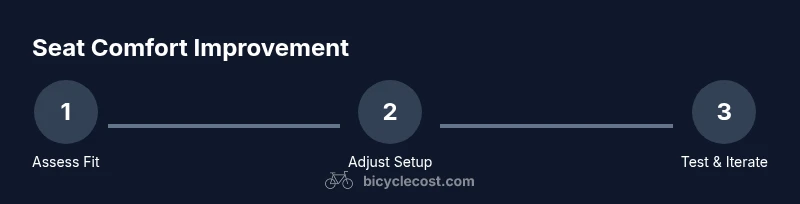
Goal: make bicycle seat more comfortable by optimizing saddle type and fit. You’ll adjust saddle height, tilt, and fore-aft position, choose a shape that matches your sit-bone width, and use padding or a breathable cover as needed. Core steps: evaluate current saddle, try an alternative with proper width, add padding or a seat cover, and test ride to refine alignment and comfort.
Understanding Seat Comfort: Why It Matters
Comfortable cycling starts with a saddle that fits your anatomy and a setup that respects your biomechanics. According to BicycleCost, seat comfort is a practical blend of saddle width, shape, and position, plus padding that suits ride duration. When your sit bones align with a saddle that matches your pelvic tilt, you reduce pressure points and numbness, especially on longer rides. In this guide we’ll translate those principles into clear, actionable steps you can apply to any bike—from a commuter to a road racer. You’ll also learn what not to overlook, like padding breathability, chafe prevention, and the impact of clothing and shorts on comfort. By focusing on fit and gradual adjustments, you can ride farther with less discomfort and more confidence.
Assess Your Sit Bones and Saddle Width
A saddle that’s too narrow concentrates pressure on soft tissue, while a saddle that’s too wide can cause chafing and awkward pedaling. Start by estimating your sit-bone width using a dedicated gauge or by reporting your experience to a bike shop for a professional sizing. If you already have a saddle, compare its width to your measured sit bones: it should be roughly 10-15 mm wider than your sits bones on each side to distribute weight evenly. Record your findings and set a baseline for future adjustments. This step is essential for choosing a saddle with the correct “sit bone pocket” shape, which reduces perineal pressure and improves overall comfort on long rides.
Saddle Shapes and Materials: Which Should You Pick?
Saddle shapes range from flat, long rails to curved, ergonomic cutouts. The best choice depends on sit-bone width, pelvic tilt, and riding style. Consider a saddle with a central cutout or relief channel if you experience numbness or pressure behind the perineum. Materials influence grip, weight, and cushioning: gel layers can feel plush but may compress over time, while foam cores preserve shape. Leather saddles last longer but require conditioning. For beginners, a mid-size saddle with a forgiving center channel often offers a good balance between support and flexibility. If you ride aggressively or frequently stand up, a firmer shell can support efficient power transfer without sacrificing comfort.
Fine-Tuning Position: Height, Tilt, and Fore-Aft
Saddle height affects knee extension and pedaling efficiency; tilt influences pressure distribution across the sit bones; fore-aft position aligns your hips with the crank. Start with a baseline height so your knee has a slight bend at the bottom of the pedal stroke. A level or slightly nose-down tilt can help reduce perineal pressure, but avoid excessive downward tilt which can cause sliding or calf strain. Fore-aft adjustment moves your weight toward the nose or the back of the saddle; small changes have large effects on comfort and knee health. Make minor adjustments and test ride after each change to gauge impact on pressure, numbness, and overall stability.
Padding, Covers, and Accessories
Padding and seat covers can provide a temporary or long-term boost in comfort. Gel pads under the seat or breathable, perforated covers reduce heat buildup and sweating. Avoid overly thick padding that disrupts pedal stroke or causes sliding. For many riders, a memory-foam or silicone-infused pad conforms to the body while maintaining stability. Be mindful of moisture management; choose padding with moisture-wicking fabrics and removable, washable covers. Keep demisting off the options by testing padding in short rides first, then integrating into longer sessions if warranted.
Foot Positioning and Pedaling Biomechanics
Seat comfort isn’t just about the saddle; it’s about how your hips, knees, and ankles align with the crank. A misaligned position can create added pressure on the hips and perineal tissues even with a well-chosen saddle. Ensure your feet remain flat on the pedals and your knees track over the crank arm during each pedal stroke. If you experience knee pain, consider slight fore-aft adjustments and check your cleat position. A small change in pedal position can reduce torque that transfers into discomfort on the sit bones.
Testing and Iterating: How to Know When You’re Done
Comfort improvements require careful, progressive testing. After each adjustment, ride for 15-20 minutes on a familiar route and note pressure points, numbness, tingling, or burning sensations. Record the changes in a notebook or app and compare them against your baseline. If discomfort persists after multiple adjustments (height, tilt, fore-aft, and padding), it may be time to re-evaluate saddle width or shape or seek a professional fit. Patience is essential; most riders require two to four adjustments to find the sweet spot.
Common Pitfalls to Avoid
Don’t rely on padding alone to solve fundamental fit issues. Padding can mask misalignment but won’t fix saddle width or geometry. Avoid extreme tilt or overly forward positions, which can lead to numbness, back strain, or knee stress. Rushing through steps without giving yourself enough test time often results in confusing results. Finally, neglecting shorts quality or chamois comfort can undermine any saddle-related improvements. Treat seat comfort as a combination of fit, padding, posture, and consistent practice.
When to Seek a Professional Fit
If you continue to experience discomfort after a structured trial-and-adjustment process, a professional bike fit is a wise investment. A qualified fitter will assess your flexibility, anatomy, and riding style and may recommend custom padding, a specialized saddle, or frame adjustments. Even frequent cyclists can benefit from a mid-season fit check to optimize power transfer and reduce fatigue. The goal is to minimize pain while maximizing efficiency and enjoyment on every ride.
Quick-Reference Troubleshooting Checklist
- Have you measured your sit bones and matched saddle width accordingly?
- Is your saddle height allowing a natural 25–35 degree knee bend?
- Are you maintaining a neutral pelvis with modest tilt and proper fore-aft alignment?
- Is padding breathable and appropriate for your climate and ride duration?
- Have you tested changes on short rides before committing to longer sessions?
Tools & Materials
- Saddle with appropriate sit-bone width(Choose width roughly 10-15 mm wider than sits bones on each side for even pressure distribution)
- Sit-bone width gauge(Optional, used to determine exact saddle width)
- Measuring tape(For baseline measurements and clamp height references)
- Allen/Hex wrench set(Adjust saddle clamp and rails safely)
- Padding options (gel pad, memory foam pad, breathable seat cover)(Test seasonally and for comfort variations)
- Chamois cream or anti-friction balm(Reduce chafing during longer sessions)
- Padding shorts or breathable cycling apparel(Supports comfort without adding bulk under clothing)
- Notebook or mobile app for ride logging(Record feedback after test rides)
Steps
Estimated time: 60-120 minutes
- 1
Assess baseline and take measurements
Measure your sit-bone width if possible and note your current saddle height, tilt, and fore-aft position. Record any pain points experienced during normal rides. This establishes your starting point for comparison as you test changes.
Tip: Take photos of your setup from the side and top to visualize alignment. - 2
Try a saddle with proper width
Swap to a saddle that matches your sit-bone width. If possible, test two or three options to find a better balance of support and freedom of movement.
Tip: Have a friend help with mounting and centering the new saddle to ensure proper alignment. - 3
Set saddle height
Adjust height so your knee has a slight bend at the bottom of the pedal stroke. Too high or too low can cause pressure shifts that lead to discomfort.
Tip: Perform a quick pedal stroke test on flat ground after adjustments. - 4
Tune tilt and fore-aft
Begin with a near-neutral tilt (slight downward tilt toward the nose) and small fore-aft adjustments. Small changes can significantly affect pressure distribution.
Tip: Record how each tilt/fore-aft change affects comfort after a 10–15 minute ride. - 5
Add padding or a breathable cover
If needed, introduce padding gradually. Ensure padding doesn’t push you forward or cause sliding during pedaling.
Tip: Prefer padding with moisture-wicking fabric for longer rides. - 6
Test ride and document
Ride 15–20 minutes on a familiar route and assess pressure points, numbness, or pain. Compare to your baseline notes and decide if further changes are needed.
Tip: Use a simple scoring system (0-5) for comfort after each ride. - 7
Iterate steps 2–6
Make incremental changes based on feedback. Avoid making multiple big changes at once; isolate the effect of each adjustment.
Tip: Limit changes to one or two variables per ride to understand impact clearly. - 8
Decide if padding is a long-term fix
If padding resolves most issues but seems temporary, you may benefit from a saddle with a better core shape or a professional fit.
Tip: Consider professional options if discomfort persists after several cycles of testing.
People Also Ask
Can I use any padding on any saddle, or do I need a specific combination?
Padding can help most saddles, but the best results come from matching padding to your saddle shape and riding duration. Use breathable, moisture-wicking materials and test gradually to ensure it doesn’t alter your pedaling posture.
Padding works for many saddles, but pick breathable materials and test gradually to avoid changing your pedal position.
What saddle width should I choose if I’m between sizes?
If you’re between sizes, opt for the wider option first to prevent pressure on soft tissues. You can micro-adjust with padding or fore-aft tweaks, but start with the correct width.
Choose the wider saddle first if you’re between sizes, then fine-tune with padding or position tweaks.
Is a professional bike fit worth it for comfort?
Yes. A professional fit evaluates your flexibility, posture, and riding style to tailor saddle choice, padding, and bike geometry, often reducing discomfort significantly and improving efficiency.
A professional bike fit can reduce discomfort and improve efficiency by tailoring saddle choice and bike geometry to you.
How long should I test a new saddle before deciding?
Give yourself several rides of increasing length—15 to 20 minutes for initial tests, then 30–60 minutes for longer sessions. Comfort should improve consistently across these tests.
Test over multiple rides, from short to longer sessions, to confirm comfort gains.
What’s a common sign that my saddle is not right for me?
Persistent numbness, tingling, or sharp pressure during or after rides typically indicates a saddle width or shape mismatch, or an improper tilt.
Numbness or persistent pressure suggests the saddle isn’t fitting properly; adjust width, shape, or tilt.
Watch Video
Quick Summary
- Assess sit-bone width before saddle choice
- Tune height, tilt, and fore-aft gradually
- Use padding as a supplement, not a fix
- Test rides reveal the true impact of changes
- Seek professional fit if persistent pain occurs