How to Deal with Bike Seat Pain
A practical, step-by-step guide to relieve bike seat pain through fit, saddle selection, padding, and riding posture. Learn practical tests, data-backed tweaks, and long-term strategies from BicycleCost.


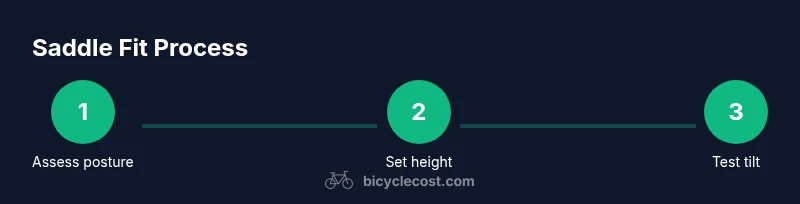
By the end of this guide, you’ll know how to identify seat-pain causes, choose the right saddle, and adjust your setup for comfort on longer rides. You’ll need a tape measure, adjustable saddle rails, and proper shorts. In 3 practical steps, you’ll learn a fit process that reduces pressure, prevents numbness, and keeps you pedaling longer. This quick answer sets you up for a deeper, data-backed approach from BicycleCost.
Understanding Bike Seat Pain
Bike seat pain is a common complaint among riders of all levels. It can show up as numbness in the perineal area, aching at the sit bones, chafing along the inner thighs, or general discomfort after long rides. The causes are often a combination of bike fit, saddle choice, clothing, and riding posture. The good news is that most seat-related pain responds well to adjustments in fit and padding rather than a costly saddle replacement. If you're wondering how to deal with bike seat pain, the first step is to review your fit, your saddle choice, and your riding posture. The BicycleCost team notes that small changes in setup can yield large relief over a few rides. According to BicycleCost, addressing fit issues first yields the most reliable reductions in pain. By applying the methods described here, you’ll be able to ride longer with less distraction from discomfort.
Common Causes of Saddle Discomfort
Discomfort isn’t only about the saddle you choose. Common causes include an incorrect saddle width that crowds soft tissue, a saddle height that places excess pressure on nerves, a forward-tilted or rearward-tilted saddle, and improper fore-aft position. Clothing choices and the posture you adopt on the bike also matter. Long rides amplify small issues, making what started as mild soreness become persistent pain. Understanding these root causes helps you target fixes efficiently. In practical terms, most riders experience relief by addressing fit first, then testing padding and saddle options. This approach aligns with BicycleCost’s emphasis on systematic testing and gradual changes to avoid new problems.
How to Assess Your Fit Right Now
Start with a quick self-check. With your bike level, sit on the saddle with your feet on the pedals and your hands on the bars. Your knee should have a slight bend at the bottom of the pedal stroke, and your pelvis should feel balanced—not tilted excessively forward or backward. Check your sit bone contact: you want even weight bearing on the saddle’s wide rear part. If you feel pressure on soft tissue or numbness during short test rides, you likely need a fit adjustment or a different saddle. For longer rides, log your discomfort and correlate it with small changes you make. This process helps you build a data-backed plan rather than relying on guesswork.
Step 1: Set Up Saddle Height Correctly
Set your saddle height so that your knee has a slight bend at the bottom of the pedal stroke, typically around 25-35 degrees of knee flexion when the crank is at the 3 o’clock position. A too-high saddle causes hip rocking, while too-low leads to knee stress. After initial setting, ride for 5-10 minutes on a flat stretch to feel for any pinch or numbness. If you notice pressure under the sit bones but not at the nerves, you’re on the right track. Small adjustments of 2-3 mm often yield meaningful relief over several rides. Pro tip: use the classic heel-to-pedal method for baseline height, then fine-tune while wearing the shoes you ride in most.
Step 2: Tune Saddle Tilt and Fore-Aft
Tilt and fore-aft position influence how weight shifts during pedal strokes. A slight nose-down tilt can reduce pressure on soft tissue but may increase knee pressure if overdone. Conversely, a nose-up tilt can lift you forward and cause more pressure on the perineum. Start with a neutral stance and adjust in small increments of 1-2 degrees or a few millimeters of fore-aft. After each small change, ride for 5-10 minutes to evaluate comfort. The aim is to find a balance where you feel evenly distributed weight across sit bones without numbness or sliding forward on the saddle.
Step 3: Choose and Test the Right Saddle
Saddle width and shape are critical. A saddle that’s too narrow concentrates pressure on the soft tissue; one that’s too wide can force you to adjust your hips unnaturally. When testing saddles, look for good sit-bone support, an appropriate cutout if you need it, and a profile that aligns with your riding style (recreational, endurance, or aggressive). If possible, test multiple saddles from the same family and compare notes across several rides. Keep a simple log: saddle model, height, tilt, and how your sit bones felt after 15 and 30 minutes. Once you identify a candidate, ride longer distances before finalizing.
Step 4: Optimize Bar Height and Pelvic Tilt
Bar height influences pelvic tilt and overall posture. A bar that’s too low can force you to drop your hips and lean forward, increasing pressure on sensitive areas. Conversely, a bar that’s too high may cause you to overextend, triggering new discomfort in the back or shoulders. Adjust handlebar height in small increments, then re-check your seating area during a brief ride. If hip rotation is excessive, consider a small crank-length change or slight shift forward on the saddle to improve pelvic alignment. The goal is to keep your pelvis stable and distribute pressure evenly.
Step 5: Padding, Shorts, and Lubricants
Padding and chamois can dramatically reduce friction and saddle-related irritation on long rides. Choose high-quality, breathable shorts with a contoured chamois that matches your sit-bone width. For new riders, a light application of chamois cream can reduce friction at first. Don’t rely solely on padding to cure poor fit—padding works best when paired with proper saddle height, tilt, and position. Lastly, ensure you hydrate and replace socks and shoes what you’d use for a longer ride; the overall comfort improves when your entire setup is consistent.
Step 6: Test, Log, and Revisit
After implementing fit changes, schedule rides of gradually increasing duration (15, 30, 45, and 60 minutes). Record how you feel in each ride: any numbness, pain point, or unusual pressure. If discomfort persists or shifts to new areas, revisit early steps and adjust again. It may take several sessions to converge on a pain-free setup. This iterative testing strategy aligns with BicycleCost’s emphasis on data-driven decisions and gradual tweaks rather than drastic one-shot changes.
Tools & Materials
- Tape measure(for saddle height and setback measurements (cm/in))
- Allen wrench set (4mm, 5mm)(to adjust saddle rails and clamp)
- Torque wrench (optional)(for carbon rails and precise torque per manufacturer)
- Padded cycling shorts(built-in chamois for reduced friction)
- Chamois cream (optional)(helps long rides; apply sparingly)
- Smartphone with ride-tracking app(log measurements and ride tests)
Steps
Estimated time: 60-90 minutes
- 1
Set Saddle Height Correctly
Position the saddle so your knee has a slight bend at the bottom of the pedal stroke. Use a quick test ride to confirm there’s no hyperextension or excessive knee bend. Small 2-3 mm increments are often enough to refine the height after an initial baseline.
Tip: Test ride on flat ground for 5-10 minutes before making further changes. - 2
Adjust Tilt and Fore-Aft
Fine-tune the saddle’s tilt first, then adjust fore-aft by a few millimeters at a time. After each adjustment, ride and note pressure points and comfort. Neutral alignment is typically most comfortable for a wide range of riders.
Tip: Make changes in increments of 1-2 degrees or a few mm; avoid large jumps. - 3
Evaluate Saddle Width and Position
If possible, compare two saddles with similar profiles but different widths. Ensure your sit bones are well-supported and that the edges don’t press on soft tissue. Log your sensation after 15 and 30 minutes to see which width feels best.
Tip: Choose a saddle with sit-bone support that matches your anatomy. - 4
Test Different Saddles (or Pads)
If you still have pressure hotspots, test a different saddle with a similar stiffness or a pad designed for long rides. Avoid mixing too many variables at once; change one factor at a time and test for a full ride.
Tip: Bring notes on each saddle’s fit and your comfort level. - 5
Optimize Bar Height and Pelvic Tilt
Adjust handlebar height in small increments to find a position that keeps your pelvis stable and reduces forward lean if it contributes to pressure. Recheck sit-bone contact after changes to ensure you aren’t overcompensating with your hips.
Tip: Keep your spine neutral and your core engaged during changes. - 6
Incorporate Padding and Lubricants
Pair your fit tweaks with comfortable padding and, if needed, chamois cream to reduce friction. Ensure padding doesn’t mask poor fit; padding is a support, not a fix for misalignment. Re-test across multiple miles and terrains.
Tip: Use padding designed for your riding style (endurance vs. casual).
People Also Ask
What causes bike seat pain?
Seat pain is usually due to fit or saddle selection, friction, and poor posture. Address fit first, then experiment with padding. If pain persists, consider a professional bike fit.
Seat pain is usually caused by fit or saddle choice and friction. Start with fit, then padding, and seek a professional fit if it continues.
How do I know if my saddle width is wrong?
If you feel pressure on soft tissue or numbness, the saddle may be too narrow or too wide. Compare sit bone contact with different widths and log how you feel after short rides.
Pressure on soft tissue or numbness often means the saddle width isn't right. Try different widths and test after rides.
Should I always wear padded shorts?
Padding helps reduce friction and improve comfort on longer rides, but it won’t fix fit issues. Use high-quality padding in combination with proper saddle setup.
Padding helps with comfort, but fit still matters. Use padding with proper saddle setup.
When should I see a professional fitter?
If pain persists after adjusting height, tilt, and saddle type, or if numbness continues across multiple rides, a professional fit can resolve underlying issues.
If pain doesn’t improve after your tweaks, seek a professional fit.
How long should I test a new saddle?
Test a new saddle over several rides, gradually increasing distance. Compare comfort levels and numbness across sessions before deciding.
Test a new saddle over several rides and note comfort and numbness before deciding.
Watch Video
Quick Summary
- Identify the pain type and adjust saddle height.
- Prioritize correct saddle width and tilt.
- Test and log changes over several rides.
- Combine fit adjustments with padding and posture.