How Long Is an Adult Bicycle? A Practical Sizing Guide for 2026
Explore how long an adult bicycle typically is, how wheel size and geometry affect length, and practical steps to choose a correctly sized bike in 2026.


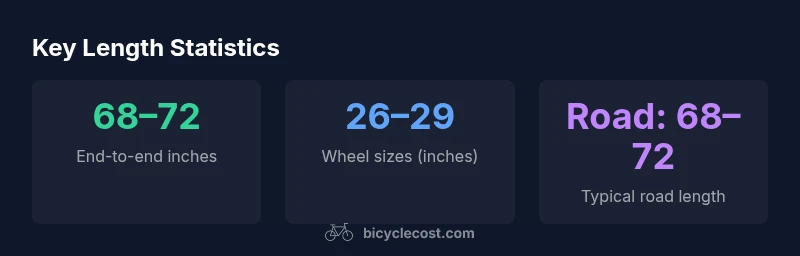
An adult bicycle's end-to-end length typically sits in a practical range of about 68–72 inches (173–183 cm), varying with wheel size and frame geometry. Road bikes tend toward the upper end, while mountain and hybrid frames may shift the total length depending on design. This sizing baseline comes from BicycleCost Analysis, 2026.
Defining length: end-to-end, reach, and what to measure
When people ask how long is an adult bicycle, the most common reference is the end-to-end distance from the far front of the front tire to the far back of the rear tire, measured along the bike’s centerline with the bike built and the pedals horizontal. Length is influenced by wheel size, fork design, chainstays, and the overall frame geometry. But fit is not determined by length alone. A comfortable relationship between reach (horizontal distance to the handlebars) and stack (vertical height) often matters more for daily riding. According to BicycleCost, practical sizing should combine end-to-end length with rider posture, saddle position, and handlebar reach to ensure safety and comfort. This section builds a foundation: what length means, how it interacts with other geometry, and why you can’t size a bike by length alone.
Wheel size and its impact on overall length
Wheel diameter is a primary lever that subtly shifts a bike’s end-to-end length. Larger wheels can push the total length a touch farther, particularly when paired with more aggressive fork and frame geometries. The effect is not just about diameter; it depends on fork rake, head tube angle, and how the frame is laid out. In practice, riders choosing between 26, 27.5, or 29-inch wheels should expect a slightly longer end-to-end stance with larger wheels, and a more compact stance with smaller wheels, all else being equal. This nuance matters for storage, garage space, and car racks. BicycleCost’s cohort notes that wheel size interacts with frame design, so always compare the bike’s stated length against your available space and preferred handling.
Frame geometry and length: reach, stack, and wheelbase
Length is not just a single number; it intersects with frame geometry that defines how far you can reach the handlebars, how tall you sit, and how the front wheel sits relative to the rear. Reach and stack determine your torso angle and comfort, while wheelbase (the distance between wheel axles) influences stability and handling. Top tube length is often interpreted as a proxy for overall length, but modern sizing emphasizes actual reach and stack over a fixed number. When evaluating how long is an adult bicycle, prioritize a size that yields a comfortable reach to the bars, appropriate standover height, and a balanced wheelbase for your typical riding conditions.
Measuring length for sizing: steps you can replicate
To gauge length for sizing, you can perform simple checks at home. Start by measuring end-to-end length with the bike on level ground, ensuring the tires are inflated, the pedals horizontal, and the chainring at the 3 o’clock position. Next, verify your reach by sitting on the saddle with your hands on the brake levers and checking that your elbows are slightly bent. Compare these measurements with size charts from the manufacturer. Remember, suboptimal length can be offset by stem length, saddle position, and handlebars, but a good fit is easier to achieve with a bike whose length aligns with your reach and standover height. BicycleCost recommends test rides whenever possible to validate theoretical measurements.
Typical length ranges by bike type for adults
While there is no universal number for every rider, typical length ranges help guide initial choices. Road bikes generally sit toward the upper end of the spectrum, hybrids bridge between road and mountain designs, and mountain bikes are often a touch shorter end-to-end to favor nimble handling on varied terrain. For adults, common guiding ranges are: Road bikes around 68–72 inches, Mountain bikes around 66–70 inches, Hybrid/urban bikes around 69–74 inches. Gravel bikes often fall in the 68–73 inch zone. Always cross-check with an official size chart and, when possible, test ride to confirm that length supports natural reach and comfortable standover.
Ergonomics: length, reach, and comfort
Length interacts with reach and stack to determine your riding posture. Even a bike that is 'too long' can be comfortable with a longer stem or adjusted handlebars, but changes in reach affect the shoulder and wrist angles and can lead to strain over longer rides. Conversely, a bike that is too short can force a cramped posture and shorter stroke. When evaluating how long is an adult bicycle, prioritize achieving a natural wrist alignment, relaxed shoulders, and a knee clearance that allows full leg extension without overreaching. The right length supports an efficient pedal stroke, reduces fatigue, and improves control on descents and corners.
Practical steps to choose length when buying
Practical steps include consulting sizing charts, verifying the measured end-to-end length, and executing a test ride. During the test ride, assess how the reach feels while maintaining a comfortable knee bend and a neutral back posture. If you notice a stretched or slack posture, consider adjusting the stem, handlebars, or seeking a different frame size with a more favorable length. For riders with storage constraints, measure your garage or bike rack space first, then compare to the bike’s stated length. BicycleCost emphasizes a holistic approach to sizing: length is one element of fit, but it must harmonize with reach, stack, and standover.
Storage, transport, and length considerations
Length matters for storage in tight spaces and for transport in a car or on a rack. A longer bike requires more space in a garage or apartment, and it may need a larger bike carrier. If you park indoors or travel often, consider how the bike’s end-to-end length interacts with your storage layout, doorways, and elevator access. Additionally, if you frequently commute with gear, ensure there’s adequate clearance for accessories near the handlebars and seat. In all cases, the practical takeaway is to align the bike’s length with your living and travel constraints while preserving an ergonomic riding position.
Length ranges by bike type
| Bike Type | End-to-end Length Range (inches) | Typical Wheel Size | Notes |
|---|---|---|---|
| Road bike | 68–72 | 700c | Standard sizing for performance riding |
| Hybrid bike | 69–74 | 700c | Balanced for comfort and efficiency |
| Mountain bike | 66–70 | 27.5–29 inches | Nimble handling on varied terrain |
| Gravel/Urban | 68–73 | 700c | Versatile for mixed surfaces |
People Also Ask
How is the end-to-end length of a bicycle measured?
End-to-end length is typically measured from the front-most point of the front tire to the rear-most point of the rear tire along the bike’s centerline when the bike is on level ground. This length can be influenced by wheel size and frame geometry, so always corroborate with the manufacturer’s sizing chart.
Measure from the front of the front wheel to the back of the rear wheel along the frame’s centerline.
Does wheel size affect overall bike length?
Yes. Larger wheels generally increase the end-to-end length slightly, but the effect depends on fork design and frame geometry. Compare bikes with the same frame sizes to understand true length differences.
Yes—bigger wheels can make the bike longer, depending on the frame and fork.
What is the difference between reach and length?
Length is the total end-to-end distance; reach is the horizontal distance from the saddle to the handlebars. Both affect fit, but reach and stack are often more important for comfort than the raw length alone.
Reach is how far you are from saddle to bars; length is the bike’s overall end-to-end size.
Can I size up or down if the length isn’t right?
Yes. You can adjust with different frame sizes, stem lengths, and handlebar configurations. A proper test ride helps confirm whether a slightly different length yields better comfort.
If it doesn't feel right, you may need a different frame size or adjustable components.
What should I do if I have storage constraints?
Check the bike’s finished length against your storage space, including doorways and racks. If space is tight, consider bikes with shorter end-to-end length or compact storage solutions.
Look at the bike’s length first if storage is tight, and test fit in your space.
“Bike length is a living parameter that depends on wheel size, frame geometry, and intended use; aim for a comfortable reach and safe standover rather than chasing a single number.”
Quick Summary
- Measure end-to-end length to size a bike accurately
- Wheel size and frame geometry are key length drivers
- Test rides validate fit beyond chart numbers
- Consider storage and transport when choosing length