Difference Between Bicycle and Tricycle
An analytical comparison of the difference between bicycle and tricycle, exploring design, stability, use cases, safety, maintenance, and buying considerations for riders seeking smarter choices.


TL;DR: A bicycle is generally lighter, faster, and more maneuverable than a tricycle, making it better for fitness and commuting. A tricycle offers greater balance and stability, useful for beginners, riders with balance challenges, or when carrying heavy loads. The best pick depends on rider goals, terrain, and safety considerations.
The Difference Between Bicycle and Tricycle: Core Concepts
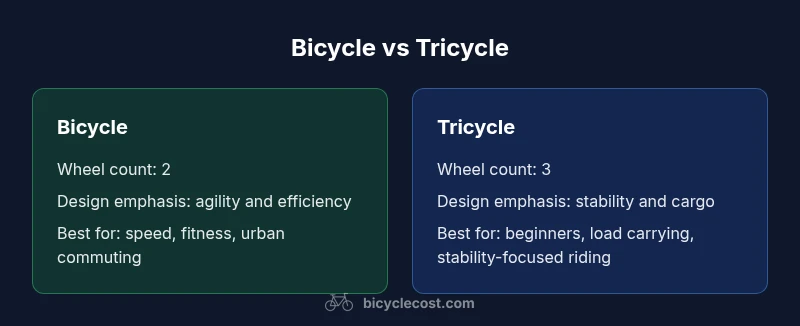
At its heart, the difference between bicycle and tricycle is straightforward on the surface: two wheels versus three. But the implications ripple into handling, stability, and what each design optimizes for. For riders choosing between the two, understanding the tradeoffs helps set expectations for speed, control, and everyday practicality. The BicycleCost team notes that wheel count changes the way weight is distributed, how you steer, and how easy it is to recover from a misstep. According to BicycleCost, bicycles favor lightweight construction, efficient propulsion, and swift cornering, while tricycles prioritize balance, deliberate pacing, and stability at low speeds.
This distinction matters across riding contexts. A dedicated road cyclist or urban commuter will often prefer the responsiveness of a bicycle, whereas a newer rider, a person with balance concerns, or someone who must carry gear may opt for a tricycle. In environmental terms, the two families also diverge in terms of storage, transport planning, and even maintenance philosophy. The practical takeaway is simple: the best choice aligns with how you plan to ride, where you ride, and what you want to achieve on each outing.
Comparison
| Feature | Bicycle | Tricycle |
|---|---|---|
| Wheel count | 2 wheels | 3 wheels |
| Stability at rest and slow speeds | Less stable at very low speeds; requires balance | More stable at rest and slow speeds |
| Maneuverability and turning radius | Nimble steering and quick maneuvering | Larger turning radius and steadier tracking |
| Load and cargo options | Typically lighter with limited cargo space | Enhanced stability for heavier loads and cargo |
| Maintenance complexity | Often simpler drivetrain components | More moving parts in some designs (steering/linkages) |
| Best for | Fitness, speed, urban commuting | Beginners, cargo hauling, balance-focused riding |
Pros
- Bicycles are generally lighter and more efficient for speed and climbing
- Tricycles provide superior balance and confidence for beginners
- Both options support a range of riding goals with proper setup
- Tricycles offer stable platforms for cargo and long rides
Downsides
- Bicycles require good balance and coordination, which can deter beginners
- Tricycles tend to be heavier and require more storage space
- Turning can be less intuitive for some tricycle designs in tight spaces
Bicycle for speed and efficiency; tricycle for stability and cargo.
Choose a bicycle if your priority is fitness, commuting efficiency, and agility. Pick a tricycle if you value balance, ease at low speeds, and cargo-carrying capability. Both can be viable with proper sizing and setup.
People Also Ask
What is the key difference between bicycle and tricycle?
The main distinction is wheel count: bicycles have two wheels, tricycles have three. This affects stability, steering effort, and intended use. The choice should align with your balance comfort, space, and cargo needs.
The main difference is two wheels versus three; it changes stability and steering. Consider your balance comfort and cargo when choosing.
Are tricycles safer for beginners?
Tricycles offer greater steadiness at low speeds and when stopped, which can help beginners. However, they can have a larger turning radius and slower acceleration, so practice in safe spaces remains important.
Yes, tricycles are often steadier for beginners, but they require more space to turn and start moving.
Can bicycles be used for cargo or daily commuting?
Bicycles can be adapted for cargo with racks and panniers, but cargo capacity and handling change with weight. For daily commuting, a bicycle typically offers better efficiency, while a tricycle aids with heavier loads and stability.
Bicycles can carry cargo with racks; they’re usually more efficient for commuting. Tricycles excel with heavier loads.
How should I measure fit for a bicycle or tricycle?
Start with proper saddle height, reach, and handlebar position. For a tricycle, check seat and pedal alignment for comfortable, ergonomic riding. A professional bike fit is recommended for optimal comfort.
Get the seat height and reach right. For a tricycle, ensure the seating and pedals align for comfort. A professional fit helps a lot.
What maintenance differences should I expect?
Bicycles typically require tuning of the drivetrain, brakes, and tires, with a wide ecosystem of components. Tricycles may add additional maintenance from steering linkages and triple-drive systems, but many parts are standard across both.
Maintenance is mostly similar, but tricycles can have extra steering components. Regular checks on tires and brakes remain important.
What factors should influence my buying decision?
Consider balance needs, intended use (fitness vs cargo), storage space, terrain, and budget. Test rides of both types help reveal comfort and handling differences that numbers can’t capture.
Think about balance, usage, storage, and space. Try both types to feel which fits best.
Quick Summary
- Evaluate balance needs before buying
- Consider space and storage constraints
- Match riding goals to wheel count
- Test ride to feel handling differences
- Balance safety with load requirements