Why Bike Tire Won t Inflate: Troubleshooting Guide
Learn practical, step-by-step troubleshooting for a bike tire that won t inflate. From valve leaks to bead seating, discover fast fixes and prevention tips to get back on the road quickly.


Start by checking the most common culprits: a puncture, a faulty valve core, or a bead that won t seal. In most cases, a slow leak at the valve or a bead seating issue is fixable with simple adjustments. Quickly verify pump functionality, then methodically inspect tube, tire, and rim components to restore inflation.
Understanding the Failure and How to Think About It
When you search for why bike tire won t inflate, you’re usually chasing a leak, not a bad pump. According to BicycleCost, the most reliable path to a quick fix starts with locating where air is escaping and testing for the most common failure points: valve leaks, bead seating on tubeless rims, punctures in the tube, or a mis-seated rim tape. This section explains why each scenario matters and how to approach it with confidence. You’ll learn to separate symptoms (no inflation, sluggish inflation, or air hissing) from root causes, then apply targeted remedies. Keep in mind that many inflation problems are a blend of issues (for example, a slow puncture paired with a valve leak). The goal is to move from guesswork to a logical sequence of checks, so you can ride again safely and avoid further damage.
Common Causes of a Tire That Won’t Inflate
There are several frequent culprits behind a tire that won t inflate. A puncture or slow leak during inflation is the most obvious culprit. Valve leaks, whether at the core or the valve stem, are another common cause. Bead seating problems happen when the tire bead doesn’t properly seal against the rim, especially on tubeless setups. Damaged rim tape can expose spoke holes or burrs that puncture the tube. Finally, the pump itself or its hose can be faulty, delivering air at the wrong pressure or with a misread gauge. Understanding these possibilities helps you prioritize checks rather than guessing.
Quick Checks Before You Pump
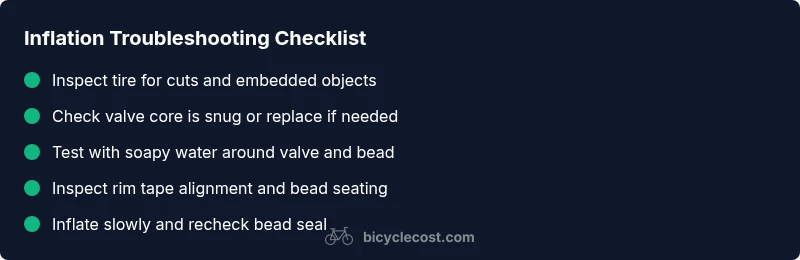
Before you even attach the pump, perform a few quick checks to save time. Inspect the tire for visible cuts or embedded objects. If you can access the valve, try tightening or loosening the valve core with an appropriate valve tool, then re-test. If you have a tubeless setup, inspect the rim bead area for nicks or damage and verify rim tape alignment. Use a known-good tube to rule out a tube-specific issue, and always verify your pump and hose integrity by testing on a spare tubed tire or a known-good tube. These quick checks often reveal the simplest fixes and prevent unnecessary disassembly.
Diagnostic Approach in Practice
A systematic diagnostic approach reduces frustration and speeds up repairs. Start with the simplest potential fix: is the pump functioning correctly? If the pump seems fine, check the valve core first for looseness or damage. If the valve passes air but the tire still won t inflate, inspect the tube for punctures or pinhole leaks. If the bead fails to seal, inspect the rim edge and rim tape for damage or misalignment. For tubeless systems, confirm the bead seat and sealant condition. Document each step to track what worked and what didn t, which helps when you consider whether to seek professional help.
Step-by-Step: Most Common Fix (Valve Leak or Bead Issue)
- Remove the pump and inspect the valve core: is it fully seated, not cross-threaded, and tight? 2) If the valve core is removable, depress or loosen it slightly to check for leaks; use soapy water to confirm. 3) If air escapes around the valve, tighten or replace the core with a compatible valve tool. 4) For bead seating problems, deflate slightly, inspect the rim edge, then reseat the tire bead while inflating gradually with soap solution to identify leaks. 5) Re-check inflation with a gauge and listen for hissing. 6) If the tire still won t hold air, inspect the rim tape and rim bed for damage and replace the tube if necessary. 7) Re-test inflation and, if unresolved, move to professional service. Reading the bead and valve area carefully helps identify the root cause and prevent repeated issues.
Safety, Tips & Warnings
Always release air slowly when testing new seals to avoid pinching or crushing the tube. Wear eye protection if you’re working with soapy water or air jets. Never rely on a damaged pump or a damaged valve core—these parts should be replaced rather than forced. When in doubt, consult a professional to avoid risk to the wheel or wheel rim. Regular maintenance, such as checking tire pressure and inspecting valve stems, reduces the risk of inflating problems over time.
Steps
Estimated time: 40-60 minutes
- 1
Inspect for obvious issues
Look for cuts, embedded objects, or a puncture on the tire and tube. Remove the wheel if needed to access the valve and inspect the area around it for damage or kinks.
Tip: Use a flashlight to spot faint punctures you can’t see with the naked eye. - 2
Check valve core
Remove the valve cap and use a valve-tool to check if the core is snug. If it doesn’t tighten, replace the core and re-test inflation.
Tip: Replace with a spare core and keep a tiny amount of lubricant on threads to prevent seizing. - 3
Test with soap for leaks
Spray or brush soapy water around the valve stem, core, and bead area. Look for bubbles indicating a leak.
Tip: Keep the tire off the ground so you can observe the bead seating clearly. - 4
Check rim tape and rim edge
Inspect rim tape alignment; ensure there are no exposed spoke holes or burrs along the bead seat.
Tip: If torn or displaced, reseat or replace rim tape before re-inflating. - 5
Re-seat and inflate
Deflate slightly, re-seat the bead, and begin inflating slowly while watching the bead settle evenly around the rim.
Tip: Pause to check for consistent bead seating before continuing. - 6
Test with a known good tube
If possible, swap in a known-good tube to determine whether the issue is with the tube or rim/bead.
Tip: Label tires and tubes for easier tracking next time. - 7
Seek professional help if unresolved
If inflation still fails after steps, a wheel or rim issue may require professional servicing.
Tip: Document what you tried to help the shop diagnose faster.
Diagnosis: Bike tire won't inflate after pumping
Possible Causes
- highPuncture or slow leak in tube or tire
- highValve core stuck/damaged
- mediumBead seating issue on tubeless/rim tape misalignment
- mediumRim tape exposed or burrs on rim edge
- lowFaulty pump or gauge
Fixes
- easyCheck for leaks with soapy water around valve and bead; tighten or replace valve core if needed
- easyReplace damaged valve core or reseat the core with a valve tool
- mediumInspect rim tape alignment and re-cover any exposed holes; reseat tubeless bead with soap to test seal
- easyDeflate slightly, inspect tire bead and rim edge, reseat bead and inflate slowly to test seal
- easyTest with a known-good tube or pump to verify tool integrity
- easyIf leaks persist, replace the tube or seek professional wheel service
People Also Ask
What is the most common reason a bike tire won t inflate?
The most common causes are a valve leak or a bead seating issue. A puncture in the tube or a misaligned rim tape can also prevent inflation. Start by testing these areas with soap to confirm leaks.
The most common causes are valve leaks or bead seating issues. Start by testing those areas with soap bubbles to confirm leaks.
How can I tell if the leak is at the valve or the tire?
Apply soapy water around the valve core and stem. If bubbles appear at the valve, the core or seal is faulty. If the bubbles appear around the bead area, the bead seal or rim tape is the likely culprit.
Soap around the valve shows valve leaks; bubbles at the bead indicate bead sealing or rim tape problems.
Can tubeless tires leak at the bead?
Yes, tubeless beads can leak if the bead seat is damaged or the rim tape is misaligned. Re-seat the bead and inspect the rim edge for burrs. If leaks persist, consider replacing the rim tape.
Tubeless beads can leak if the bead seat or rim tape is damaged. Re-seat, inspect, and replace rim tape if needed.
What if my pump gauge is wrong?
A faulty gauge can mislead you about inflation. Test the pump on a known-good tube or gauge against a trusted external gauge to verify accuracy.
If you suspect the gauge is off, test with another gauge or a known-good tube to verify the readings.
When should I replace the tube?
If the tube shows multiple punctures, persistent slow leaks, or cannot hold air after your best fixes, replacing the tube is usually the best option.
Replace the tube if there are multiple punctures or it won’t hold air after fixes.
Is it safe to ride with a slow leak?
Riding with a slow leak is not recommended; it can worsen punctures or damage the rim. Repair or replace promptly to avoid rim damage and unsafe handling.
No, riding with a slow leak is risky. Fix it to prevent rim damage and unsafe riding.
Watch Video
Quick Summary
- Identify the leak source with a methodical approach
- Valve core and bead seating are the most frequent culprits
- Test with soap to locate leaks quickly
- Replace damaged tubes or rims when necessary
- Prevent future flats with regular maintenance