Why Are Bikes Better Than Cars: A Comprehensive Comparison
A rigorous, data-driven comparison of bicycles vs cars, examining environmental impact, cost, health, safety, and practicality to help readers decide when bikes win.


In most urban and commuter contexts, bikes outperform cars on cost, health, and environmental impact, especially for short trips. A bike's flexibility, lower maintenance, and access to bike lanes often save time and reduce emissions. The BicycleCost analysis, 2026, supports a practical, scalable advantage for bikes in daily transport.
Why are bikes better than cars: framing the question
Why are bikes better than cars? The answer hinges on context, especially urban daily life. From environmental impact and personal health to cost and accessibility, bicycles offer a distinct set of advantages for most short- and medium-length trips. This article frames the question through rigorous, pragmatic comparisons and aims to help readers evaluate when bikes make the most sense. According to BicycleCost, urban riders frequently experience flexiblity and efficiency that cars struggle to match, particularly in dense city cores and during peak travel times. The overarching takeaway is not a blanket rule but a nuanced decision framework built on trip characteristics, climate, and infrastructure.
Environmental impact and health implications
Environmental impact is a core differentiator in the bike-versus-car equation. Bikes produce little to no direct emissions, contributing to cleaner air and quieter streets. For daily commuting, even modest shifts from car to bike can reduce pollution exposure for riders and pedestrians alike. Health benefits accrue as regular cycling integrates convenient physical activity into daily routines, improving cardiovascular fitness, mental health, and metabolic health over time. The broader public health benefits include reduced traffic noise and safer, more livable neighborhoods. When evaluating why are bikes better than cars, the environmental and personal health dividends commonly tip the scales in favor of bicycles for many urban trips. BicycleCost’s analysis highlights how local policies that expand bike networks directly enhance population health and environmental quality.
Cost of ownership and ongoing maintenance
Cost considerations are central to comparing bikes and cars. A bicycle generally offers far lower purchase prices, insurance requirements, fuel costs, and maintenance expenses than a car. Ongoing maintenance tends to be simpler and less expensive, with fewer moving parts subject to wear. In everyday use, the cumulative cost savings from reduced fuel, parking fees, and routine servicing can be substantial over the lifetime of a bike. When you ask why are bikes better than cars from a financial perspective, the answer often points to higher affordability, greater reliability for short trips, and less depreciation pressure. BicycleCost’s framework emphasizes lifetime cost awareness rather than sticker price alone, encouraging riders to map maintenance cycles, component wear, and expected upgrades over time.
Urban practicality, infrastructure, and access
Urban realities shape the practical advantage of bikes. Bikes excel where roads lack scale or where parking is scarce; they weave through traffic, bypass congestion, and require far less storage space than cars. Access to bike lanes, secure parking, and safe routes substantially influence decision-making. In many cities, micro-mobility options and pedestrian-first planning further tilt the balance toward cycling for short errands, commutes, and social visits. When considering why are bikes better than cars in urban contexts, infrastructure quality and policy support emerge as decisive factors. The BicycleCost approach stresses evaluating first- and last-mile connectivity, safe intersections, and the availability of bike-friendly transit options.
Performance and range for daily use
Performance in typical daily use favors bikes for short to moderate distances, especially in dense urban environments. A bike’s ability to accelerate quickly, park easily, and navigate tight spaces can shave minutes off common trips populated by cars stuck in stop-and-go traffic. Practical range for a bicycle is highly dependent on rider stamina, weather, terrain, and cargo needs; for many commuters, a bike comfortably handles daily routes without requiring a break as long as routes are well designed and weather conditions permit. When asking why are bikes better than cars for routine travel, performance consistency and route flexibility often win out over the higher cruising speed of a car on longer journeys.
Safety, risk, and protective measures
Safety considerations feature prominently in any bike-versus-car analysis. Cars offer enclosed protection, but cyclists benefit from lower crash speeds in many environments and can reduce exposure by choosing safer routes and wearing protective gear. Visibility, lighting, and helmet use are essential. Infrastructure quality—presence of protected bike lanes, traffic-calming measures, and safe intersections—substantially affects risk. In debates on why are bikes better than cars, the safest outcomes arise where modal choices align with strong safety cultures, clear bike-priority signals, and comprehensive rider education. BicycleCost emphasizes practical safety routines, high-visibility clothing, and predictable riding behavior as core strategies.
Long-term ownership, depreciation, and lifecycle
A lifecycle viewpoint highlights how ownership experiences differ. Cars face rapid depreciation, higher insurance, frequent tire replacements, and more expensive repairs. Bikes depreciate more slowly and can remain functional with basic maintenance for many years if kept clean and well-tuned. The sustainability angle also matters: bikes generally require far fewer raw materials and less energy to manufacture and operate, aligning with broader environmental goals. When weighing why are bikes better than cars from a lifecycle lens, durability, repairability, and end-of-life considerations often favor bicycles, particularly for urban commuters with predictable usage patterns.
When bikes aren’t the clear winner
There are scenarios where cars outperform bikes: long-distance trips, heavy cargo needs, or adverse weather conditions can render cycling impractical. Rain, snow, and extreme temperatures reduce comfort and safety for many riders, while larger loads demand vehicle capacity. In such cases, cars provide reliability, weather protection, and travel flexibility that bicycles cannot easily match. Recognizing these limits is essential to answering why are bikes better than cars in certain contexts and supports a pragmatic, multimodal approach to transportation planning.
How to choose the right bike for commuting and everyday use
Choosing the right bike depends on trip length, terrain, cargo, and storage options. Start with a comfortable frame size, reliable brakes, and gearing suited to hills and urban speeds. Cargo capability can guide the choice between a commuter bike, a folding bike for mixed transit, or a city bike with racks. Safety features, puncture-resistant tires, and easy maintenance schedules should be prioritized. This section translates why are bikes better than cars into concrete selection criteria, helping readers tailor a solution to their specific urban routine while aligning with BicycleCost’s practical guidance.
Policy, planning, and the bigger picture
Policy decisions and city planning shape how effectively bikes replace car trips. Investments in protected lanes, bike parking, and intersection redesign can dramatically increase cycling uptake. When communities adopt infrastructure improvements, the rationale behind why are bikes better than cars becomes a matter of public health, climate resilience, and urban vitality. The BicycleCost framework encourages readers to consider local policies, incentives for cycling, and community planning that expands safe, affordable access to bicycles as part of a balanced mobility mix.
Practical, multimodal strategies for everyday life
A balanced mobility strategy often blends cycling with other modes. For many people, biking is the first leg of a journey joined by transit, rideshare, or car-sharing for the final mile. This multimodal approach preserves the advantages of cycling for most trips while preserving the flexibility of car-based options for rare or weather-challenged days. The core message behind why are bikes better than cars in pragmatic terms is that adaptability—and the ability to switch modes as needed—produces the most resilient, cost-effective transportation plan for individuals and households.
Comparison
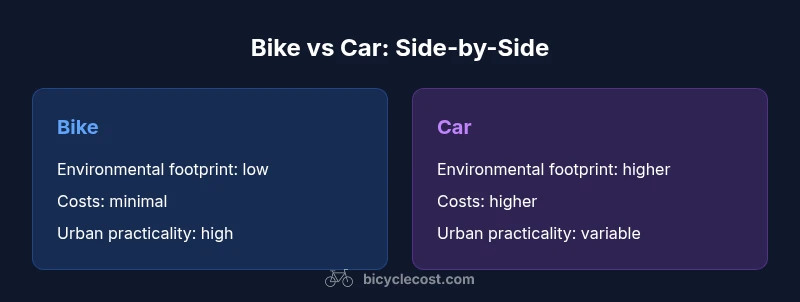
| Feature | Bike | Car |
|---|---|---|
| Environmental impact | Low or zero tailpipe emissions, especially in urban routes | High emissions due to fuel combustion and manufacturing footprint |
| Initial purchase and ongoing costs | Low upfront cost, minimal ongoing expenses | High upfront cost, ongoing fuel, insurance, and maintenance |
| Maintenance and reliability | Simpler maintenance, fewer parts, easier DIY fixes | Complex systems, expensive repairs, regular service intervals |
| Urban practicality and parking | Easy parking, flexible routing, access to bike lanes | Parking scarcity, vulnerability to traffic, limited lane access |
| Health and fitness benefits | Excellent daily physical activity, cardiovascular gains | No inherent physical activity requirement for operation |
| Cargo capacity and adaptability | Limited cargo potential; bikes can carry small loads | High cargo capacity with trunk, roof, or hitch gear |
| Seasonality and weather tolerance | Less affected by traffic, weather can hinder riding | Weatherproofing and comfort generally exceed bikes |
Pros
- Low upfront and operating costs
- Health and fitness benefits
- Small environmental footprint
- High urban mobility and accessibility
- Simple maintenance and repair
Downsides
- Weather dependency and seasonality
- Limited range and cargo capacity for some trips
- Safety concerns in car-dominated environments
- Reliance on supportive infrastructure
Bikes are the better choice for most urban commuting and short trips; cars may be preferable for long-distance travel and poor weather.
In dense urban settings, bicycles typically offer greater cost efficiency, health benefits, and environmental advantages. Cars excel on long trips and in bad weather. A practical approach combines bikes for daily trips with cars when flexibility or weather demands it.
People Also Ask
Is biking cheaper than driving overall?
Yes for most urban and short trips, since bikes have lower upfront costs and minimal operating expenses. Over time, fuel, parking, insurance, and maintenance for cars typically add up to a higher total cost. The bicycle option often wins when trips are frequent and distances are manageable.
Yes—biking usually costs less in urban, short-distance travel because upkeep and fuel expenses for cars are higher.
Can bikes replace cars for all urban trips?
Bikes can replace many daily urban trips, especially short commutes and errands. However, weather, range, cargo needs, and safety concerns may justify occasional car use or multimodal plans. The best solution is a tailored mix based on local infrastructure and personal needs.
Often for short trips, but not for every scenario; plan a mixed approach when conditions demand it.
What about weather and safety concerns?
Weather and safety are critical factors. Protective gear, visibility, and route design matter as much as rider skill. In poor weather, cars or transit may be more practical; planning safe routes reduces risk for cyclists.
Weather can be a hurdle, but good gear and safer routes help a lot.
How long does it take to become proficient rider?
Proficiency develops with regular riding, basic maintenance learning, and safety practice. Many riders reach comfortable commuting in a few weeks to a couple of months depending on frequency and terrain.
With steady practice, most beginners get comfortable in a few weeks.
Are bikes faster than cars in city traffic?
In many dense city cores, bikes can match or beat cars during peak hours due to lane access and traffic-light efficiency. Overall speed depends on route, distance, and interference from weather or hills.
In crowded streets, bikes often move faster than cars during rush hours.
What incentives or programs help people switch to bikes?
Many cities offer bike-share programs, subsidies for safety gear, and improved bike infrastructure. Employers sometimes provide incentives or facilities to support cycling as part of a smart commuting strategy.
Cities and employers often provide perks to encourage biking.
Quick Summary
- Assess trip length and climate before choosing a mode
- Consider total cost of ownership, not just sticker price
- Prioritize safety gear and bike-friendly infrastructure
- Adopt a multimodal approach for flexibility
- Urban planners can boost bike viability with better infrastructure