Replace Bicycle Brake Pads: A Complete How-To Guide
Learn how to replace bicycle brake pads with clear, step-by-step instructions, safety tips, and tools. This BicycleCost guide covers rim and disc brakes, wear indicators, and proper bedding-in for reliable stopping power.


You will learn how to replace bicycle brake pads and restore reliable stopping power. This guide covers tools, safety checks, pad selection (rim vs. disc), and alignment. Follow the step-by-step process to avoid rubbing or squealing, ensure proper brake feel, and test in a safe area. Whether you ride city streets or mountain trails, these steps help you do the job right.
What You Need to Know Before Replacing Brake Pads
Replacing bicycle brake pads is a routine maintenance task that restores stopping power and control. Before you begin, identify whether your bike uses rim brakes or disc brakes, as pad types and installation steps differ. You should also confirm pad material (organic, metallic, or sintered) and wear indicators. If the brake system is contaminated with oil or grease, do not proceed until it is cleaned. By planning ahead, you avoid common mistakes that can compromise braking performance. According to BicycleCost, you’ll learn how to replace bicycle brake pads safely and effectively, with practical tips to prevent noise, drag, and uneven wear.
Understanding Brake Pad Types and Compatibility
Brakes come in two broad families: rim brakes and disc brakes. Rim brake pads press against the wheel rim, while disc brake pads press against the rotor attached to the hub. Pad shapes and sizes vary by manufacturer and model, so confirm compatibility before buying. Materials influence performance: organic pads are quiet and affordable but wear faster under wet conditions; metallic or sintered pads last longer and perform better in wet or muddy environments but can be noisier. Always match pad type to your caliper, rotor, and wheel size. Based on BicycleCost research, choosing the right pad type improves braking feel and durability over time.
Safety Essentials and Pre-Work Prep
Begin with a stable work setup on a flat surface. Wear eye protection if you’re working near rotating components. Secure the bike in a stand or upside-down on a clean surface to prevent falls. Gather all tools and spare parts before starting to minimize trips to the toolbox. Ensure you’re in a well-lit area, away from traffic. Keep a rag and degreaser handy to clean the caliper surfaces and rotors. Remember, contamination from oil or grease on the pad surfaces will dramatically reduce braking effectiveness; if contamination occurs, clean or replace as needed.
Compatibility Check: Do Your Pads Fit?
Before purchasing or installing, verify pad compatibility by checking the brake system type (rim vs. disc), the caliper model, and the pad retention method (pin, clip, or slot). Rims may use single- or dual-piston pads; discs require specific rotor sizes and pad shapes. Take a photo of the current pad and caliper to reference the exact model when shopping. The BicycleCost approach emphasizes matching pad thickness and width to avoid drag or misalignment, which can cause uneven wear and inconsistent braking.
Step-by-Step Overview and Prep
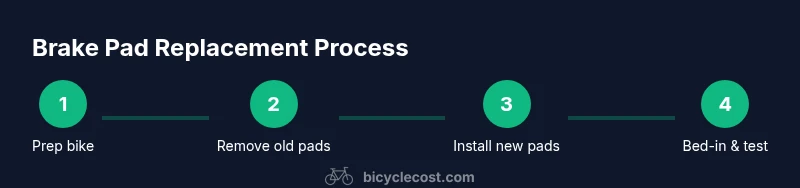
This overview translates the theory into action. You’ll prepare the bike for maintenance, remove the old pads, inspect hardware for wear, clean the caliper and rotor (if applicable), install the new pads with correct orientation, reassemble the brake system, and perform a bedding-in procedure followed by a test ride. The goal is a quiet, predictable brake feel with even pad wear and no rubbing. Approach each step methodically, especially when working with disc brakes where rotor cleanliness and pad alignment are critical.
Installing New Brake Pads: Rim Brakes
For rim brakes, slide out the old pads and eject debris from the pad slots. Check the pad orientation: the friction material should face the rim, with the keeper springs or retaining pins properly seated. Align the caliper so the pads make even contact with the wheel rim when engaged. Refit the wheel and test the brake lever to confirm consistent bite without rubbing. Handle the braking surface with a clean cloth to prevent oil contamination. BicycleCost notes that correct orientation and seating prevent early pad wear and squeal.
Installing New Brake Pads: Disc Brakes
Disc brakes require careful rotor and caliper interaction. Remove the wheel if needed to access the brake pads. Push back the pistons evenly using a suitable tool, then slide the new pads into the caliper with the friction material facing the rotor. Re-seat the caliper so it centers over the rotor and test for smooth lever feel with the wheel off the ground. Replace the wheel, squeeze the brake lever to seat the pads lightly, and ensure there’s no rotor rub. This alignment process is critical for consistent stopping power.
Bedding-In, Adjustment, and Final Check
Bedding-in creates a heat cycle that helps transfer a small amount of pad material to the rotor, improving friction consistency. Gently brake from moderate speeds several times, releasing halfway to avoid overheating. Check pad wear regularly and listen for rubbing or squealing, which indicates misalignment. After the ride, re-check pad alignment and ensure the brake lever travel feels normal. The BicycleCost team emphasizes regular inspection and correct bedding-in to maximize pad life and braking performance.
Tools & Materials
- Compatible brake pads (rim or disc as appropriate)(Match pad type to your braking system and caliper model)
- Allen wrenches/hex keys(Common sizes: 5mm or 6mm depending on caliper bolts)
- Small flat-head screwdriver or plastic pick(For retracting pistons and removing old pads)
- Rag or degreaser(Clean caliper surfaces and rotor/disc without residue)
- Torque wrench (optional)(Helpful for precise caliper mounting torque on some models)
- Brake grease (silicone-based, optional)(Apply lightly to specified contact points; never on pad friction surfaces)
- Bike stand or stable Work Surface(Keeps bike steady during pad replacement)
Steps
Estimated time: 45-75 minutes
- 1
Prep and secure the bike
Place the bike on a stand or upside-down on a clean surface. Engage the parking brake or block the wheels to prevent movement. If you’re working with road traffic, ensure you’re in a safe, well-lit area. This reduces risk and makes handling pads easier.
Tip: Take a quick photo of the pad layout before removing anything for later reference. - 2
Remove old pads
Loosen the retention mechanism and slide the old pads out of the brake caliper. Inspect the retaining springs or pins for wear and replace if needed. Keep track of any small shims or spacers that came with the pads.
Tip: Don’t force the pads out; if they resist, check the retention mechanism and caliper alignment. - 3
Clean and inspect
Wipe down the caliper body and rotor with isopropyl alcohol or a dedicated cleaner. Look for uneven wear, cracks, or glazing on the rotor and pads. Replace worn hardware as needed.
Tip: Avoid touching the friction surfaces of the new pads with your fingers. - 4
Install new pads
Slide the new pads into the caliper, ensuring correct orientation (friction material toward the rotor or rim). Re-seat retention hardware securely and verify clearance so pads don’t rub when the wheel spins freely.
Tip: Before torquing bolts, ensure the caliper is centered over the rotor for disc brakes. - 5
Reassemble and bed-in
Reinstall the wheel, apply a few light brake applications to settle the system, then perform a controlled bedding-in ride. Do not ride aggressively during bed-in; heat buildup can glaze pads.
Tip: Alternate gentle braking with short rests to avoid overheating. - 6
Final checks
Check for rubbing, ensure lever feel is consistent, and test at low speed in a safe area before returning to traffic. If you notice issues, recheck pad alignment and rotor cleanliness.
Tip: If noises persist after bedding-in, re-check alignment and consider replacing pads if glazing is present.
People Also Ask
Can I replace brake pads myself, or should I go to a shop?
Most riders can replace brake pads at home with basic tools. Follow a step-by-step guide for your specific brake system, and test carefully afterward. If you encounter stubborn retaining mechanisms or rotor issues, consider professional help.
Yes, you can replace pads at home with basic tools; follow the guide and test slowly. If you have rotor problems, seek a professional.
How do I know which brake pad type I need?
Check your caliper model and wheel type. Rim brakes use pads shaped for rims, while disc brakes require rotor-compatible pads. Your bike’s manual or the caliper markings will indicate the correct type.
Look at your caliper and rotor; the manual or markings will tell you the right pad type.
What tools are essential for pad replacement?
You’ll need replacement pads, hex keys, a pick or small screwdriver, and a cleaning cloth or degreaser. Optional items include a torque wrench and brake grease for certain models.
A few hex keys, a pick, replacement pads, and cleaner are the essentials.
How often should I replace brake pads?
Pad life depends on riding style, terrain, and pad material. Inspect pads regularly and replace when the material wears to the minimum thickness or the braking performance declines.
Inspect pads regularly and replace when wear is evident or braking feels off.
Is it safe to mix pad brands or types?
Mixing brands or pad types on the same brake system can cause uneven braking. Use matched pads for both sides and ride cautiously after replacement.
Avoid mixing brands or types on the same brake system.
What should I do if the rotor is glazed after replacement?
Glazing creates a hard, smooth surface reducing friction. Lightly sand or replace the rotor if glazing occurs after bedding-in, then re-bed the pads.
If glazing happens, consider rotor resurfacing or replacement and re-bed the pads.
Watch Video
Quick Summary
- Identify brake type and compatible pad material.
- Follow proper seating and bed-in to maximize life and performance.
- Test gently in a safe area before returning to traffic.
- Regularly inspect pads and hardware for wear and replace timely.