How to Pump a Bicycle Tire: A Practical How-To
Learn how to pump a bicycle tire with confidence. This step-by-step guide covers valve types, choosing the right pump, checking tire pressure, and safe inflation practices for road, mountain, and commuter bikes.


Learn how to pump a bicycle tire correctly using a floor pump or portable mini-pump. The guide covers identifying valve types (Presta vs Schrader), choosing the correct pressure range, attaching the pump securely, and verifying with a gauge before you ride. It also includes tips to avoid pinch flats and how to check the tire after inflation.
Why Proper Tire Inflation Matters
Maintaining proper tire pressure is essential for safety, efficiency, and ride comfort. Underinflated tires increase rolling resistance, heat buildup, rim strikes, and risk pinch flats when hitting potholes. Overinflated tires reduce grip, make the ride harsher, and can cause a blowout on rough surfaces. For most daily riding, checking pressure weekly and before long rides yields the best balance of comfort and performance. Tire pressure also determines the tire’s footprint on the ground, which affects traction during cornering and braking. The right pressure helps you pedal efficiently, reduces wear on the tread, and lowers the chance of rim damage from sharp impacts. According to BicycleCost, consistent inflation practices can extend tire life and improve overall ride quality. In this section, you’ll learn how to read your tire sidewall, choose the right pump, and apply pressure safely across common bike types. Whether you ride a road bike, a mountain bike, or a city commuter, the core steps are the same: verify, attach, inflate, and recheck. With a little practice, inflating becomes quick and reliable.
Understanding Valve Types: Presta vs Schrader
Bicycle tires use two common valve standards: Presta and Schrader. Presta is slender and threads onto a valve core, requiring a compatible pump head or an adapter. Schrader is wider and works with most floor pumps without additional adapters. The valve type determines the pump head you’ll use and whether you need to remove a small locknut on the valve to open it. Dual-head pumps simplify this choice by allowing you to flip between Presta and Schrader without changing equipment. For tubeless setups, ensure you can seal around the valve bead when inflating to prevent slow leaks. Knowing your valve type helps you avoid air leaks and makes inflation smoother, especially on the go.
Tools and Materials You'll Need
Before you start, gather a pump with a gauge (or a separate gauge), and verify you have the right nozzle for your valve. A floor pump with a dual-head nozzle is ideal for most riders; a compact mini-pump is a good backup or travel option. Keep a clean cloth handy to wipe the valve stem and a storage cap to protect the valve when not in use. If you ride in cold weather, consider an extra protective cap or a small patch kit for quick on-road repairs. While not strictly required, having an extra gauge helps confirm accuracy if your primary gauge seems off. These tools keep inflation precise and efficient, reducing the risk of flats and pressure loss during rides.
Reading Tire Sidewall Information
Your tire sidewall displays a recommended pressure range, usually listed in psi or bar. Start by locating this range and aim toward the middle for a comfortable compromise between rolling resistance and grip. Day-to-day factors—like rider weight, luggage, and road conditions—can shift your target within that range. For newcomers, it’s safer to start near the midpoint and adjust after a test ride. If you ride in different conditions (wet or snowy roads, gravel, or urban streets), you may fine-tune pressure slightly up or down. Always respect the tire’s stated range to avoid pinch flats or bead damage.
Preparing for Inflation
Inspect the tire for wear, cracks, or embedded objects before inflating. Clean the valve stem to ensure a clean, tight seal with the pump head. If you use a floor pump, lock the valve head onto the stem and listen for a brief hiss indicating a proper seal. If the pump has a lever, flip it to engage the seal, then slowly begin pumping in short bursts. Keep the bike upright or mounted in a stand to prevent it from tipping, and take a moment to confirm that the tire bead sits evenly on the rim.
The Step-by-Step Guide to Pumping a Bicycle Tire
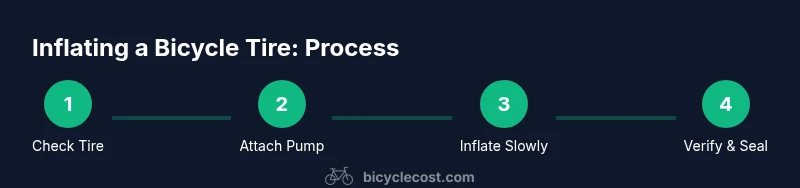
To provide a structured approach, use the steps below in addition to the narrative guidance above. These actions focus on practical execution and ensure you inflate safely and accurately.
Step-by-Step Actions
- Inspect the tire and remove the valve cap. Ensure the valve is clean and free of debris; wipe gently with a cloth. Tip: Keeping the valve clean prevents air leaks and cross-contamination.
- Attach the pump head securely to the valve. Confirm a tight seal before starting to press. Tip: If air leaks, re-seat the head and check for a bent valve core.
- Inflate gradually toward the target pressure. Use short, measured bursts and watch the gauge. Tip: If the tire bulges near the rim, stop and check seal quality.
- Remove the pump and recheck the pressure. Ensure the reading matches the target range after disengagement. Tip: Some pumps lose a little air after removal; recheck quickly.
- Replace the valve cap and perform a brief test ride. If handling feels off, top up slightly and recheck. Tip: A quick ride helps confirm the tire feels firm but compliant.
Estimated total time: 10-20 minutes.
Common Pitfalls and How to Avoid Them
Avoid over- or under-inflating by always aligning with the tire’s sidewall range and using a reliable gauge. Don’t rush the inflation, which can cause inconsistent readings or damaged valves. If you notice sluggish inflation or a hissing sound, pause and inspect the pump connection and the valve for leaks. Keep the tire and rim clean to prevent grit from compromising seals. Regular maintenance, including checking pressure weekly, reduces the risk of flats and improves ride quality.
Aftercare: Storage, Maintenance, and Quick Checks
After inflating, store your pump and gauge in a clean, dry place. Wipe the valve stem and check the tire for embedded debris that could cause slow leaks later. Before rides, perform a quick visual and feel check to ensure the tire is seated correctly and the pressure feels stable. Periodically verify your gauge’s accuracy by comparing it with a known reference gauge. This discipline helps you ride more confidently and reduces unexpected pressure loss on the road.
Troubleshooting Inflate Issues
If the tire won’t hold air after inflation, inspect for punctures, leaks at the valve stem, or a damaged valve core. A persistent leak around the bead could indicate a rim issue or a damaged tire bead. Swap to a known-good gauge to rule out measurement error and test with a different pump head. If the problem persists, consider replacing the inner tube or reseating a tubeless setup with appropriate sealant. Regular maintenance minimizes the chances of recurring inflation problems.
Tools & Materials
- Floor pump with gauge(Dual-head for Presta/Schrader, built-in gauge preferred.)
- Portable mini-pump(Useful as a backup or for on-bike inflation.)
- Tire gauge (separate or integrated)(Accuracy matters; keep an extra gauge as a backup.)
- Valve adapters(Only if you encounter uncommon valve types.)
- Cloth or brush(For cleaning valve stems and rims.)
Steps
Estimated time: 10-20 minutes
- 1
Inspect and prepare
Remove the valve cap and wipe the valve stem. Check the tire for damage and embedded objects. This prep reduces air leaks and puncture risk.
Tip: A clean valve ensures a snug seal with the pump head. - 2
Attach pump securely
Position the pump head on the valve and lock it in place if your model has a lever. Ensure there are no wiggles before you start pumping.
Tip: A shaky connection causes slow, uneven inflation. - 3
Inflate in small bursts
Pump in short bursts and read the gauge frequently. Stop when the target range is approached to avoid overinflation.
Tip: Raising the pressure gradually helps detect leaks early. - 4
Verify pressure after removal
Detach the pump and recheck the tire pressure. Some air loss can occur when the head is removed.
Tip: Recheck ensures you hit the exact target. - 5
Seal and test
Replace the valve cap and perform a quick ride test to ensure handling feels correct.
Tip: If the ride feels too stiff or too soft, adjust accordingly.
People Also Ask
What is the best pump for beginners to start inflating bicycle tires?
A floor pump with a built-in gauge and a dual-head nozzle is ideal for beginners. It provides stable readings and easy valve engagement.
For beginners, a floor pump with a gauge is the easiest and most reliable choice.
How do I know the correct tire pressure for my bike?
Check the sidewall for the recommended range and start near the middle. Adjust based on rider weight, luggage, and terrain.
Look at the sidewall range and start in the middle, then tweak for weight and terrain.
Can I overinflate a tire?
Yes. Overinflation reduces grip and can cause a blowout. Inflate in small steps and stop if you notice excessive stiffness.
Overinflating can be dangerous; inflate gradually and monitor how it feels.
How often should I check tire pressure?
Before long rides and at least weekly. In colder weather, check more often as pressure can drop with temperature.
Check weekly, and before long rides; adjust for colder months.
What if my gauge seems inaccurate?
Calibrate against a known reference or try another gauge to verify. If inconsistent, replace the gauge.
If it seems off, test with another gauge to confirm.
Is it okay to inflate tubeless tires with a floor pump?
Yes, but ensure a tight seal at the valve and bead seating. Some tubeless setups may require a larger volume or compressor.
Tubeless is fine with the right seal and effort, but watch for bead seating.
Watch Video
Quick Summary
- Check tire pressure before every ride.
- Use the correct pump head and valve type.
- Inflate gradually and recheck after removal.
- Always align with the tire’s sidewall range.
- Keep a reliable gauge handy for consistent inflation.