How to Protect Your Bike: Theft Prevention & Care
Practical, step-by-step guidance to protect your bike from theft, weather, and wear. Learn locking strategies, safe storage, maintenance, and insurance basics for comprehensive protection.


By the end of this guide you will learn practical, actionable ways to protect your bike from theft, weather, and everyday wear. You’ll discover smart lock configurations, how to secure accessories, best storage practices, maintenance checks to prevent corrosion, and simple steps to document your bike for insurance and recovery.
The Core of Protection: Locks and Lockup Strategy
Protecting your bike starts with a solid locking strategy. A high-quality U-lock provides strong resistance against bolt-cutters, especially when placed through the frame and rear wheel and anchored to a fixed object. Add a secondary lock of a different type to cover components thieves might target, like the front wheel or accessories. Remember: no single lock is foolproof; a layered approach greatly increases deterrence.
- Lock orientation: Ensure the shackle faces away from potential leverage points.
- Lock engagement: The lock should secure the frame and at least one wheel to an immovable object.
Pro tip: When you park on the street, look for solid objects like a bike rack or signpost that cannot be easily lifted or removed.
Storage Habits: Safe Home and On-the-Go
Your storage choices dramatically affect protection. At home, store your bike in a locked garage or dedicated bike room whenever possible. Indoors is best, but if you must keep it outside, use a sturdy cover over a well-secured bike to deter opportunistic theft and reduce exposure to the elements. When you’re out and about, always lock to fixed structures and avoid leaving the bike unattended for extended periods.
Key practice: detach temporary accessories when practical and secure them with a small secondary lock or cable. This minimizes loss if a thief targets gear rather than the bike frame.
Organize a regular routine to check locks for corrosion or wear, and replace any damaged components promptly.
Transport and Street Protection
On public streets or when loading onto a car rack, keep the lock and key in a secure, accessible place. Use a secondary strap or chain to prevent wheels from spinning or wobbling during transport. If you’re using public racks, pick spots with good lighting and high foot traffic. For rides longer than a few blocks, consider a portable alarm or GPS tracker as an extra deterrent.
Practical tip: remove quick-release components when security is lax or you can’t keep an eye on the bike.
Protective Accessories That Make a Difference
Accessories can multiply your protection without requiring heavy lifting. A visible alarm or tracker can deter theft when a thief sees there is an extra layer of security. Wheel locks, seat clamps, and integrated sleeve screws can slow down a thief who targets removable parts. Choose accessories that are compatible with your bike’s frame and have reputable reviews for durability and ease of use.
If you ride at night, add bright, motion-activated lights and reflective tape to improve visibility, reducing the likelihood of opportunistic theft.
Weather and Maintenance to Extend Lifespan
Weather exposure accelerates wear. Clean your chain and drivetrain after wet rides, dry the bike, and apply a suitable lubricant to moving parts to prevent rust. Regularly inspect tires for cuts or embedded debris and keep air pressure at recommended levels. A well-maintained bike not only lasts longer but also remains reliable when you need it most, reducing situations where you’re forced to leave it unattended in risky spots temporarily.
Create a simple seasonal maintenance routine to check braking, gears, and fasteners. Tighten bolts if they feel loose and replace worn parts promptly to prevent sudden failures.
Documentation, Registration, and Insurance
Document your bike with clear photos, a detailed description, and the serial number. Keep receipts and any warranties in a safe place. Register your bike with local programs or a national registry if available in your area. Consider rider insurance or specific bicycle insurance to increase your recovery chances and lower financial risk in the event of theft. These steps can dramatically improve the likelihood of recovery if the worst happens.
Store digital copies securely and share essential information only with trusted parties.
Community and Environment: Neighborhood Security
Community awareness is a powerful ally. Park in well-lit, populated areas; encourage colleagues and neighbors to report suspicious activity. Share best practices for locking and storage with your riding group to raise collective protection. A culture of accountability—both on the street and online—reduces theft opportunities and helps everyone recover faster if something goes wrong.
For a stronger network, consider joining a local cycling club or neighborhood watch program that supports bike security initiatives.
Seasonal Routines and Long-Term Protection
Protecting your bike is an ongoing process. Revisit your security setup as your environment or schedule changes. If you notice a pattern of thefts in your area or new lock technologies emerge, upgrade accordingly. Maintain a proactive stance: refresh photos and documentation, review insurance coverage annually, and replace worn locks before they fail. A consistent, evolving approach keeps your bike safer year-round.
Tools & Materials
- High-quality U-lock (Sold Secure Gold or equivalent)(Bolt-cutter resistant; lock bike frame and rear wheel to a fixed object)
- Secondary lock (chain or cable)(Use a different lock type from the U-lock to deter tool-based attacks)
- Lock mounting hardware (brackets, straps)(Mounts on bike frame or rack for quick, secure locking when parked)
- Ground anchor or sturdy home rack (optional)(Optional for securing bikes indoors or in shared courtyards)
- Bike cover or breathable storage bag(Protects from weather while reducing glare and visibility)
- Maintenance kit (lubricant, brush, rag)(Keeps chain and components rust-free and operating smoothly)
- GPS tracker or alarm device (optional)(Adds a recovery option if the bike is stolen)
Steps
Estimated time: 2-3 hours
- 1
Assess risk and plan lock setup
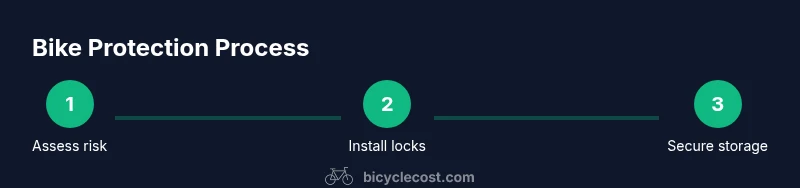
Identify common theft scenarios in your area and map out the best lock positions. Decide which components to secure first and which locks to use as a layered defense. This planning reduces time spent locking and increases effectiveness.
Tip: Walk around your usual parking spots to spot vulnerabilities before you leave the bike. - 2
Install your primary lock correctly
Place the U-lock through the frame and rear wheel and anchor it to a fixed, immovable object. Ensure the lock mechanism is on the outside and that there is minimal space for the bolt-cutters to gain leverage.
Tip: Keep the shackle low to prevent prying tools from slipping underneath. - 3
Add a secondary lock for extra coverage
Run a secondary lock through the front wheel or other removable components to deter thieves from quickly swapping parts. Use a different lock type from your U-lock to defeat tool familiarity.
Tip: Lock any removable parts when unattended for long periods. - 4
Secure wheels and accessories during outings
If you can’t remove a wheel, lock it to the frame using the secondary lock and consider wheel bolts or skewers designed for security. Take small accessories with you when possible or lock them to the frame.
Tip: Check wheel engagement points for slack before leaving the bike unattended. - 5
Choose safe storage at home and away
Store indoors whenever possible; if outdoors, place the bike in a locked area with a solid anchor. At work or in public spaces, look for well-lit, high-traffic locations and always secure the bike.
Tip: Keep your lock and keys in a dedicated small container to avoid misplacement. - 6
Protect against weather and perform routine maintenance
Wipe down moisture after rain and apply appropriate lubricant to the chain and moving parts. Inspect tires, brakes, and bolts regularly to prevent rust and failures.
Tip: Create a monthly checklist to streamline maintenance tasks. - 7
Document, register, and consider insurance
Take clear photos, record serial numbers, and keep receipts. Register your bike with local programs where available. Consider bike-specific insurance for added protection and quicker recovery.
Tip: Store digital copies of photos and documents securely in the cloud. - 8
Review and adjust your setup regularly
Reassess risks as your routine changes, such as a new commuting route or different parking options. Upgrade locks or storage if you detect weaknesses or if new tools become common among thieves.
Tip: Set a yearly reminder to evaluate and refresh your security plan.
People Also Ask
What is the best lock configuration for bike protection?
A layered approach using a high-quality U-lock for the frame and rear wheel plus a secondary lock for the front wheel or accessories provides strong deterrence. Avoid relying on a single lock type.
For best protection, use two different locks: a sturdy U-lock for the frame and rear wheel, plus a secondary lock for the front wheel or accessories.
Can I rely on an alarm device alone to protect my bike?
An alarm can deter some thieves, but it should be used as part of a broader strategy. A robust lock setup and secure parking location remain essential.
An alarm helps, but don’t depend on it alone. Pair it with strong locks and smart parking.
Is registering my bike worth it?
Registration can aid in recovery if stolen and is often free or inexpensive. Check local programs and keep a record of the serial number and photos.
Registration helps with recovery. Keep serial numbers and photos handy.
How should I secure my bike at work or in public?
Choose a locked, well-lit area and use a two-lock approach. Remove or secure quick-release parts and avoid leaving the bike unattended for long periods.
Park in a bright, secure spot and use two locks. Take off or lock quick-release parts when possible.
Do weather covers prevent rust and damage?
Covers protect from rain and sun but do not replace regular maintenance. Dry and lubricate components after exposure to moisture.
Covers help, but you still need routine maintenance after weather exposure.
Will insurance cover theft of my bike?
Many policies offer bicycle theft coverage, especially when you document the bike well. Review terms and keep proof of ownership.
Insurance can help recover costs; document ownership and read policy terms carefully.
Watch Video
Quick Summary
- Choose strong, paired locks for layered security
- Lock to fixed objects and cover frame and wheels
- Store indoors when possible and maintain equipment
- Document your bike and consider insurance
- Regularly review and upgrade security as needed