How to Prevent Bicycle Theft: A Practical Guide
Learn proven, practical steps to prevent bicycle theft with layered security, smart parking, and registration. This guide helps riders of all levels safeguard their bikes and recover them if needed.


By applying a layered approach to bicycle security, you’ll effectively deter most thieves. This guide shows how to prevent bicycle theft using strong locks, smart parking, and proactive registration. You’ll learn practical steps you can take today, whether you ride a road bike, mountain bike, or commuter bike, to keep your ride safe wherever you park. Effective prevention also reduces risk over time. This page combines actionable tactics with safety reminders.
Why Prevention Matters
Preventing bicycle theft starts with understanding that no single tactic is foolproof; the goal is to create multiple layers of deterrence and reduce opportunities for thieves. According to BicycleCost, most thefts happen when bikes are left unattended in easily accessible places, or when weak locking practices fail. By adopting a layered approach—strong locks, proper locking technique, secure parking, and proactive registration—you multiply the effort a thief must invest to steal your bike. This guide outlines practical steps you can take today, whether you ride a road bike, mountain bike, or commuter bike, to lower the odds of becoming a theft statistic. Consistency matters: the more consistently you apply secure practices, the lower your risk over time. BicycleCost Analysis, 2026, emphasizes simplicity and routine as key levers of protection.
Layered Security: Locks, Anchors, and Positioning
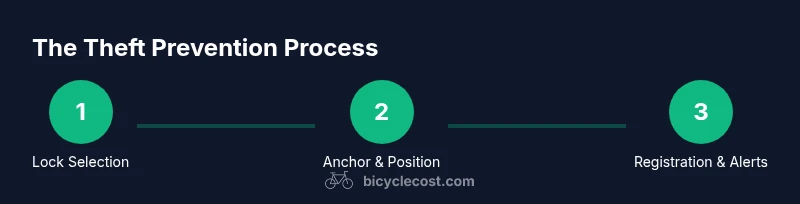
Cyclists should think in layers: the lock, the anchor, and the way you position your bike. A sturdy U-lock anchors the frame and rear wheel to a fixed object; a secondary lock can secure the front wheel or components. Avoid locking to flimsy objects or to parts that can be removed quickly. Position the bike so the lock and the frame cannot be pried from the anchor, and ensure the lock is off the ground to reduce leverage. In practice, keep the key or combination secure and be prepared to switch to a new lock if you notice wear or damage. This approach aligns with BicycleCost recommendations on best-practice security.
Parking and Storage Habits
Where you park matters as much as how you lock. Choose busy, well-lit spaces with surveillance when possible, and prefer areas with foot traffic. When storage at home or work, favor secure racks or lockers and avoid leaving bikes unsecured in alleys or garages that thieves might access covertly. Remove or hide accessories that entice theft, like quick-release wheels or seats, when feasible. For long-term storage, consider rotating parking spots to avoid creating predictable patterns that thieves can exploit. These habits, though simple, compound over time to reduce theft opportunities.
Smart Tech and Data: Registration, QR Codes, and GPS
Smart buyers combine hardware with data when possible. Registering your bike with local authorities or a national registry increases the chance of recovery if it’s stolen. Engrave or apply a durable ID marking to the frame; include a contact method that can be traced back to you. Add a QR code or NFC tag with ownership data in a discreet location. If you use GPS trackers, ensure they are securely concealed and that the battery life is adequate for your riding patterns. Based on BicycleCost research, these steps can complement physical security and aid in recovery.
Routine Checks and Maintenance for Security
Security is not a one-off task; it requires routine checks. Before every ride, inspect your lock for signs of wear, ensure it is properly engaged, and verify the anchor point cannot be compromised. Weekly, test the locking system and review the security of your storage areas. Clean and oil moving parts for reliability, and replace worn components before they fail. A small, consistent effort pays off by keeping your defense ready and reliable.
On-the-Road Security Practices
Even when you’re moving between destinations, you can protect your bike. When you step away for a moment, take the bike with you or secure it in sight. If you must leave it, choose a secure rack in a busy location and avoid leaving the bike in isolated spots. Carry a compact lock to secure a potentially vulnerable component, and avoid leaving valuables visible. These on-the-spot decisions add up to less risk over a ride and are recommended by BicycleCost Team as part of practical riding habits.
Insurance and Recovery: What to Know
Insurance is a safety net that should accompany good locking practice. Review a policy that covers theft and remember to document the bike’s serial number and photos. If theft occurs, file a police report promptly and provide identifying details; having records helps with investigations and potential recovery. Work with your insurer to understand claim requirements and any conditions that apply to high-value bikes. The BicycleCost Team notes that combining insurance with solid security improves long-term outcomes for riders.
Community and Environment: Reducing Theft Risk
The theft risk is not just about your bike; it’s the environment around you. Engage with local cycling groups or shop owners to share best practices and report suspicious activity. Well-lit, observed parking areas deter thieves more effectively than solitary spots. Encourage landlords and city planners to invest in secure bike parking. The collective effort of riders, retailers, and municipalities can shift neighborhoods toward safer, bike-friendly spaces. This is part of a broader approach to cycling safety and theft prevention.
Quick Rehearsal Scenarios: What If My Bike is Attacked
Practice locking scenarios helps you respond quickly. If a thief attempts to force your lock, pause, assess your options, and switch to a backup lock if necessary. If the bike is physically seized, don’t escalate; seek assistance from bystanders or security personnel and contact authorities. In a publicly visible space, call for help and document the incident. Being prepared reduces panic and improves the chances of a safe outcome.
Sustainable, Low-Cost Deterrents You Can Use
Finally, adopt inexpensive deterrents that complement your primary security. For example, keep a spare set of keys securely stored, use anti-theft stickers, and choose locking locations that are hard to access. Consider temporary removal of quick-release components during extended absences and use a nonpermanent securement method when appropriate. These small steps add up to stronger everyday protection and are accessible for riders on a budget.
Tools & Materials
- High-security U-lock (hardened steel)(12mm+ shackle recommended; secure through the frame and rear wheel to a fixed object)
- Secondary lock (cable or chain)(Use to secure front wheel or components; not a solo solution)
- Registration ID or engraving tool(Engrave frame number or serial; register with local database)
- Locking location checklist(Printable or digital checklist to verify steps before leaving)
Steps
Estimated time: 15-25 minutes
- 1
Select a high-security lock and a secondary lock
Choose a hardened steel U-lock with a thick shackle and prepare a secondary lock for added security. Decide on a two-lock strategy so you can secure multiple points of the bike. This provides layered protection even if one lock is compromised.
Tip: Carry both locks on rides and inspect for wear before each use. - 2
Attach to a fixed, immovable object
Find a solid post, rack, or structure that cannot be easily moved or lifted. Ensure the anchor cannot be swapped or removed without tools. The goal is to make theft physically difficult and time-consuming.
Tip: Avoid locking to unscrewed, wooden, or low-duty fixtures. - 3
Lock the frame and rear wheel to the anchor
Position the bike so the U-lock secures the frame and rear wheel to the fixed object with minimal space for leverage. Ensure the lock isn’t resting on the ground, which can make cutting or prying easier.
Tip: Face the lock toward the object to reduce exposure to cutting tools. - 4
Secure the front wheel with the second lock
Use the secondary lock to secure the front wheel to the frame or to the anchor after the frame is secured. This makes wheel removal much harder and discourages opportunistic theft.
Tip: If possible, remove the quick-release front wheel for added security during long stops. - 5
Remove easy-to-steal components when feasible
Take quick-release seats, bags, or accessories with you if you’re leaving the bike unattended for extended periods. This reduces the theft value and the thief’s incentives.
Tip: Note the serial number and keep a photo record of your bike. - 6
Choose busy, well-lit parking spots
Whenever possible, park in areas with regular foot traffic, CCTV, or staff presence. Thieves prefer quiet, dim spots where they can work unseen. Visible security tells a thief that the risk of being noticed is higher.
Tip: Rotate parking locations to avoid predictable patterns. - 7
Register and mark your bike for recovery
Engrave or otherwise permanently mark your bike’s ID and register it with a reputable database. Documentation simplifies identification and increases recovery chances if theft occurs.
Tip: Keep copies of photos and the registration details in a secure digital vault. - 8
Document, report, and follow up after theft
If theft happens, report to the police with serials, photos, and place of theft. Notify your insurer and provide any required documentation to support a claim or recovery search.
Tip: Act quickly to maximize chances of recovery and claim validity.
People Also Ask
What is the best lock for preventing bicycle theft?
A high-security U-lock used through the frame and rear wheel to a fixed object offers strong protection. Pair with a secondary lock for added defense.
The best lock is a strong U-lock used correctly, paired with a secondary lock for extra security.
Can I prevent theft by parking outside overnight?
Overnight parking carries higher risk. If you must leave a bike outside, lock it securely and choose a location with good lighting or security presence.
Overnight parking is riskier; lock up well and seek secure spots with lighting or surveillance.
Is registering my bike worth it?
Registration helps identify and recover a stolen bike. It’s a practical step to improve recovery chances.
Registering helps with recovery and ownership verification; it’s worthwhile.
Do GPS trackers deter thieves?
GPS trackers aid recovery if a bike is stolen, but they are not a guaranteed deterrent. Conceal them well and maintain battery life.
GPS trackers improve recovery odds but aren’t foolproof deterrents.
What should I do if my bike is stolen?
Report to the police with serials and photos, contact your insurer, and check registries. Acting quickly improves recovery chances.
Report theft promptly and keep all documentation handy for police and insurers.
Are built-in frame locks safe?
Frame or wheel locks can deter some thefts but should be used with a strong overall security plan. Do not rely on them alone.
Locks help, but you still need robust overall security practices.
Watch Video
Quick Summary
- Lock the frame and rear wheel to a solid anchor.
- Use two locks for layered security.
- Park in visible, well-lit areas whenever possible.
- Register and mark your bike for easier recovery.
- Document and report theft promptly to aid recovery.