How to Protect Your Bike from Theft: A Practical Guide
Learn practical, field-tested strategies to protect your bike from theft—from choosing the right locks to smart parking and recovery tips. A BicycleCost guide for cyclists and bike owners seeking durable protection and peace of mind in 2026.


By using a layered approach, you’ll dramatically reduce the chance of theft. Start with a strong, correct lock combination, secure the frame and at least one wheel to a fixed anchor, and add a second lock for the remaining wheel or components. Include deterrents like alarms or trackers, park in visible, well-lit spots, and document your bike for recovery.
The Theft Landscape: Why Bikes Attract Thieves
Bicycles are highly portable and often left unattended in public spaces, making them attractive targets for thieves. Understanding why bikes are stolen helps you design effective defenses. According to BicycleCost, theft risk tends to rise in urban areas where parking spots are crowded, visibility is imperfect, and opportunistic thieves can strike quickly. The best protection starts with awareness: park in well-lit, high-traffic locations; use a sturdy lock; and avoid leaving the bike in the same spot for long periods. In this section, we examine common theft scenarios and intuitive red flags that signal a higher risk, such as poor locking practices, visible quick-release components, or leaving a bike unattended near transit hubs. By treating security as a routine habit, you reduce the chances of a theft occurring and simplify the recovery process if something does go wrong.
Core Security Principles: Layered Defense
A layered defense means combining multiple countermeasures so that if one fails, others still protect your bike. The core principles are visibility, physical resistance, and redundancy. Visible deterrents (brightly colored locks, signage, or alarms) discourage tampering. Hard, properly installed locks (thick U-locks or hardened chains) resist cutting and wrenching. Redundancy means using two different locks on different parts of the bike, ideally with one locking the frame and wheel to a fixed object and a second lock securing the other wheel or accessory. BicycleCost analysis emphasizes that no single tactic is enough; the most reliable protection relies on combining several techniques that complement one another and raise the effort, time, and risk for thieves.
Locks Demystified: U-locks, Chains, and More
Knowing what kind of lock to use is critical. U-locks provide strong resistance to leverage and cutting, but they must be thick enough (generally 13mm or more) and used correctly. Chains offer flexibility but can be heavy; choose a chain with a high resistance to picking and shielded links. Folding locks can be convenient, but ensure the locking points are secure and avoid exposing the shackle to cutting attempts. The best practice is to secure the bike with two different locks: a U-lock for the frame and a chain or cable for a second component. Always ensure the lock passes through the frame, at least one wheel, and a fixed anchor. Avoid placing locks too close to the ground or in spaces thieves can exploit with leverage tools.
How to Lock Your Bike Correctly
Locking correctly means executing a precise, repeatable action. Start by placing your U-lock through the bike frame and one wheel, then anchor both to a solid, immovable object. Add a second lock to secure the second wheel or any removable components. Position the locks so the locking bars are off the ground and difficult to access with tools. Make sure the locks are tight—no wiggle room—so thieves cannot pry or twist them. Finally, test by attempting a gentle shake to ensure the bike is firmly immobilized. If you rely on quick-release wheels, transport them with you or secure them with the secondary lock to prevent wheel removal.
Choosing the Right Parking Spot
Location is a major aspect of theft prevention. Look for busy, well-lit areas with foot traffic, security cameras, and durable bike racks. Avoid isolated corners, vacant lots, or places where the bike cannot be seen from nearby entrances or windows. When possible, use higher-traffic venues like transport hubs, gyms, or popular bike parking zones near shops. If you must leave your bike for a short errand, choose a place where other people are nearby and where parking time is limited. The key is to maximize presence and minimize the ease of tampering, moving, or carrying the bike away unnoticed.
Alarms, GPS Trackers, and Smart Deterrents
Audible alarms can startle thieves and make the crime clear, while GPS trackers provide location data for recovery. Visible deterrents—such as a prominent alarm device or a tracker with a bright sticker—signal extra effort and reduce theft likelihood. When choosing deterrents, balance visibility, battery life, and durability. Remember that trackers require registration and access to a network. Combining alarms with trackers often yields the best results because it raises the risk and adds a reliable path to recovery. Always follow local regulations about recording devices and privacy.
At-Home Storage: Garage and Apartment Security
If you store your bike at home, ensure it remains protected when doors close and you’re not around. A dedicated wall mount or ceiling hoist minimizes the chance of theft by preventing easy pick-and-go removal. Secure the bike to a fixed rack, and use a second lock for components that could be removed. In apartments, consider a secured locker or bike room with access control and good lighting. Keep doors and windows locked, and avoid leaving keys accessible to visitors. Regularly inspect your storage area for wear or signs of tampering.
On-the-Go: Protecting Your Bike When Cycling Locally
Even when you’re away from home, you can maintain strong security. Before leaving a bike unattended during a stop, choose a high-visibility, defended space and lock the bike properly. When you return, examine the area for suspicious signs—loose racks, unfamiliar footprints, or tools left behind. Carry a compact spare lock and prepare a plan to move the bike quickly if a security issue arises. If you’re using bikeshares or urban hubs, always verify the lock’s compatibility and ensure you leave the bike secured to a permanent object.
Documentation, Insurance, and Recovery Tactics
Maintain an up-to-date record of your bike's serial number, make, model, color, and distinctive features. Photograph your bike from multiple angles and store the images securely online. Keep a digital inventory of accessories and serial numbers for quick reporting. Consider adding theft insurance or rider coverage if your local regulations permit. In case of theft, report promptly to local authorities and provide proof of ownership, serial numbers, and photos. These steps increase your chances of recovery and reduce the time needed for claims.
Maintenance for Security: Regular Checks
Security is not a set-and-forget task. Regularly inspect locks for wear, rust, or misalignment; check that bolts and screws remain tight on racks; and ensure quick-release components are either locked or carried. Clean and lubricate locks to prevent stuck mechanisms. Replace worn or compromised locks and store spares securely. Schedule a monthly security review: check anchor points, storage areas, and alarm or tracker battery levels. Small maintenance tasks keep theft prevention effective over time.
Common Mistakes to Avoid and Quick Wins
Avoid using only a cable lock or parking in poorly lit spots. Do not assume a cheap lock will deter thieves; invest in a robust locking system. Do not leave the bike in one place for extended periods, and never neglect to secure the wheels. A quick win is to develop a routine: always lock to a fixed object, always secure both wheels, and always photograph your bike for documentation. Short, daily practices compound into strong long-term security.
Quick-Start Security Checklist
If you’re in a hurry, run through this high-impact checklist: use a heavy U-lock that passes through the frame and a wheel to a fixed object; secure the second wheel with a different lock; park in a busy, well-lit area with surveillance if possible; attach an audible alarm or GPS tracker as a visible deterrent; photograph the bike, record serial numbers, and keep copies; remove or secure any quick-release components; and perform a quick lock integrity test before leaving. Following these steps creates a robust baseline in minutes and can save you from future headaches. The BicycleCost team recommends turning this into a 5-minute daily habit to maximize impact.
Tools & Materials
- U-lock (hardened steel, >= 13mm)(Lock the frame and at least one wheel to a fixed object. Look for a tight fit with minimal clearance.)
- Secondary lock (chain or cable)(Use a different locking mechanism to secure the other wheel or components.)
- Fixed anchor point (immovable post or rack)(Choose a solid object that cannot be easily dislodged or cut.)
- Spare keys or lock combination record(Store offline in a secure location and consider a digital backup.)
- GPS tracker or audible alarm (optional)(Visible deterrent and recovery aid if used properly.)
- Documentation kit (photos, serial number list)(Keep up-to-date records for ownership and claims.)
- Small flashlight(Helpful for inspecting locks in low light.)
- Bike cover or transport bag (optional)(Can reduce visibility during long parking periods.)
Steps
Estimated time: 15-25 minutes
- 1
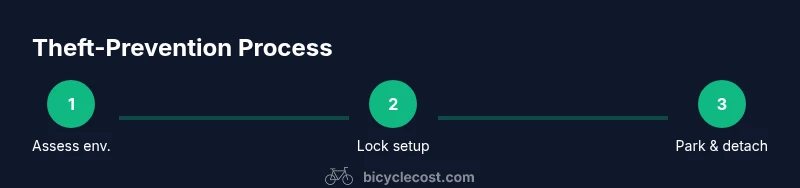
Assess the locking environment
Scan the area for a solid anchor and check for quick escape routes. Prioritize places with high foot traffic or cameras. The goal is to choose a spot where tampering would be obvious and slow. This upfront assessment reduces risk before you even lock the bike.
Tip: Choose a location with clear sightlines and avoid isolated corners. - 2
Choose a dual-lock setup
Plan to use two different locks on different parts of the bike. A strong U-lock protects the frame, while a chain or cable lock secures the remaining wheel or accessories. This combination complicates thieves’ attempts and increases the time required to steal.
Tip: Avoid using two identical locks; diversity increases resistance. - 3
Lock the frame and at least one wheel to the anchor
Pass the U-lock through the frame and one wheel, then secure to the fixed object. Add the second lock to secure the remaining wheel or components. Ensure there is minimal slack and no obvious leverage points.
Tip: Keep the locks off the ground to prevent prying leverage. - 4
Secure the second wheel or removable components
If you used a dual-lock setup, secure the second wheel with the second lock so thieves cannot ride the bike away by removing a wheel. For bikes with quick-release parts, consider removing or locking them when feasible.
Tip: Carrying or securing quick-release components reduces risk of wheel theft. - 5
Add deterrents and visibility
Activate an audible alarm or attach a tracker. Place the hardware so it’s visible and signals that extra effort has been made to deter theft. Check battery life and test signals before leaving the bike.
Tip: Visible deterrents nearly double as a deterrent in real-world conditions. - 6
Document ownership and check-in
Take fresh photos, note the serial number, and store securely. Update records after any maintenance or upgrades. This information speeds up recovery and insurance claims if the worst happens.
Tip: Keep a digital backup in cloud storage for easy access. - 7
Secure storage at home and away
At home, use a fixed wall mount or rack and lock everything securely. When traveling, carry the spare lock and use the strongest lock available. Regularly re-evaluate storage spaces for new threats.
Tip: Inspect storage gear monthly for wear and corrosion. - 8
Routine security review
Make security a habit by performing a quick 5-minute check before each ride and after every stop. Over time, these small checks become automatic and dramatically reduce risk.
Tip: Set a recurring reminder to maintain consistency.
People Also Ask
Do I really need two locks for every ride?
Using two different locks dramatically increases protection. It creates multiple points an attacker must defeat and makes targeted lock-picking more time-consuming.
Yes. A second lock adds a crucial layer of security that deters most thieves.
Should I remove quick-release wheels when parking?
If your bike has quick-release wheels, consider removing them or securing them with the secondary lock. This prevents wheel removal and reduces theft risk.
Yes—carrying or securing quick-release wheels helps prevent wheel theft.
What’s the best place to park to reduce theft risk?
Choose busy, well-lit locations with foot traffic and cameras. Avoid isolated areas and places where your bike isn’t visible from entrances or windows.
Park in a busy, well-lit spot whenever you can.
Do GPS trackers actually help recover stolen bikes?
GPS trackers aid recovery by providing location data, but effectiveness depends on battery life, network availability, and proper activation.
Trackers can help locate a stolen bike if they’re active and connected.
Does insurance cover bike theft?
Coverage depends on your policy. Check with your provider about theft protection, required documentation, and claim processes.
Talk to your insurer to understand what’s covered and what you need to file a claim.
Are integrated locks better than separate locks?
Integrated locks offer convenience but may compromise on strength. For highest protection, pair a robust U-lock with a separate lock for the second component.
Integrated locks can be convenient, but two-lock systems generally provide better security.
Watch Video
Quick Summary
- Lock with purpose and purposefully.
- Use two different locks for layered security.
- Park in visible, well-lit areas with surveillance when possible.
- Document bike details for faster recovery and claims.
- Make security a daily habit to reduce theft risk over time.