How to Clean Bicycle Tires: Step-by-Step Guide
Learn how to clean bicycle tires effectively using everyday supplies. This step-by-step guide covers prep, safe cleaning, tread care, and maintenance for safer rides.


To clean bicycle tires, gather mild soap, water, a soft brush, and a clean rag. Scrub the tire surfaces and sidewalls gently, paying extra attention to the tread valleys to remove embedded grit. Rinse with clean water, dry, and inspect the tire for wear or damage before re-inflating. Avoid soaking the rim if it is a tubeless setup.
Why clean bicycle tires matters
Keeping bicycle tires clean isn't just about looks. Dirt and road grime can work into the rubber, accelerating wear and concealing small cuts or embedded debris that could cause a flat at an inconvenient moment. Regular cleaning also helps you inspect tires for cracks, sidewall bulges, or bead damage that could compromise safety. For tubeless setups, soap residue or grit can affect seal performance if left behind. A modest routine saves you time and money by extending tire life and reducing the chance of roadside issues. The BicycleCost team emphasizes consistency: set aside a few minutes after most rides to check the tires, then proceed with a gentle clean. According to BicycleCost, small habits compound into safer rides and fewer roadside repairs.
What you’ll need to clean bicycle tires
Before you start, assemble a small, straightforward kit. You’ll want a bucket or basin filled with warm water and a few drops of mild dish soap, a soft-bristle brush, a sponge or clean rag, and a towel for drying. You may also use an old toothbrush for tight areas between tread and the bead. Optional tools include a spray bottle, gloves to protect your hands, and a tire pressure gauge to verify inflation after cleaning. Using gentle cleaners keeps rubber flexible and preserves the tire’s protective compounds. This setup works for most bicycle tires, whether you ride city streets or rugged trails, and minimizes the risk of accidental rim or bead damage during cleaning.
Understanding dirt types and what to look for during cleaning
Riders encounter several dirt types when cleaning tires: crusty road grime, mud from off-road trails, and fine dust that sticks to the rubber. Each requires a slightly different approach. Crusty grime benefits from a pre-soak with warm soapy water, while lighter dirt can be removed with a quick scrub. While you’re wiping, inspect the tire sidewalls for cracks, cuts, or bulges and scan the bead area for rim damage. Embedded stones or glass may lurk in the tread pockets and should be removed with a pick or careful brushing. Regular checks help you catch wear early, keeping you safer on the road or trail. BicycleCost analysis suggests that combining cleaning with quick inspections saves time and reduces the need for early tire replacement.
Setting up the workspace and safety basics
Choose a well-lit, level area to avoid slips. Place a towel on the floor or a work mat to catch drips, and lay out your cleaning kit within easy reach. Wear gloves if you have sensitive skin or if you’re using shared tools. Keep soap, water, and brushes separate from the rims to protect tubeless seals and rim tape. If you’re cleaning outdoors, consider shielding from wind or dust and keep pets away. A simple bottle of clean water helps you rinse and repeat without refilling a bucket. This preparation reduces mess and keeps your bike stable while you work.
Step-by-step overview of the cleaning process (high-level)
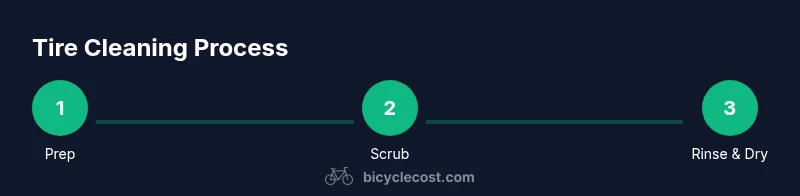
The cleaning process unfolds in three phases: prep and loosen grime, targeted scrubbing, and rinse-dry-inspect. Start by loosening dirt with warm soapy water and a soft brush. Then scrub the rubber surface, paying particular attention to grooves in the tread. Next, rinse thoroughly, dry completely, and inspect for signs of wear or damage. If you detect any cracks or exposed cords, address them before riding. This overview helps you understand the workflow before you dive into the detailed steps.
Cleaning procedures for different tire types and surfaces
Road tires with smooth tread clean easily using gentle scrubbing and a soft brush, while mountain tires with deeper grooves may require more aggressive brushing to remove embedded dirt. For tubeless tires, avoid aggressive soaps near the bead area and rims; residue can hinder sealing. Tubed tires are a bit more forgiving, but you should still avoid soaking rims or letting water sit on the rim tape. In all cases, use a soft brush, mild soap, and plenty of fresh water to avoid damaging compounds that keep tires supple.
Scrubbing techniques: getting into the grooves and along the sidewalls
Work in small circular motions to lift dirt from the tread grooves without abrading rubber. For stubborn grime, let the soap sit for 15-20 seconds before scrubbing again. Use the toothbrush for tight gaps near the bead and lettering on the sidewalls. Do not use harsh solvents or abrasive pads that can wear away tread and weakening the rubber. Always rinse away soap thoroughly so it doesn’t dry on the rubber and attract more dirt during rides.
Rinsing, drying, and final inspection
Rinse from the outside toward the rim to push dirt away from the bead area. Avoid high-pressure jets directly on the seal if you ride tubeless. Dry the tire thoroughly with a microfiber cloth, then allow it to air-dry completely to prevent moisture from seeping into valve cores or bead areas. Once dry, inspect for small cuts, cracks, or bulges and check the tread depth visually. If you notice any damage, replace the tire or seek professional advice before riding again.
Re-inflating and reinstalling the tire
Inflate the tire to the manufacturer’s recommended pressure printed on the sidewall. If you’ve removed the wheel, reinstall and spin the wheel to ensure the bead seats evenly. Check for any leaks around the valve stem and bead. A properly inflated tire improves rolling resistance, grip, and puncture resistance. Return your bike to its normal setup and test ride gently in a safe area.
Tubeless tires: special care after cleaning
Tubeless systems require particular attention to the bead seal after cleaning. Make sure no soap residue remains on the bead or rim tape, and reseat the bead carefully with a soapy water spray if needed. If you notice air loss after cleaning, re-seal following the tubeless setup instructions for your rim and tire. Tubeless tires often perform best when free of any film or soap on the sealing surfaces.
Quick maintenance checks you can perform after cleaning
While tires are off the bike or when rotated, check for sharp objects stuck in the tread and remove them with pliers or a small tool. Verify that the rim tape is intact and that there is no bulging in the sidewall. Confirm that the valve stem is straight and not leaking. These quick checks prevent future flats and improve reliability on longer rides.
Common mistakes to avoid
Avoid using strong solvents, degreasers, or aggressive scrubbing pads on rubber tires. Do not spray water directly into bearings or into the rim tape. Avoid letting water pool around the valve. Always finish with a thorough check for embedded debris and signs of wear before you ride again.
Tools & Materials
- Bucket of warm water with mild soap(Use a small amount of mild dish soap; avoid solvents)
- Soft-bristle brush(Nice for tread grooves and sidewalls)
- Sponge or clean rag(For wiping and drying)
- Old toothbrush for tight gaps(Reach into grooves and near bead)
- Towel or microfiber cloth(Dry until no moisture remains)
- Spray bottle (optional)(Rinse aid or extra rinse)
- Gloves (optional)(Protect hands from grime)
- Tire pressure gauge (optional)(Verify inflation after cleaning)
Steps
Estimated time: 20-40 minutes
- 1
Prepare workspace and tools
Set up a clean, well-lit area. Gather all materials and lay a towel to catch drips. This makes the process smoother and reduces the risk of slipping or losing control of the bike.
Tip: Keep a separate tray for used brushes to avoid cross-contamination. - 2
Inspect tires for wear and damage
Before cleaning, do a quick visual check for sidewall cracks, bulges, or embedded objects. If you see serious damage, postpone riding and consider replacement.
Tip: Note any high-risk areas to re-check after cleaning. - 3
Rinse to loosen surface grime
Lightly rinse the tire to remove loose dirt. Use a gentle spray and avoid blasting water into the bead if you’re tubeless.
Tip: Rinsing first helps a lot when dirt is caked on. - 4
Apply mild soap and scrub
Create a soapy solution and scrub the tire surface and sidewalls with a soft brush. Focus on tread grooves where grit hides.
Tip: Let the soap dwell for a short moment on stubborn spots. - 5
Scrub gumption: between grooves and beads
Use the toothbrush for tight gaps and the bead area. Be gentle to avoid inflicting micro-damage to rubber or rim tape.
Tip: Avoid abrasive pads that can wear down rubber over time. - 6
Rinse thoroughly
Rinse away all soap residues completely. Residual soap can attract more dirt during rides and may irritate the rim seal on tubeless setups.
Tip: Check that no soap remains on the bead or seal area. - 7
Dry completely and inspect again
Dry with a microfiber cloth and allow air-drying to finish. Recheck for any signs of wear or remaining debris.
Tip: Moisture around the valve stem can hide slow leaks. - 8
Re-inflate and reinstall
Inflate to the recommended pressure shown on the tire sidewall. Reinstall the wheel and spin to confirm the bead seats evenly.
Tip: Check for leaks around the valve and bead after seating. - 9
Special care for tubeless tires
Ensure no soap film remains on bead or rim tape. If needed, reseat the bead with soap and water to improve sealing surface contact.
Tip: Tubeless systems often perform best when surfaces are clean and dry. - 10
Final safety checks
Take a short test ride in a safe area to confirm handling. Listen for any unusual hiss of air or changes in ride feel that could indicate a leak.
Tip: If you hear a hiss, stop and inspect the bead and valve again.
People Also Ask
How often should I clean bicycle tires?
Clean tires after muddy rides or on a regular schedule during the riding season. Regular cleaning helps you spot damage early and keeps tires in good condition.
Clean tires after muddy rides or on a regular schedule during the season to catch damage early.
Can I use dish soap on bicycle tires?
Yes, mild dish soap with warm water is safe for rubber tires. Avoid harsh solvents or degreasers that can degrade rubber or affect tubeless seals.
Yes, mild soap and water work; avoid harsh chemicals.
Is it safe to use a pressure washer to clean tires?
Avoid high-pressure washers near the tire bead and valve. Use a gentle spray to prevent forcing dirt into bearings or damaging seals.
No heavy pressure near the bead; use gentle spray.
Should I remove the wheel to clean tires?
You can clean tires mounted on the bike, but removing the wheel gives better access to the bead and tread for thorough cleaning.
You can clean on-bike, but removing the wheel helps access.
What should I look for when inspecting tires after cleaning?
Check tread depth visually, sidewall cracks, bulges, and any embedded objects. Replace tires showing signs of wear or damage.
Look for cracks, bulges, and embedded objects.
Can I clean tubeless tires the same way as tubed tires?
Yes, but be gentler around the bead and rim tape to avoid seal damage. Ensure no soap film remains on sealing surfaces.
Tubeless tires get cleaned the same way, but be gentle near beads.
Watch Video
Quick Summary
- Gather simple tools and use mild soap.
- Scrub gently and focus on grooves and sidewalls.
- Rinse thoroughly and dry completely before inflating.
- Inspect for wear and signs of damage after cleaning.
- Re-inflate to the tire’s recommended pressure and safe-ridable condition.