How Often to Tune Up Your Bike: A Practical Maintenance Guide
Discover how often to tune up your bike with practical maintenance schedules, factoring mileage, terrain, and storage, plus tips to keep rides safe and smooth.


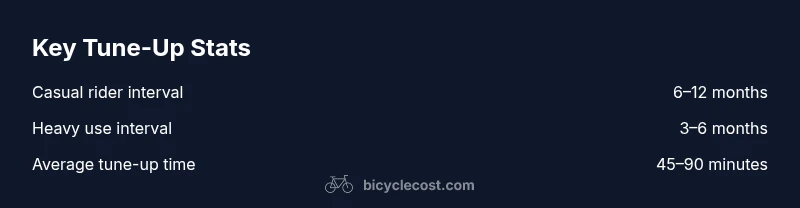
According to BicycleCost, the recommended tune-up cadence for most casual riders is every 6–12 months, with more frequent service (every 3–6 months) for heavy use, rough terrain, or high-mileage bikes. Regular seasonal checks can catch issues early and help prevent flats or gear slipping. This cadence balances safety, performance, and cost while extending bike life.
What a bike tune-up includes
A comprehensive tune-up goes beyond a quick oiling of the chain. For most bikes, a professional tune-up covers safety-critical checks and adjustments across several subsystems. Expect components such as brakes and cables to be adjusted for proper bite and smooth engagement, the derailleur and shifting to be aligned, the chain lubricated, and drivetrain wear inspected. Wheel true, tire inspection, spoke tension, and hub bearings are evaluated; the headset and bottom bracket are checked for play. Many shops will tighten bolts to torque specs, mop up any rust, and replace worn parts as needed. For riders who prefer DIY, a basic tune-up often includes cleaning and lubricating the chain, inspecting brake pads and rims, and ensuring quick-release skewers are secure. Regardless of approach, a thorough inspection of frame bolts, steering, and wheel health helps prevent unexpected failures on the road or trail.
How often to tune up your bike (how often bike tune up)
The cadence for maintenance depends on how you ride. If you log long miles, ride in wet or muddy conditions, or store your bike in damp spaces, you should lean toward the shorter end of the recommended range and schedule checks more frequently. Conversely, light, routine riding with dry storage may fit the upper end of the interval. The important point is consistency: create a cadence you can realistically maintain and adjust as your riding habits change. Regular micro-checks (before and after long rides) can catch problems early and reduce the risk of sudden failures. This approach aligns with best practices from BicycleCost Team and is suitable for most common bicycles and riders.
Factors that influence tune-up frequency
Several variables influence how often you should tune up: riding style (pavement, off-road, or mixed), climate and storage conditions (humid or salty air can accelerate corrosion), bike age and component wear, and the quality of components. Bikes used for commuting or racing experience more stress on brakes, drivetrain, and tires, pushing maintenance toward the earlier end of the spectrum. Harsh weather or frequent exposure to rain and mud also accelerates wear. Annual mileage is a practical proxy: higher mileage generally means more frequent tune-ups. While every rider’s cadence differs, tracking these factors helps you personalize a maintenance calendar that preserves safety and performance.
Seasonal vs year-round maintenance checklist
Seasonal maintenance focuses on preparing the bike for weather shifts and storage. In spring and fall, inspect components after exposure to rain, check brake pads for wear, and lubricate the chain. For winter riding, rinse off salt and grime, re-lubricate moving parts, and store your bike in a dry place. Year-round maintenance emphasizes regular checks: tire tread and pressure, brake function, gear indexing, chain wear, and bolt security. A simple checklist can be logged in a journal or digital app to ensure nothing is overlooked across seasons.
DIY vs professional tune-ups: what to look for
Basic maintenance like cleaning the chain, lubing steering bearings, and inspecting brake pads is well within a DIY wheelhouse with the right tools. More advanced tasks—such as truing wheels, indexing gears, adjusting derailleur limits, or inspecting headset and bottom brackets—often require professional knowledge and torque-rated tools. If you’re unsure, start with weekly visual checks and a semi-annual professional evaluation to confirm everything is aligned and safe.
Tracking maintenance: calendars and reminders
Use a calendar, reminder app, or bicycle maintenance log to set cadence reminders. Record the date, ride distance, weather exposure, and any issues observed. When you notice symptoms earlier than expected, shift the schedule sooner. A lightweight reminder system helps ensure you stay on top of care, reducing the likelihood of expensive repairs later and extending the bike’s life.
Cost considerations and value of regular tune-ups
Regular tune-ups can prevent major failures that leave you stranded or require costly part replacements. The value comes from safer rides, better shifting and braking performance, and longer component life. While the upfront cost is a factor, the long-term savings from avoiding breakages and extending bike life often justify scheduled maintenance in most riders’ budgets.
Tune-up interval guidance by rider type
| Scenario | Recommended interval | Notes |
|---|---|---|
| Casual rider | 6–12 months | Inspect brakes, derailleur, chain; adjust as needed |
| Heavy use / rough terrain | 3–6 months | More frequent inspection of drivetrain and brakes |
| Seasonal changes / storage | Seasonal checks | Lubrication; tire inspection; rust prevention |
People Also Ask
How often should I tune up a road bike versus a mountain bike?
Road bikes usually require tune-ups less often than mountain bikes, which endure rough trails and more mud. Plan a 6–12 month interval for road bikes, and a 3–6 month interval for MTB with more frequent checks after wet rides.
Road bikes need service about every 6–12 months; mountain bikes every 3–6 months, especially after muddy rides.
What signs mean my bike is overdue for a tune-up?
Worn brakes, slipping gears, creaking components, or poor braking responsiveness indicate a tune-up is overdue. If you hear squeaks or notice stiffness, schedule service.
Look for squeaks, slipping gears, noisy chains, or unresponsive brakes as red flags.
Is a tune-up the same as a bike service?
Terminology varies by shop, but a tune-up generally covers safety-critical checks, lubrication, and minor adjustments; a full service may replace worn parts.
Tune-ups fix what's worn and adjust what’s out of alignment; services can include parts replacement.
Can I do basic maintenance myself?
Yes for basic tasks like chain cleaning, lubing, and brake pad inspection; more complex adjustments require tools and expertise.
You can start with simple things, but some tasks need a pro.
How long does a tune-up take?
A basic tune-up typically takes a couple of hours at a shop; durations vary by scope and whether you’re in-store or mobile.
Most tune-ups take a couple of hours.
How should I schedule tune-ups over the bike's life?
Set a cadence based on usage, terrain, and storage, then adjust after significant mileage or seasonal changes. Make it part of your riding calendar.
Treat tune-ups like regular maintenance and adjust as your riding changes.
“Regular tune-ups are a safety investment that keeps your bike performing at its best.”
Quick Summary
- Set a baseline 6–12 month tune-up for casual riders.
- Increase frequency to 3–6 months for heavy use or rough terrain.
- Track mileage and riding conditions to adjust intervals.
- Ask a shop for a clear, itemized service plan.
- Regular checks reduce safety risks and long-term costs.