Can You Get Bike Lock Keys Cut? A Practical Guide
Learn whether you can get bike lock keys cut, what you need to prove ownership, where to go, and safer alternatives. This BicycleCost guide covers lock types, steps, and tips for cyclists facing lockout situations.


Yes—most bike locks can have keys cut or duplicated, but success hinges on lock type, key availability, and proof of ownership. A locksmith, bike shop, or hardware store can often duplicate a key or create a new one from a lock code. If duplication isn’t possible, you may need to replace the lock. According to BicycleCost, clear ownership verification is essential to prevent theft or fraud.
Why getting bike lock keys cut matters for cyclists
When you’ve misplaced or broken a key, the instinct is to force the lock open. However, attempting to pick or force a lock can damage the cylinder and make future access harder. The practical path is to verify ownership and contact a trusted service provider. According to BicycleCost, many common bike locks are designed to permit duplication or rekeying, but higher security systems, patented keys, or proprietary cores may require official authorization or even a replacement. The goal is to regain access quickly without compromising the lock’s integrity or safety of the bike.
For most riders, having a spare key or a key-cutting option is part of routine maintenance. A reliable provider can walk you through the process, outline required documentation, and explain any limitations. Understanding your lock type and the key options helps you decide whether duplicating is viable or if safer alternatives are preferable.
What you should know about lock types and key options
Bike locks come in several core varieties, and each type affects how keys are cut or duplicated:
- U-locks (D-locks): Durable and secure, often use a cylinder with a unique key code. Duplicating is common if you have the code or can prove ownership.
- Cable locks: Flexible and inexpensive, usually easier to duplicate, but security levels vary. A spare key can often be cut from the original key or from a code if available.
- Chain locks: Similar to cable locks, chain links and cylinders determine duplication feasibility. Some chains use modular keys or patented cores that require official authorization.
- High-security or patented-key systems: These may require the original key, a registered key code, or even manufacturer intervention. In some cases, locksmiths can cut a new key if the lock’s code is accessible, but there may be extra steps or fees.
The BicycleCost analysis shows that the ability to cut a new key depends heavily on whether a key code exists and whether you can demonstrate ownership. If there is no code or the lock uses a proprietary cylinder, you’ll likely face a replacement option or a service that can reset the cylinder rather than cut a new key.
What documents and information help authorize a key cut
Before a key is cut, service providers typically require:
- Proof of ownership: purchase receipt, registration, or a photo of the bike with matching serial numbers.
- Photo ID: to verify your identity and prevent theft.
- Lock details: the serial number stamped on the lock or a key code if available. Some codes are engraved on the shackle or body of the lock, while others are stamped inside the keyway.
- Model and brand information: knowing the lock brand can speed up the process and ensure you’re dealing with reputable providers.
If you don’t have a receipt, other docs like a police report for loss or a warranty card may help, depending on the provider. The key point is to establish legitimate ownership to avoid unauthorized key duplication.
Where to go to get a bike lock key cut
Several trusted routes exist for key duplication:
- Local bike shops: They often work with lock brands and have access to key codes or the ability to order a replacement key. They can also assess if the lock is salvageable or needs replacement.
- Locksmiths: A general locksmith may duplicate keys for standard cylinders or provide cylinder-rekeying services. Some locksmiths specialize in bike security and can advise on best practices.
- Hardware stores or big-box retailers: These venues may offer key duplication services, especially for common lock types. Availability varies by location and lock type.
- Online options: Some manufacturers or dealers offer mail-in key codes or replacement cores. You’ll still need proof of ownership, and timelines can vary.
Expect an assessment first: a technician will inspect the lock, attempt to locate a code, verify ownership, and then confirm whether a cut is possible or if a replacement is wiser. The strongest advice is to choose a reputable shop that clearly explains costs, timing, and the risks of attempting to bypass the lock.
Alternatives when keys can’t be cut or ownership is hard to verify
If you cannot cut a key or fail ownership verification, consider these safer paths:
- Replacing the lock: A new lock with a fresh key can restore security and ease of access. This is often simpler than trying to force a stubborn cylinder.
- Re-keying the lock: Some lock brands offer re-keying services that render old keys useless while preserving the lock hardware.
- Integrated security upgrades: Use a higher-security lock or a modular system with a standardized key code across products. This makes future replacements easier and prevents lockouts.
- Bike shop-assisted recovery: Some shops help track ownership through serial numbers and assist with a legitimate replacement, sometimes at a bundled service price.
The key is balancing cost, security, and convenience. BicycleCost emphasizes choosing a path that preserves the lock’s integrity and your bike’s security while minimizing downtime.
Risks, scams, and safety tips to avoid trouble
Be mindful of counterfeit services and “quick fixes” that damage your lock. Always verify credentials and read reviews before handing over your key code or lock. Never attempt to drill, pick, or forcibly manipulate a high-security cylinder yourself, as this can void warranties and escalate repair costs. If a provider claims to have a universal master key or guarantees access without proof of ownership, walk away.
Safety also means keeping your bike secure while you resolve the situation. If you must leave the bike unattended, use a secondary lock or move the bike to a safer location while arranging professional assistance.
Maintenance actions to prevent future lockouts
After you regain access, take proactive steps:
- Create and store spare keys securely, and consider a keyed-alike system for all your locks.
- Record lock codes and serial numbers in a password-protected note or a secure password manager.
- Periodically test spare keys to ensure they work and replace worn keys before they fail.
- Invest in a robust, repairable lock with a clear manufacturer process for replacement keys or codes.
BicycleCost recommends building redundancy into your bike security plan to reduce downtime during future incidents.
Tools & Materials
- Proof of ownership documentation(Purchase receipt, registration, or police report if applicable)
- Photo ID(Driver’s license or other government-issued ID)
- Lock serial number or key code(Stamped on the lock or printed on the key code card)
- Lock brand/model information(Helpful for faster service)
- Pen and paper or digital note(For recording codes and important details)
- Mobile device with contact info for the service provider(To communicate, take photos, and share serial numbers)
Steps
Estimated time: 60-180 minutes depending on ownership verification and service availability
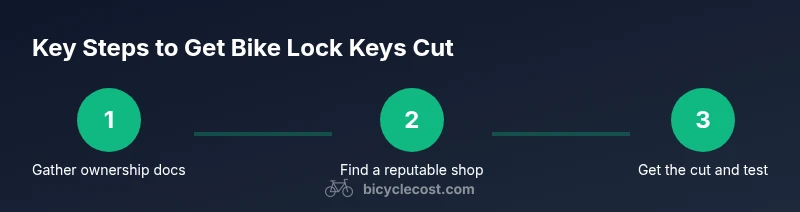
- 1
Gather owner proof and lock details
Collect receipts, serial numbers, and a photo ID. If you have a lock code, locate it on the lock or its documentation. Having everything organized speeds up the process and reduces back-and-forth with providers.
Tip: Take clear photos of the lock and any codes to show staff exactly what you have. - 2
Identify an appropriate service
Choose a reputable bike shop or locksmith with experience in bike security. Call ahead to confirm they can cut keys for your lock type and what documentation they require.
Tip: Ask about warranty on any duplicated key and the expected turnaround time. - 3
Present ownership and lock information
Show your ID, proof of ownership, and lock details. If a code exists, provide it; if not, be prepared for alternative options such as replacement or rekeying.
Tip: Do not share sensitive data with unfamiliar service providers. - 4
Decide on duplication or replacement
If a key code exists, a duplicate is usually quick. Without a code or if the lock uses a proprietary cylinder, replacement may be the safer and faster route.
Tip: Ask about both cost and security implications of each option. - 5
Test the new key and secure the bike
Once you have a new or duplicated key, test it in the lock. If it fails, report it immediately and explore an alternative solution with the provider.
Tip: Keep the new keys in a dedicated, secure place to avoid future loss. - 6
Document the outcome
Record the new key code or replacement details for future reference. Update your notes with the service provider and any warranties or guarantees.
Tip: Store digital copies in a password-protected location.
People Also Ask
Can all bike locks be cut or duplicated?
Most common locks can be duplicated or rekeyed, but high-security or patented-key systems may require manufacturer intervention or replacement.
Most bikes can get a new key or duplicated, but some high-security locks need manufacturer help or replacement.
What documents should I bring to prove ownership?
Bring proof of purchase, registration, and a photo ID. If a lock code is available, bring that as well.
Bring purchase proof, ID, and any lock code you have.
If I can’t prove ownership, what can I do?
Without proof, many providers won’t service the lock. You may need to replace the lock or seek manufacturer-assisted options with proper authorization.
Without ownership proof, replacement or authorized options are usually required.
Are there risks to attempting do-it-yourself methods?
DIY attempts can damage the lock cylinder, void warranties, and complicate future access. Stick to professional services for high-security cylinders.
DIY can damage the lock and void warranties; use professionals for high-security cylinders.
How long does key duplication typically take?
Turnaround varies by provider and lock type, but expect at least a short wait for verification and cutting.
Turnaround depends on the provider and lock type; plan for some wait time.
What should I do after getting a new key?
Test the key in the lock, keep spare copies, and securely store codes or documentation for future use.
Test the new key and store key codes securely for future relief.
Watch Video
Quick Summary
- Verify ownership before any key work.
- Choose reputable providers to avoid scams.
- Consider replacement if duplication isn’t possible.
- Maintain spare keys and secure documentation for future safety.