How to Bike on Snow: A Practical Winter Riding Guide
Learn practical, safe techniques for biking on snow, including gear, tire choices, braking, body position, and route planning with BicycleCost's expert guidance.


By the end of this guide you will know how to bike on snow safely and effectively. You’ll learn essential gear, tire choices, braking and balance techniques, plus route planning for icy or powdery surfaces. Follow the step-by-step approach to build confidence on winter trails and streets while staying warm, visible, and in control.
Why snow changes riding dynamics
Snow affects grip, balance, and braking. Even small changes in snow type, temperature, and moisture can alter how your tires interact with the ground. As you begin riding in winter, you’ll notice that turns feel different, acceleration is gentler, and braking requires smoother inputs. According to BicycleCost, winter riding is as much about technique as it is about equipment; the right mindset reduces risk and boosts confidence. Snow comes in many forms: packed or firm snow on trails, crusty top layers, fresh powder, and hidden ice beneath. Each type behaves differently under weight. Packed snow can offer reasonable grip if you maintain steady cadence and smooth steering. Powder demands gentler power and wider lines. Ice is the most hazardous and can hide under a crust, producing unexpected slippages. Before heading out, assess snow texture, temperature, and visibility, then adapt your route and speed. This foundation informs gear choices, tire setup, and safe riding techniques, ensuring you stay in control on winter surfaces.
Gear and bike setup for snowy conditions
Riding on snow requires gear and a bike setup that prioritize warmth, visibility, and grip. Start with a waterproof, breathable outer layer and moisture-wicking base layers. A well-fitting helmet, warm gloves, and insulated socks help maintain dexterity and comfort. For the bike, ensure brakes are responsive, lights are bright, and the drivetrain shifts smoothly even when cold. If you ride on icy stretches, consider fenders or mudguards to reduce spray that can impair visibility. On flat ground, practice balance and braking to build muscle memory before tackling longer segments. BicycleCost’s guidance emphasizes practicing in a safe area, carrying a phone, and planning an exit route in case conditions worsen. Keep a small repair kit, tire levers, and a pump with a gauge; cold weather makes pinch flats more likely, and you want to address punctures quickly. All clothing should allow full range of motion while keeping you warm and dry.
Tire choices, traction, and pressure in snow
Tires dramatically influence traction in winter conditions. If you can, use winter-specific tires with deeper tread, or studded tires for icy patches. In general, reduce tire pressure slightly to increase the contact patch and improve grip on compacted snow, but don’t go so low that the tire buries itself in deep powder. Check sidewall clearances and ensure there’s no rubbing when you spin the wheel. Tubeless setups can help prevent pinch flats, but you must verify sealant integrity in cold weather. Consider having two wheelsets: one for packed snow and a lighter, more studded option for icy days. BicycleCost analysis suggests that riders who optimize tire choice and maintain steady, progressive inputs experience more consistent grip and safer braking on winter surfaces. Always test your tires on a safe surface before venturing onto mixed terrain.
Safe riding techniques on snow and ice
Adopt a light touch on the handlebars to feel shifts in grip and avoid overcorrecting. Bend your elbows and knees slightly to act as natural shock absorbers, keeping the bike stable over irregular surfaces. Maintain a centered, low stance with your weight over the pedals rather than the saddle to maximize traction. Brake gently, progressively, and use both brakes in a controlled manner rather than slamming the lever. Practice emergency stops in a safe space to understand your bike’s stopping distance on snow. When curves appear, take wider lines and avoid abrupt steering inputs. Visibility is critical in winter; wear bright colors and keep lights on, especially in low-light conditions. Delegating some braking to the rear wheel can help prevent skidding on slick patches, but avoid locking the rear wheel entirely. BicycleCost’s approach emphasizes deliberate, controlled movements over aggressive riding.
Route planning and safety considerations for winter rides
Plan routes with lower traffic and longer daylight windows whenever possible. Favor routes with clear sightlines, predictable surface textures, and known snow removal patterns. Check the forecast for wind chill, precipitation type, and temperatures that might cause ice formation or refreezing after sunset. Carry a map or GPS and share your planned route with someone. In urban areas, ride with extra caution near intersections where ice tends to form first. If you encounter unexpected ice, dismount and walk the bike through the tricky section. Always wear a helmet, keep lights and reflective gear visible, and be prepared to cut rides short if conditions worsen. Preparation reduces risk and makes winter riding enjoyable.
Maintenance, care, and post-ride checks
Rinse off salt and grime after a winter ride to protect the drivetrain and frame. Wipe down the chain and lubricate with a light cycling oil once the bike is dry to reduce corrosion. Inspect brakes, cables, and rotors for warmth-induced swelling or stiffness, and test them before your next ride. Dry and store the bike in a sheltered area to prevent rust and freezing of components. Check tire pressure again after rides in very cold weather, as pressure can drop with temperature. Lubricate joints and apply protective spray to prevent rust on exposed metal parts. Finally, log any mechanical issues you encountered so you can address them before the next trip.
Common mistakes and troubleshooting
A common error is riding in too much gear or too little momentum, which reduces traction. Overly aggressive steering or abrupt braking on snow and ice increases the risk of falls. Another frequent mistake is neglecting lights and visibility during winter days when daylight is limited. If you feel slides during acceleration or braking, ease off inputs and recheck tire pressure and temperature. If you encounter persistent slippage on a route, seek a safer alternative and consider practicing on smoother sections before attempting riskier terrain. Regular maintenance after winter rides helps prevent cold-weather damage and extends the life of components.
Tools & Materials
- Winter-ready bicycle(Bike with reliable brakes; suitable for cold conditions)
- Studded tires or snow-specific tires(Useful for icy patches or packed ice)
- Compact repair kit(Pliers, tire levers, patches)
- Tire pressure gauge(Check pressure for traction)
- Pump with gauge(For on-the-spot adjustments)
- Lights (front and rear)(High visibility in low light)
- Waterproof outer layer jacket(Keeps wind and moisture out)
- Thermal gloves and warm socks(Maintain dexterity in cold)
- Base layers and insulating layers(Moisture-wicking and warmth)
- Goggles or clear glasses(Protection from wind and glare)
Steps
Estimated time: 60-90 minutes
- 1
Check conditions and plan
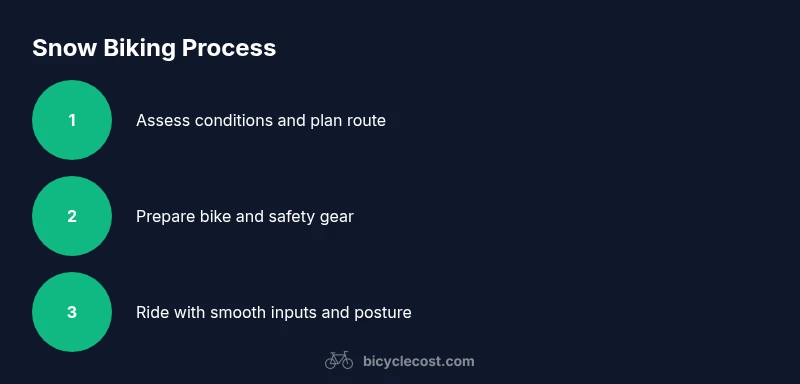
Review weather, daylight, and trail conditions. Identify potential icy patches and decide whether to postpone. Plan an exit route if conditions worsen and inform someone of your plan.
Tip: Choose a route with better visibility and known traction conditions. - 2
Inspect bike and safety gear
Test brakes, shift performance, and lights while the bike is stationary. Ensure tires have adequate tread and check for any ice buildup on the rims or chain. Confirm that the helmet, gloves, and outer layers fit properly.
Tip: Test braking on a dry patch before entering snow. - 3
Dress appropriately
Layer up with moisture-wicking base layers and windproof outerwear. Ensure you have warm, grippy gloves and a well-fitted helmet. Keep neck and face protected against cold air.
Tip: Avoid overdressing to prevent overheating and reduced mobility. - 4
Mount and balance on flat ground
Stable footing is essential before engaging snow. Stand with a balanced stance, pedals level, and hands light on the bars to feel the bike’s response. Move slowly to avoid sudden shifts.
Tip: Practice mounting and stopping on a safe, flat patch first. - 5
Begin riding on packed snow
Start with low speed to feel how the tires grip. Keep a smooth cadence and maintain a centered body position. Avoid sharp steering inputs that can cause slides.
Tip: Use gradual acceleration and keep your weight over the pedals. - 6
Climb and descend with control
Shift to a lower gear for climbs; maintain steady cadence. On descents, apply light, progressive braking and keep your weight centered over the bike. Look ahead to choose stable lines.
Tip: Practice braking with both brakes and avoid locking either wheel. - 7
Respond to slips safely
If you feel the front or rear slipping, ease off inputs and realign your line. Do not abruptly steer or brake hard. Move to a safer section or dismount if necessary.
Tip: Keep hands on the brakes with light grip to maintain control. - 8
Post-ride care and storage
Wipe down the bike to remove salt and moisture, dry thoroughly, and re-lubricate the chain. Check for wear and store in a sheltered area to minimize corrosion.
Tip: Inspect components for cold-weather damage before next ride.
People Also Ask
Is it safe to bike on snow?
Snow biking can be safe when you plan ahead, wear proper gear, and ride with controlled inputs. Avoid icy patches and ride at reduced speeds. Always have a backup plan and let someone know your route.
Snow biking is safe if you plan, dress for warmth, and ride with smooth inputs. Avoid ice and ride with caution.
What tires are best for snow?
Winter tires with deeper tread or studded tires provide better traction on snow and ice. For many riders, a dedicated winter wheelset improves consistency and grip in varying conditions.
Winter tires with good tread or studs offer better grip on snow and ice.
How should I dress for snow biking?
Dress in layers with moisture-wicking base layers and a windproof outer shell. Include warm gloves, socks, and a hat or balaclava under your helmet. Bright, reflective gear improves visibility.
Layer up with moisture-wicking base layers, a windproof outer layer, and bright gear for visibility.
Can I bike on snow if it’s icy?
Riding on ice is risky. If you must ride, choose a route with more traction, slow down, and use progressive braking. Consider carrying spikes or studs for persistent icy sections.
Ice is very risky; slow down, test traction, and avoid sudden inputs.
How do I stop quickly on snow?
Brake progressively with both brakes and avoid abrupt, hard inputs. Keep your weight centered and slightly back to prevent front-wheel washout. Practice stopping on a safe patch before venturing onto mixed terrain.
Brake gradually with both brakes and stay centered to stop safely.
What should I carry for a winter ride?
Carry a small repair kit, a pump, a light, extra warm layers, and a means to communicate in case of emergency. Let someone know your route and expected return time.
Bring a repair kit, pump, lights, extra layers, and inform someone of your route.
Watch Video
Quick Summary
- Assess snow and weather before riding
- Choose appropriate winter tires or studs when needed
- Maintain a relaxed, centered stance for grip
- Plan routes with clear traction and daylight
- Carry a basic repair kit and lights for visibility