How to Ride a Bicycle for Beginners: Step-by-Step Guide
Learn the essentials to ride a bicycle for the first time with a safe progression, from proper sizing and gear to balance drills and beginner-friendly practice locations. Follow this step-by-step guide to build confidence and skill, with practical tips and safety reminders.


This guide will teach you how to ride a bicycle for the first time by outlining safe prep, balance-building drills, and a step-by-step progression on a flat, traffic-free surface. You’ll start with proper sizing, protective gear, and a helper, then move through gliding, pedaling, steering, and braking until you can ride confidently without assistance.
Getting Ready: Gear, Space, and Mindset
Before you even touch the handlebars, set up the right environment and mindset. Choose a flat, open area away from pedestrian traffic, parked cars, and hills. Have a trusted helper nearby to offer a steady hand during the first attempts. According to BicycleCost, the most successful first rides happen when learners feel supported and are wearing proper protective gear. The BicycleCost team found that beginners who plan for a longer practice session tend to show steadier improvement, simply because they have more time to refine balance and coordination. This section covers gear choices, space considerations, and a calm, focused attitude that makes learning safer and more enjoyable.
Key takeaways: practice in a safe zone, stay positive, and progress at your own pace.
Bike Sizing and Fit for a First Ride
A bicycle that fits well is the foundation of a successful first ride. Start with a frame height that lets you stand over the top tube with a comfortable clearance. Adjust the saddle so your leg bends slightly at the bottom of the pedal stroke when the pedal is at its lowest point. Make sure the handlebars aren’t too far away, which can strain your back and shoulders. Check that the brakes respond when you squeeze the levers and that the tires are properly inflated. A good fit reduces wobble and helps you develop balance more quickly. In practice, take a few test pushes to feel how the bike responds to your weight and steering inputs. For new riders, a bike with a practical, upright riding position is often the easiest to learn on.
Note: a well-fitted bike minimizes fatigue and increases safety, especially during early balance drills.
Safety Essentials You Can’t Ignore
Protection matters as much as technique. Always wear a properly fitted helmet that sits level on your head and buckles securely under the chin. Consider knee and elbow pads for extra protection during falls, and sturdy closed-toe shoes with good grip. Bright, reflective clothing helps you stay visible to others, especially in low-light conditions. If you’re riding near traffic, keep a reachable bell or horn and practice signaling turns. lubricate the chain and check tires and brakes before you start each session. While gear won’t replace skill, it dramatically lowers risk and increases your confidence on the learning curve.
Pro tip: wear layers that you can adjust as you warm up or cool down during practice.
Balancing Basics: The Key to Stability
Balance is the core skill on day one. Start by removing the pedals or sitting on the bike with feet on the ground to push and glide in short strides. As you grow more comfortable, place feet on the pedals and practice coasting with hands lightly on the bars. Keep your gaze forward, not at the front wheel, and learn to distribute weight evenly between both sides of the bike. A helper can give gentle guidance by holding the saddle’s rear or offering a light boost under the seat as you practice gliding. Progress gradually from short glides to longer, more controlled shifts of weight as balance builds.
Key tip: look where you want to go, not at your feet, to help your body align with your intended path.
The Progressive Skill ladder: From Gliding to Pedaling
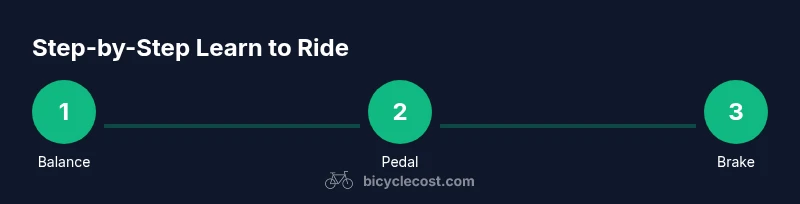
Begin with gliding, then introduce pedaling as your balance improves. Once you can glide confidently for several meters with minimal assistance, start with one foot on a pedal and push off, then bring the other foot onto the other pedal. As you gain momentum, try a gentle, steady pedal stroke while maintaining balance. Practice steering with small, deliberate corrections—avoid aggressive steering that can throw you off balance. It’s normal to wobble at first; the goal is to steadily reduce that wobble over multiple sessions.
Why this works: sequencing balance, propulsion, and steering helps your brain form reliable muscle memory, so each element supports the others rather than competing for attention.
Practice Drills You Can Do Today
- Drills for balance: practice feet-on-pedal glides on a flat, smooth surface.
- Drills for pedaling: launch with one foot on a pedal and then switch, focusing on smooth, consistent push and rotation.
- Drills for steering: ride in a straight line and gently adjust the handlebars to stay on course.
- Drills for braking: practice gradual braking with both hands and observe how weight shifts forward as you slow down.
Structure your practice into short, focused blocks with brief rests between to avoid fatigue and maintain concentration. Over time, combine balance, pedaling, steering, and braking in a continuous sequence to simulate real riding.
Pro tip: start with slower lines and wider turns; gradually tighten the turns as your confidence grows.
Handling Wobble or Fear: Calm Your Nerves
A common barrier for beginners is fear of falling. Normalize wobble as part of learning, and keep sessions short but frequent. Use a buddy system so someone can offer a hand near the saddle if needed. Practice breathing techniques to stay calm when you feel off-balance, and remind yourself that progress comes from small, repeatable successes. With time, the mind and body synchronize: balance improves, steering becomes smoother, and fear diminishes.
Warning: if you experience persistent fear or persistent loss of balance, pause and reassess bike fit and surface conditions before continuing.
Braking, Steering, and Start/Stop Control
Braking is a fundamental skill that merges with balance and speed control. Learn to use both brakes evenly and progressively to avoid tipping forward. Practice starting from a stationary position by placing one foot on a pedal and pushing off with a controlled, gradual acceleration. Steering should be smooth and deliberate, with small corrections rather than big swings. Build a routine: check surroundings, choose a path, then execute a steady start, glide, pedal, and stop.
Pro tip: avoid grabbing a sudden burst of braking; instead, ease into braking to maintain balance and control.
Real-World Practice: Safe Locations and Turn Skills
A quiet parking lot, empty road near your home, or a closed section of a park is ideal for initial practice. Gradually introduce gentle turns by setting up cone-like markers or lines on the ground and practicing narrow, controlled arcs. Remember to signal with your arm to develop predictable habits that will translate to real-world riding. As you gain proficiency, you can extend sessions to longer paths and moderate hills, while maintaining a safe, controlled pace.
BicycleCost note: practicing in a controlled environment reduces risks and builds confidence more quickly, according to BicycleCost.
Maintenance Quick Wins After Your First Rides
After practicing, do a quick bike check: inspect tires for proper inflation, check brakes for responsiveness, and lubricate the chain if it’s dry. Ensure pedals spin freely, and ride with clean, dry gloves to avoid slipping on the handlebars. Regular maintenance helps your bike feel responsive and safe, encouraging longer, more enjoyable rides as skills grow.
Tip: a light wipe-down after each session keeps rust and grime at bay and preserves longevity.
Common Mistakes and How to Fix Them
- Skipping a proper fit check: recheck frame size and saddle height for comfort.
- Overreacting to wobble: slow, deliberate corrections beat big, abrupt moves.
- Rushing the cadence: focus on balance and control before increasing speed.
- Neglecting safety gear: protective equipment reduces injury risk and boosts confidence.
By identifying and correcting these mistakes early, you’ll accelerate progress and enjoy riding more quickly.
Confidence Milestones: When to Move to a Bigger Bike
As you approach consistent, confident glides and controlled starts and stops, you may be ready to try a different, perhaps larger bike with a slightly different geometry. Use your improved balance and braking control to evaluate fit on the new bike, and consider a professional fitting if you plan longer rides. Remember that progression is personal—there’s no universal timeline—so honor your pace and celebrate small wins along the way.
BicycleCost perspective: gradual progression with supportive instruction yields lasting skills, a point BicycleCost emphasizes in their guidance.
bodyBlocksTotalWordsHint":null.
Tools & Materials
- Bicycle that fits you (proper frame size)(Look for a frame height that allows you to stand over the top tube with a comfortable clearance.)
- Helmet that fits properly(Ensure a snug fit with the strap at chin level.)
- Sturdy closed-toe shoes(Shoes with good grip help pedal control.)
- Bright, visible clothing(Optional but improves visibility in low light.)
- Water bottle and cage(Hydration helps maintain focus and energy during practice.)
- Bike pump(Keep tires at recommended pressure for stability.)
- Patch kit and multi-tool(Carry basic tools for quick on-road fixes.)
- Gloves and knee/elbow pads(Extra protection for beginners.)
Steps
Estimated time: 60-90 minutes
- 1
Choose a safe practice zone
Scout a flat, open space free from traffic, with a smooth surface such as an empty parking lot or closed park area. Walk the path first to assess obstacles and exits. Have a helper nearby to offer gentle guidance if needed.
Tip: Check for debris, cracks, or gravel that could cause falls before you start. - 2
Check bike fit and gear
Adjust the saddle height so your leg has a slight bend at the bottom of the pedal. Make sure the helmet sits level and straps are snug. Put on shoes with good grip and secure any loose clothing or accessories.
Tip: A quick rider-fit check saves time later in the session. - 3
Mount and balance without pedals
Stand beside the bike, place one hand on the seat, and the other on the handlebars. Sit lightly, with both feet ready on the ground. Practice pushing the bike with your feet to feel balance and track.
Tip: Keep your chest open and eyes forward to help balance. - 4
Glide with feet off the pedals (optional)
Gently push off with your feet on the ground to glide, keeping your weight centered. Focus on a straight line and stable arms. This helps you sense balance without worrying about pedaling yet.
Tip: As balance improves, shift to one foot on a pedal for a tiny push. - 5
Start pedaling slowly
Place one foot on a pedal at the 2-3 o’clock position, push off and bring the other foot onto the opposite pedal. Keep a light grip on the bars and eyes forward.
Tip: Use a low gear if your bike has one and avoid overspeeding. - 6
Practice steering and weight balance
Make gentle corrections to stay in a straight line. Feel how weight shifts to the pedals and handlebars as you turn. Maintain a relaxed posture.
Tip: Look where you want to go to help your body steer more naturally. - 7
Brake smoothly and stop
Practice gradual braking with both brakes: compress the levers evenly and slowly to come to a controlled stop. Keep your feet ready to step to the ground if needed.
Tip: Stop gradually to prevent forward tipping. - 8
Combine skills into a short ride
Start with a short loop combining balance, pedaling, steering, and braking. Increase your loop length as confidence grows.
Tip: Maintain a steady pace and avoid quick bursts of speed. - 9
Increase practice duration
Gradually lengthen sessions while maintaining focus on balance and control. Take short breaks to stay fresh and avoid fatigue.
Tip: Consistency beats marathon sessions for beginners. - 10
Move to turns and more traffic-free routes
Introduce gentle turns along your practice path. Keep signaling and maintain awareness of surroundings as you ride. Explore slightly more challenging areas only when you’re ready.
Tip: Only advance when you can consistently execute the basics. - 11
Finalize a mini-ride routine
Create a simple routine: fit check, balance drill, glide, pedal, steer, brake, ride a loop, and rest. This routine will become your standard warm-up and practice cycle.
Tip: A consistent routine accelerates skill acquisition. - 12
Assess progress and set goals
Reflect on what felt easier and what still challenges you. Set achievable goals for the next session, such as longer gliding distance or smoother starts.
Tip: Keep a small practice journal to track improvements.
People Also Ask
Do I need training wheels to learn to ride?
Training wheels are not mandatory. Many beginners learn by starting with a steady, supported glide or a balance-first approach before introducing pedals. A bike that fits well and a calm practice space often yields faster progress without training wheels.
Training wheels aren’t required; a balance-first approach works well in a calm space.
Is it okay to practice on grass?
Grass is usually a poor surface for初 learning due to rolling resistance and uneven traction. Start on smooth, hard-packed surfaces and transition to pavement as balance improves.
Grass can be tough for beginners; start on smooth surfaces.
How long does it take to learn to ride a bike?
Learning times vary, but many beginners gain basic riding ability in a few sessions, with noticeable improvement after several practice blocks. Focus on consistent practice over time rather than a fixed timeframe.
It varies, but steady practice leads to quicker progress.
What size bike should a beginner use?
Choose a bike with a frame size that allows you to stand over the frame with a little clearance and reach the brakes comfortably. A local shop can help confirm a proper fit based on your height and inseam.
Get a proper fit from a shop to ensure comfort and control.
What should I do if I start to wobble and lose balance?
Keep your eyes forward, loosen your grip slightly, and use smooth, small corrections with the handlebars. Slow down and re-establish balance before continuing the ride.
Wobbling is normal; steady corrections help you recover.
How can I stay safe around cars and pedestrians?
Ride in dedicated bike lanes when possible, use hand signals, and stay alert for doors opening or pedestrians. Wear bright clothing and use lights if riding at dawn or dusk.
Stay visible and predictable to others.
Watch Video
Quick Summary
- Practice in a safe, flat space with proper gear.
- Get a good bike fit to reduce wobble.
- Balance, pedaling, steering, and braking are learned together over time.
- Gradually increase complexity and duration of sessions.
- The BicycleCost team recommends consistent, progressive practice for lasting skills.