How to Recycle a Bicycle: A Practical Step-by-Step Guide
A practical guide to recycle a bicycle responsibly, from safe dismantling to recycling options or donation. Learn tools, centers, upcycling ideas, and tips to reduce waste.


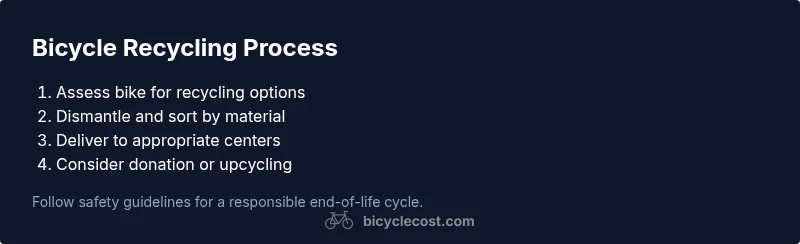
This guide shows you how to recycle a bicycle responsibly by assessing the bike, safely dismantling components, and choosing recycling or donation options. You’ll need basic tools, access to a local recycling center, and a plan for handling old parts. Follow the step-by-step process to minimize waste and maximize reuse. This approach aligns with sustainable cycling practices.
Why recycling a bicycle matters
Every bicycle carries value beyond its ride. When you recycle bicycle components, you prevent valuable metals and plastics from ending up in landfills and reduce energy needed to manufacture new parts. The BicycleCost team notes that responsible recycling aligns with practical maintenance and sustainable cycling. By reusing components that still function and disposing of the rest properly, you extend the bike's life cycle and strengthen the local circular economy. Recycling also keeps hazardous fluids, like oils and solvents, from polluting waterways and soil. The process isn't just about throwing things away; it's about choosing the best end-of-life path for each part. Start with a clear decision tree: which parts can be reused, which should be upgraded or donated, and which are best recycled as scrap metal. If you approach this task thoughtfully, you can turn an end-of-life bike into a resource for neighbors, clubs, and repair spaces. The goal is to minimize waste while preserving safety and value. Recycle bicycle materials whenever possible, and seek programs that accept bikes as donations or scrap metal. This first step sets the tone for a responsible, community-minded disposal.
Environmental and community benefits
Recycling a bicycle yields environmental benefits by reducing demand for virgin materials and lowering energy use associated with producing new parts. When the BicycleCost team analyzes bike end-of-life practices, they emphasize the way reuse and proper disposal supports local repair ecosystems, charities, and community bike programs. Salvaging functional components can fund local biking initiatives, while responsibly disposing of non-reusable parts minimizes pollution and landfill burden. Donated bikes or parts help schools, clubs, and repair shops stock affordable options for new riders. Community programs often route salvaged frames and parts to refurbishing projects, giving second lives to equipment that would otherwise go to waste. Adopting a mindful approach to end-of-life bikes also encourages brands, retailers, and hobbyists to design for easier recycling in the future. Overall, the impact is practical: fewer raw materials mined, less energy wasted, and more opportunities for people to ride.
Assessing the bicycle for recycling options
Start by inspecting the bike to identify which components are reusable, repairable, or recyclable as scrap. Metal frames, aluminum rims, and steel components are commonly processed at metal recyclers, while plastics and rubber come through specialty streams or end-processors. Assess the condition of the drivetrain, brakes, cables, tires, and bearings to decide whether parts can be refurbished or donated. If the frame is structurally sound and has no dangerous cracks, it may be a good candidate for refurbishment or sale as a used bike. For parts with limited life, plan for recycling streams, scrap yards, or local programs that accept metal and plastic residues. Always check local guidelines, because recycling options vary by region and facility capabilities. Purposefully labeling and storing components helps streamline the process when you reach a recycling center or a bike shop that accepts parts.
Dismantling safely: tools and preparation
A careful dismantling process reduces damage to parts and makes recycling easier. Begin by putting on gloves and safety glasses, then secure the bike on a stand or sturdy work surface. Disconnect accessories like lights and bags, and remove quick-release skewers from wheels. Use the appropriate Allen keys and screwdrivers to detach components like the seat post, handlebars, brakes, chain, cassette, and crankset. Keep fasteners organized in labeled containers. If you encounter seized parts, apply a penetrating oil and wait a few minutes before continuing. Clean hands and tools between steps to avoid cross-contamination of materials. Safety first keeps you from injuring yourself or damaging parts that could be reused or recycled.
Sorting by material: metal, rubber, plastic, and cable
Proper sorting maximizes recovery value and reduces contamination. Separate steel and aluminum from the frame and components, and keep rims with tires only if tires are being recycled; many facilities remove rubber and metals separately. Inspect cables and hoses; copper wiring and metal strands often have distinct recycling streams. Plastics from water bottle cages, shifters, and housings require different processing than metals. Rubber from tires and seals may go to specialized processors or retread programs. Label bags or bins clearly so you or a recycler can route items correctly. This step is crucial to ensure that each material type follows the correct end-of-life pathway and that hazardous fluids are handled appropriately.
Recycle centers, programs, and costs
Local governments, schools, and bike shops often host take-back programs or accept bike parts for recycling. Some centers provide drop-off days specifically for bicycles, while others offer mail-in or curbside options for metal frames. If a component is still usable, consider refurbishment or donation rather than disposal. Costs vary by center and region, and some programs offer free drop-off for bikes, while others may charge a small processing fee. Always verify hours, accepted materials, and any fees before you travel. By choosing the right facility, you help ensure that your bike parts are processed responsibly and that the journey from bike to resource is efficient and transparent.
Upcycling ideas: give parts a second life
Upcycling keeps the spirit of the bike alive even when parts are no longer roadworthy. Frame sections can become art pieces, garden trellises, or bike-themed furniture. Old rims can be repurposed as planters or wall hoops, while gears and chain links can be used in jewelry or kinetic sculptures. Tires can craft durable mats, belts, or protective sleeves for garden tools. By thinking creatively, you can turn what would be waste into useful, functional items. Document the project with photos and share your results with local bike clubs or makerspaces to inspire others to recycle bicycle components creatively.
Documentation and responsible disposal
Keep a simple record of what you recycled, donated, or upcycled, including approximate weights or counts when possible. This helps you track your environmental impact and can be useful for local programs or school projects. Photograph labels, serial numbers, and the condition of components before disposal so future owners understand what they’re receiving. If you participated in a donation or refurbishing program, retain receipts or confirmation numbers for accountability. The goal is to maintain openness about end-of-life choices and encourage others to follow sustainable practices. Finally, ensure you restore a clean work area and responsibly dispose of any fluids or hazardous materials per local guidelines.
Safety, ethics, and common mistakes
Always prioritize safety when handling bicycles at end-of-life. Use a stable stand, wear protective gear, and follow local rules for disposing of fluids and hazardous materials. Avoid disposing of fluids like motor oil or brake fluid down drains; take them to an appropriate facility. Never rush the dismantling process—careful handling preserves potentially reusable parts and prevents injuries. Ethical recycling respects the community by maximizing reuse and minimizing environmental impact. Common mistakes include mixed-material contamination, improper labeling, and neglecting local disposal rules. Plan ahead, sort meticulously, and verify acceptance criteria with your local center to ensure a smooth, responsible recycling experience.
Tools & Materials
- Workbench or stable work surface(Solid surface that can support a bike securely)
- Bike stand (or secure mounting)(Keeps bike stable during dismantling)
- Allen keys (metric and standard)(Sizes may vary; include 4, 5, 6, 8 mm as common options)
- Screwdrivers (flathead and Phillips)(For components like derailleur cables and housings)
- Pliers and wire cutters(For cutting cables and removing stubborn fasteners)
- Cable cutters(Useful for drivetrain disassembly)
- Penetrating oil (e.g., PB Blaster)(Loosens seized bolts; wait time helps effectiveness)
- Rags or shop towels(Keep mess contained and dry parts)
- Safety glasses(Eye protection from debris)
- Gloves(Hand protection during dismantling)
- Containers or bins for parts(Label by material type (metal, rubber, plastic))
- Lubricant or degreaser(Helpful for drivetrain parts)
Steps
Estimated time: 2-3 hours
- 1
Set up a stable workspace
Position a bike on a stand or secure surface. Clear the area, lay out containers for sorted parts, and prepare safety gear. A stable setup reduces the risk of damage to parts and injury during dismantling.
Tip: Double-check that the bike is balanced before starting. - 2
Disconnect and remove nonessential parts
Remove accessories such as lights, bags, and accessories. Detach the seat, handlebars, and pedals if needed. This simplifies access to the frame and major components for recycling.
Tip: Keep fasteners in labeled bags to prevent mix-ups. - 3
Remove wheels and tires
Take off the wheels, deflate tires if possible, and separate tires from rims if they will be recycled separately. Tires may require a tire-recycling stream; some facilities remove and reuse the rubber independently.
Tip: Compress or deflate tires to reduce space in bins. - 4
Dismantle the drivetrain
Detach the chain, derailleur, cassette, and crankset using the appropriate tools. Clean components to reduce contamination in the recycling stream and set them into material-specific bins.
Tip: Use penetrating oil on stubborn bolts and wait a few minutes. - 5
Sort frame, rims, and components by material
Identify which parts are steel, aluminum, or other metals, and separate plastics and rubber. Label each container so recyclers know how to process the materials.
Tip: Keep copper wires and aluminum separate to maximize value. - 6
Prepare parts for recycling centers or donation
If a part is refurbishable, consider donation or sale. Otherwise, route it to the appropriate recycling stream. Do not mix fluids with solid parts.
Tip: Check local programs for bike donations; they can fund repairs and community projects. - 7
Donations and upcycling options
Identify usable components for refurbishment or upcycling projects. Share projects with local makerspaces or cycling clubs to inspire reuse.
Tip: Take photos to document the upcycling steps for future use. - 8
Transport and documentation
Bring sorted parts to the appropriate center, with labels and notes. Keep receipts or confirmation numbers for records and potential tax benefits or program validation.
Tip: Ask facilities about pickup services if travel is a challenge. - 9
Safety, cleanup, and final checks
Clean the workspace, store leftover fluids according to local guidance, and verify that all parts are separated correctly. Ensure the bike frame and components are secured and prepared for the next stage.
Tip: Dispose of fluids through approved facilities only.
People Also Ask
Is recycling a bicycle required by law?
Regulations vary by region, but most areas require proper disposal of hazardous fluids and adherence to local recycling guidelines. Always verify with your local authority or recycling center.
Rules vary by area, but always follow local disposal rules and proper fluid handling.
Can I recycle the entire bike curbside?
Curbside programs typically accept metal scraps, not entire bikes. Check with your city’s waste service for bike-specific options or drop-off programs at nearby facilities.
Most curbside programs don’t take whole bikes; look for bike-specific drop-offs.
What parts are most recyclable?
Metal frames and components (steel and aluminum) are widely recyclable; plastics and rubber have variable options depending on local facilities. Confirm with your recycler for materials they accept.
Metals are usually recyclable; plastics and rubber depend on your center.
How should I dispose of bike fluids like oil?
Do not pour oils or other fluids down drains. Take them to a household hazardous waste facility or a recycling center that handles bike fluids.
Never pour bike fluids; use approved disposal sites.
Are there bike donation programs?
Yes. Many programs accept bikes in working condition for refurbishment or for parts to support community programs.
Yes, donate if the bike is still rideable.
What should I do if my bike has hazardous parts?
Isolate any hazardous components (fluids, batteries) and follow local guidelines for disposal. Seek assistance from a professional recycler if unsure.
Isolate hazards and follow local disposal guidelines.
Watch Video
Quick Summary
- Plan before disassembly to maximize reuse
- Sort by material to improve recycling efficiency
- Donations and upcycling extend a bike's life
- Contain hazardous fluids and follow local rules
- Document the process for accountability