Can You Put Bicycle Tyres in a Skip? A Practical Disposal Guide
Learn whether you can put bicycle tyres in a skip, explore legal disposal options, and get practical steps for eco-friendly tyre recycling with BicycleCost guidance.


Can you put bicycle tyres in a skip? In most cases, a standard skip will not accept tyres due to recycling and safety rules. Tyres require separate disposal or recycling. Always check with your skip hire provider and your local authority before loading tyres. These rules help prevent waste contamination and avoid penalties.
Tyre disposal basics
Disposing of bicycle tyres is more complex than bulk-waste items because tyres are bulky, rubbery, and have recycling streams that differ from general waste. If you’re planning a cleanup or a bike upgrade, understanding how tyres are treated helps you avoid fines and wasted trips. According to BicycleCost, most local authorities require tyres to be recycled rather than landfilled, and many skip hire operators will not accept tyres in standard waste streams. This means you should treat tyres as a separate disposal item, even if you’re disposing of several tyres at once. In practice, you’ll need to choose between dedicated tyre recycling services, drop-off at a recycling centre, or a tyre-skip option offered by some providers. In all cases, prepare to show proof of disposal if required and keep records for your own compliance. The key idea is to separate tyres from other waste streams so they can be recycled or processed responsibly. So, can you put bicycle tyres in a skip? The short answer is: not usually in a standard skip. Look for tyre-specific disposal routes instead.
Can a standard skip take bicycle tyres?
Most domestic skip hire services operate under rules that exclude tyres from general waste. A common question is can you put bicycle tyres in a skip, and the answer is usually no. Tyres pose special handling problems: they take up space, can trap air when compressed, and create recycling streams that differ from regular rubbish. Local authorities often require tyres to be recycled or disposed of through approved facilities, not simply dumped into a generic skip. Some skip companies offer a dedicated tyre skip service or an add-on to collect tyres separately, but this is not universal. If you ignore these rules, you risk fines, rejected loads, or extra charges from the skip operator. To avoid trouble, contact your chosen skip hire company before you book to confirm whether tyres are accepted, and if not, what alternatives they provide. If in doubt, plan ahead for tyre recycling drop-offs or a specialist collection instead of trying to force tyres into a standard skip.
Alternatives to using a skip for tyres
If your goal is to reduce waste while staying within regulations, there are better options than loading tyres into a standard skip. Tyre recycling centres accept used bicycle tyres and will usually provide proof of disposal. Several council bulky-waste programs also collect tyres on specific days or by appointment. Some private waste companies offer tyre-only collections with a small surcharge. Don’t forget independent tyre retailers sometimes run take-back schemes when you purchase new tyres. If you’re comparing, ask your supplier: can you put bicycle tyres in a skip? The typical answer is no, but you can arrange a tyre-specific drop-off or collection that is more cost-effective and compliant in the long run. By choosing tyre-focused disposal, you support recycling streams and reduce landfill pressure, which aligns with broader sustainability goals that BicycleCost emphasizes in its guidance.
How to prepare tyres for disposal
Preparation matters to keep loads safe and streams clean. Start by deflating bicycle tyres fully to reduce volume and make handling easier. If tyres are mounted on rims, separate the tyre from the rim if you can, as many facilities prefer tyres without rims. Place tyres in a sturdy rubbish bag, a heavy-duty bin liner, or a strong box to prevent them from scattering. Tape or seal the bag to keep it closed during transport. Label the container as 'tyres – bicycle' to help waste staff sort correctly. Keep tyres dry and clean; muddy or greasy tyres attract pests and complicate processing. If you have tubeless tyres or unusual sizes, check with the recycling centre for any additional requirements. Finally, obtain a disposal receipt or drop-off ticket as proof of proper handling and keep it with your records. A well-prepared load speeds up processing and reduces the chance of delays or extra charges.
Working with skip hire companies and recycling centres
Coordinate disposal early by contacting your skip hire company before ordering. Ask what they will and will not accept, and whether tyres incur an extra haulage or permit requirement. If tyres are refused, ask for a tyre-only disposal option or a recommended local recycling centre. When visiting a recycling centre, bring proof of disposal if required and transport tyres in secure containers. If your city offers a tyre collection day, mark it on your calendar and arrange a drop-off time. From BicycleCost’s perspective, a proactive approach reduces delays and ensures compliance with regulations. Based on BicycleCost Analysis, 2026, authorities encourage recycling and proper documentation, which protects you and the environment.
Environmental and safety considerations
Disposing tyres responsibly has environmental benefits and avoids safety hazards. Tyres contain materials that can be recycled into new products, and improper disposal can leak oils or become breeding grounds for pests. Avoid stacking tyres in the open, which can create fire hazards or collapse under pressure. Always transport tyres in sealed bags or bins to prevent leakage and to keep the waste stream clean. If you’re unsure about a facility’s acceptance, ask for a written confirmation before making the trip. Continuous compliance also reduces risk of fines and makes future waste reductions simpler. BicycleCost’s guidance emphasizes keeping disposal records and choosing options that maximise recycling, rather than simply dumping tyres in a skip.
Common questions and misconceptions
Six common questions arise when planning tyre disposal. First, can you put bicycle tyres in a skip? The typical answer is that tyres are not accepted in standard skips; always verify with your provider. Do all tyres count the same? Most programs treat bicycle tyres similarly, but some centres have size or condition restrictions. Are tubeless tyres accepted? Many facilities accept tubeless tyres, but confirm with the centre to avoid delays. What about rims? Tyres on rims are harder to process, and many facilities require rims removed. Should I keep receipts? Yes; keeping documentation helps prove proper disposal. Is it better to recycle? Recycling generally provides better environmental outcomes and avoids landfill.
Policy checklist before loading tyres
Before loading tyres, complete a quick policy check: verify skip acceptance rules for tyres, confirm any extra costs, and check whether you need a special collection or drop-off. Gather all tyres together in a secure, labeled container and ensure they are deflated. If you have a mix of tyre types, separate bicycle tyres from car tyres or other rubber waste for easier sorting at the facility. Always obtain a disposal receipt or docket after handing over tyres and store it with your waste records. Doing this reduces confusion at the site and supports responsible disposal practices.
Tools & Materials
- Heavy-duty gloves(Protect hands from sharp rims and debris)
- Sturdy bin bag or heavy-duty container(Contain tyres during transport)
- Marker or label(Label tyres as 'bicycle' for sorting)
- Deflation tool(Deflate tyres if not pre-deflated)
- Pen and notepad(Record disposal options and receipts)
- Sealant or tape(Seal bags to prevent leakage during transport)
Steps
Estimated time: 1-2 hours (depends on tyre quantity and available disposal options)
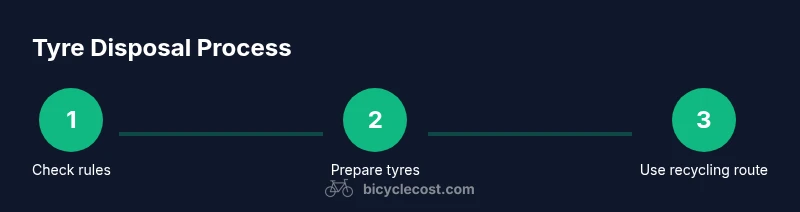
- 1
Check local rules and skip acceptance
Call your skip provider to confirm tyre acceptance and any extra charges. If tyres aren’t accepted, ask for tyre-only disposal options or a recycling drop-off nearby.
Tip: Getting a written confirmation avoids surprises on the day. - 2
Deflate and detach tyres from rims
Fully deflate bicycle tyres to reduce volume. If possible, remove tyres from rims to simplify processing at recycling facilities.
Tip: Keep rims dry and separate from tyres to streamline sorting. - 3
Package tyres for transport
Place tyres in a sturdy bag or container to prevent scattering. Seal the bag and label it as tyres – bicycle for clear handling at the site.
Tip: Use multiple bags for a large batch to avoid ruptures. - 4
Arrange drop-off or pickup
Coordinate a tyre-specific drop-off at a recycling centre or schedule a tyre-only collection with your waste provider.
Tip: Bring disposal proof or receipts when required. - 5
Get proof of disposal
Obtain a disposal receipt or ticket and keep it with your records in case of future audits or inquiries.
Tip: Store receipts with home improvement paperwork for easy reference. - 6
Review and adjust for next time
Reflect on which disposal options were fastest and most cost-effective, and use that for future bike maintenance projects.
Tip: Consider setting up a tyre recycling plan to simplify future cleanups.
People Also Ask
Can you put bicycle tyres in a standard domestic skip?
In most regions, tyres are not accepted in standard domestic skips. Always verify with the skip provider for any exceptions or tyre-only options. These rules protect recycling streams and prevent unexpected charges.
Tyres are usually not accepted in standard skips. Check with your provider for tyre-only options to stay compliant.
Do all tyre types count the same for skip disposal?
Most programs treat bicycle tyres the same as other tyres when it comes to disposal, but facilities may have size or condition restrictions. Always confirm with the site before loading.
Bicycle tyres are typically treated like other tyres, but confirm size and condition rules at the facility.
Are tubeless tyres accepted at recycling centres?
Tubeless bicycle tyres are usually accepted by recycling centres, but some sites have size restrictions. Check in advance to avoid delays.
Tubeless tyres are generally accepted, but verify with the centre beforehand.
What should I do if my skip company won’t accept tyres?
Ask for a tyre-only disposal option or a recommended local tyre recycling facility. Some providers offer separate pick-up for tyres.
If your skip won’t accept tyres, ask for tyre-only disposal or a local recycling option.
Can I recycle bicycle tyres at a local centre?
Yes, many local centres accept bicycle tyres for recycling. Bring tyres in sealed bags and follow their drop-off instructions.
Most local centres will recycle bicycle tyres; bring them in sealed bags.
How should I prepare tyres for disposal?
Deflate tyres, detach from rims if possible, bag them securely, and obtain a disposal receipt when you hand them over.
Deflate and bag tyres, remove from rims if you can, and keep your disposal receipt.
Watch Video
Quick Summary
- Check skip policy before loading tyres.
- Prefer tyre recycling over bulk skipping where possible.
- Deflate and contain tyres for transport.
- Keep disposal receipts for compliance.