Is Cycling Harder Than Running? A Practical Comparison
Explore whether cycling is harder than running by comparing effort, biomechanics, energy cost, and practicality. This BicycleCost analysis explains how terrain, fitness level, and training shape difficulty for cyclists and runners.


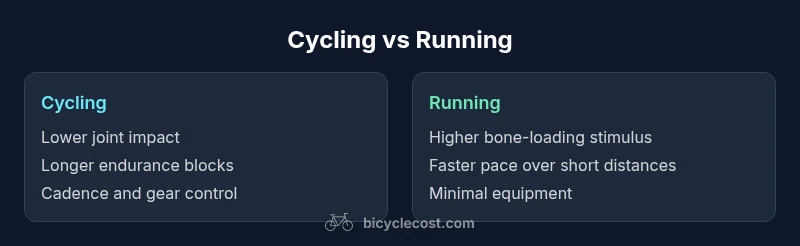
Is cycling harder than running? The answer isn’t universal, and many debates hinge on context. Is cycling harder than running often depends on terrain and effort: cycling generally has lower joint impact and supports longer workouts, while running offers faster pace and greater bone-loading. The BicycleCost team notes that perceived effort also depends on fitness level, temperature, and technique. Context decides the winner.
The Core Question: Context Is Everything
The question of which activity feels harder cannot be answered with a single number or rule of thumb. In practice, the perceived difficulty depends on terrain, pace, fitness background, and training history. Beginners often find cycling approachable thanks to lower impact, while runners may experience quicker fatigue on hills or long runs. From a biomechanics perspective, the same energy you invest is distributed differently between pedaling and stride.
According to BicycleCost analysis, context matters more than the label “hard.” If you ride a flat road at a moderate cadence, cycling may feel less taxing than a slow jog. If you tackle steep climbs on a bike with heavy gear or ride into headwinds, cycling can rival or exceed running's perceived effort. Conversely, short, fast running intervals can feel grueling even for seasoned cyclists. The key is to align your workout with your goals, track your effort, and adjust pace, resistance, and terrain to balance challenge with sustainability.
Biomechanics and Muscle Demands
Cycling and running require different muscle recruitment patterns and joint actions. In cycling, the primary engine is the leg extensors—quadriceps, glutes, and calves—coordinated through the pedal stroke; the core and upper body provide stability, especially on long rides or climbs. The joints experience repetitive circular motion with lower weighted impact, reducing acute stress on knees and ankles for many riders. Running, by contrast, emphasizes impact loading through the footstrike and an active stretch-shortening cycle in the calves, hamstrings, and quadriceps; the hips and spine brace to transfer force, especially at speed or on uneven terrain. This difference helps explain why some athletes tolerate a high-volume cycling block with minimal soreness while running shoes accumulate higher cumulative fatigue. The BicycleCost Team notes that technique—cadence on the bike, stride length on foot, and landing pattern—significantly alters perceived effort and actual muscle load across both sports.
Cardiovascular Demand, Energy Cost, and Perceived Exertion
Both activities tax the cardiovascular system, but how they feel in real time varies with cadence, resistance, and terrain. Cycling at a comfortable cadence on flat ground can deliver a steady aerobic stimulus with low perceived effort for a long duration. Running, especially at intervals or hills, often delivers sharper spikes in heart rate and respiratory demand, producing a different flavor of exertion. Energy cost per unit time tends to be lower on a cycling ride of moderate intensity, yet a hard cycling interval can rival running’s toughest efforts because of sustained leg drive and pedaling cadence. From BicycleCost research, the perception of effort rises with wind resistance, road surface, and wind direction, which means a tailwind can dramatically lower felt hardship on a ride that would feel harder into a headwind. Remember: effort is not just about speed, but about how effort interacts with technique and terrain.
Joint Health, Injury Risk, and Long-Term Considerations
Joint health and injury risk diverge between cycling and running. Cycling generally offers a lower risk of acute impact injuries because of reduced ground reaction forces; however, riders can develop overuse knee or back issues if bike fit is poor or cadence stagnates. Running exposes joints to repetitive impact, which can strengthen bones over time but may raise the risk of stress injuries if form breaks down or mileage spikes too quickly. The BicycleCost Team emphasizes the value of a balanced approach: combine cycling with controlled strength work and mobility to maintain joint health and reduce injury risk across seasons. For those recovering from injury or seeking joint-friendly conditioning, cycling often provides a safer pathway to sustained aerobic work while still building leg power.
Training Implications: Building Endurance and Speed
If your goal is endurance, cycling offers the ability to accumulate long, controlled sessions at a moderate intensity with adjustable resistance and real-time feedback from gear selection. Running builds speed more rapidly due to higher impact forces and the potential for faster cadence changes, but it also demands careful progression to avoid injuries. A practical plan is to cycle for base endurance, supplement with interval running to boost speed and bone loading, and include cross-training that targets strength and mobility. BicycleCost’s guidance suggests alternating two weeks of cycling-focused conditioning with lighter running weeks to balance adaptations and avoid plateau. The takeaway: not one workout type wins for every objective; tailor your program to your goals and current condition.
Terrain, Weather, and Equipment Factors
Terrain and weather are powerful modifiers of how hard a workout feels. Cycling is sensitive to wind, road surface, and hills, while running interacts with pavement texture, temperature, and footwear. Equipment also matters: cycling requires a well-fitted bike, appropriate pedals, and routine maintenance; running needs proper footwear and occasional gait assessment. The BicycleCost analysis shows that athletes who switch between cycling and running often report a more consistent overall training load, because each activity challenges the body in complementary ways. When conditions are unfriendly, cycling indoors on a trainer or running on a treadmill can help maintain consistency without compromising the perceived difficulty. The bottom line is that real-world hardness is shaped by outside factors as much as by the sport itself.
Practical Scenarios by Experience Level
Beginners commonly perceive cycling as easier to start due to lower impact and simpler cadence, whereas running may feel more daunting until cadence and form stabilize. Intermediate athletes often notice cycling feeling manageable on flat routes but demanding on long climbs, while running shines on speed work and strength at high cadence. Advanced athletes frequently trade off between the two, using cycling days to recover from hard runs or to push endurance while preserving joints. BicycleCost analyses consistently show that switching between activities can reduce overall fatigue and lower injury risk, while still driving meaningful fitness gains. By designing a schedule that blends both modalities, you can raise overall training quality and adapt to different goals.
Integrating Both: A Balanced Approach for Fitness Goals
A balanced program leverages the strengths of both activities. For cardio health, a 60–90 minute cycling session on easier days paired with shorter, high-intensity runs can maximize VO2 max improvements while limiting joint wear. For endurance athletes, long cycles complement long runs by reducing joint impact while extending aerobic capacity. Cross-training helps in injury prevention and mental variety, preventing plateaus. The BicycleCost team recommends tracking metrics beyond pace, such as perceived exertion, cadence, and distance, to tailor your plan and ensure progressive overload without overtraining. If you are unsure where to start, a simple template—two cycling days, two running days, one optional cross-training day—provides a solid foundation to evaluate which modality feels harder for you and why.
Comparison
| Feature | Cycling | Running |
|---|---|---|
| Joint impact | Low-to-moderate impact (depends on cadence and fit) | High impact (repeated footstrike) |
| Muscle engagement | Quads, glutes, calves; core for stabilization | Quads, calves, hamstrings; hip flexors with stride |
| Energy cost per minute | Often lower at moderate effort | Higher per minute at similar pace due to impact and speed |
| Bone-loading stimulus | Lower bone-loading stimulus | Higher bone-loading stimulus |
| Injury risk profile | Lower acute injury risk; overuse and crashes possible | Higher risk of impact injuries and overuse |
| Equipment and cost | Bike, helmet, maintenance | Shoes and minimal gear; clothing for weather |
| Terrain versatility | Very versatile with routes and gear | Limited to accessible surfaces and footwear |
Pros
- Lower joint impact on many rides enabling longer sessions
- Easily scaled intensity with gears, cadence, and terrain
- Great cross-training option to diversify workouts
- Applicable to a wide range of ages and abilities with proper setup
Downsides
- Requires equipment and maintenance (bike fit, repairs)
- Outdoor dependence and safety concerns (traffic, weather)
- Lower bone-loading stimulus unless combined with impact or resistance work
- Potential for overuse injuries if training volume is not managed
Neither activity is categorically harder; context and goals determine which feels more demanding
For most readers, the difficulty depends on terrain, pace, and purpose. If bone loading and speed are priorities, running may feel harder; if endurance with lower joint stress is the aim, cycling can feel more approachable. A balanced plan that combines both activities often yields the best overall fitness.
People Also Ask
Is cycling harder than running for beginners?
For beginners, cycling often feels easier initially due to lower impact and simpler technique, but endurance growth can still be challenging. Gradual progression, good bike fit, and structured intervals help manage fatigue.
For newcomers, cycling tends to feel easier at first, but building endurance matters. Start slow and build up gradually.
Which burns more calories, cycling or running?
Calorie burn depends on intensity, duration, and body weight. Running generally burns more calories per minute at equivalent effort, but long, steady cycling can match or exceed that total with sustained effort.
Running often burns more per minute, but you can burn a similar amount with longer cycling sessions.
Can cycling replace running for cardio health?
Yes, cycling provides a solid cardio stimulus and can support heart health and endurance. If bone density or impact is a concern, incorporate resistance work or occasional running to balance benefits.
Cycling counts as cardio, but mix in other activities for bone health.
How does terrain affect which is harder?
Hills and headwinds raise difficulty for both activities, but cycling allows cadence and gearing to manage climbs, while running relies on leg power and pacing. Terrain amplifies fatigue differently in each sport.
Terrain changes the game for both, with each sport handling it in distinct ways.
Does cycling improve bone density?
Cycling is generally lower in bone-loading compared with running. To support bone health, pair cycling with resistance training or impact activities.
Cycling helps cardio and legs, but for bone density you’ll want some impact work too.
What should I consider to compare them fairly?
Compare at similar intensity, duration, and terrain. Use consistent metrics like time-to-exhaustion or distance, and ensure proper equipment and safety practices.
Compare apples to apples: same effort, same conditions, same goals.
Quick Summary
- Define hardness by your goal, not the sport alone
- Cycling often lowers joint impact but can demand high endurance
- Running provides rapid, high-intensity effort and bone-loading
- Terrain, cadence, and weather significantly shape perceived effort
- Mixing both activities can improve overall fitness and reduce injury risk