Is Cycling a Good Way to Lose Weight? A Practical Guide
Discover how cycling supports weight loss, what to expect for calories burned, and how to design a sustainable, safe plan that fits your lifestyle. Practical tips, sample plans, and common myths debunked.


Yes. Cycling is an effective way to support weight loss when you maintain a consistent energy deficit and ride regularly. It burns a substantial number of calories, is low-impact, and scalable from beginner to advanced. The outcome depends on duration, intensity, and total weekly activity, plus nutrition and recovery. Pair cycling with resistance training for best long-term results.
How cycling drives weight loss
Weight loss fundamentally comes down to energy balance: calories in minus calories out. Cycling contributes to the 'out' side by increasing daily energy expenditure without demanding high-impact loads. Regular rides—commuting, errands, or weekend outings—help create a practical calorie deficit that can be sustained over weeks and months. Beyond the ride itself, improved cardiovascular fitness and lean mass from cycling can raise resting energy expenditure slightly, which supports weight loss over time. However, nutrition plays an equally crucial role. If you compensate by eating more after a ride, you may neutralize the deficit. A sustainable plan blends consistent cycling with sensible eating, not perfection in every workout.
Intensity matters for how your body uses energy. Steady, moderate rides burn calories efficiently and promote fat oxidation during the session. Short, high-intensity intervals boost calorie burn per minute and improve insulin sensitivity, supporting fat loss indirectly. The ideal approach combines both steady rides and intervals, tailored to your fitness level and goals. For beginners, starting with 20–30 minute sessions 2–3 times per week builds habit and confidence while protecting joints and motivation.
Calories burned by cycling: what you can expect
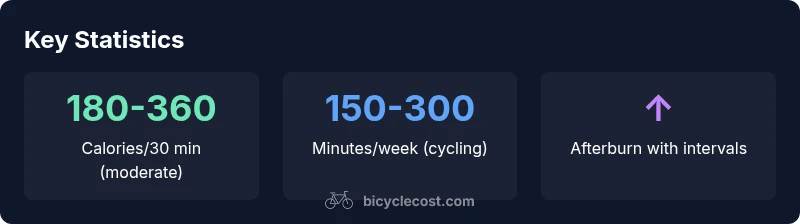
Calorie burn varies widely with body weight, cycling speed, terrain, wind, bike type, and efficiency. On average, a moderate-intensity ride on flat ground for 30 minutes can burn roughly 180–360 kcal for many adults. Heavier riders typically expend more, lighter riders less. Hills, headwinds, and intervals can push the count higher, potentially 300–600 kcal or more per 30 minutes for some workouts. An afterburn effect (EPOC) often accompanies high-intensity intervals, contributing to extra calories burned in the hours after the ride. Over weeks and months, consistent cycling supports a negative energy balance, provided eating patterns remain aligned with weight goals. The health benefits extend beyond calories: better insulin sensitivity, appetite regulation, and metabolic flexibility—factors that facilitate weight management over time.
When planning, think in terms of weekly energy expenditure rather than a single ride. A routine of 3–4 rides per week, each 45–60 minutes, commonly yields a meaningful deficit for many people. Adding light resistance training helps preserve lean mass during weight loss and supports metabolic health, making cycling part of a comprehensive program rather than a lone workout.
Optimizing cycling for weight loss: frequency, intensity, time, and type (FITT)
Adopt the FITT framework to tailor cycling workouts for weight loss. Frequency: aim for most days or at least 3–5 rides per week to accumulate meaningful energy expenditure. Intensity: mix steady-state bouts at moderate effort with some higher-intensity intervals to boost calories burned and improve metabolic health. Time: target a total weekly duration that fits your schedule—most people find 150–300 minutes of moderate activity or 75–150 minutes of vigorous effort per week effective. Type: include a variety of rides—flat-road endurance, hill climbs, and intervals—to maximize fat oxidation, cardiovascular fitness, and motivation. Progress gradually: increase duration or intensity every 1–2 weeks, not every day. Recovery matters: schedule rest days and lighter weeks to prevent overtraining and injuries. A simple starter pattern is 3 rides at 30–40 minutes with one interval-focused session each week, gradually increasing as fitness improves.
Integrating cycling with nutrition and recovery
Weight loss is about energy balance, but recovery and nutrition determine whether you retain lean mass and sustain progress. Protein intake supports lean mass during fat loss—many cyclists aim for roughly 1.6–2.2 grams of protein per kilogram of body weight per day, spread across meals. Carbohydrate timing around workouts helps performance and recovery, while fat supports overall energy needs. Sleep quality is essential for recovery and appetite regulation; aim for 7–9 hours per night. Hydration, electrolytes, and micronutrients (like iron and vitamin D) matter, especially for longer rides and in certain climates. Avoid extreme calorie restriction, which can impair performance and recovery. Instead, focus on a modest, sustainable deficit that supports training quality and daily function.
Practical cycling plans for different levels
Here are starter templates you can adapt. All plans assume 5–6 days of activity per week, with at least one rest day. Beginner: 2–3 rides per week, 20–30 minutes per ride, comfortable pace. Build to 3–4 rides, 30–45 minutes, over 4–6 weeks. Intermediate: 4 rides per week, 40–60 minutes, include one interval session (e.g., 6–8 intervals of 1 minute hard, 2 minutes easy). Advanced: 5–6 rides per week, 60–90 minutes, with 1–2 longer endurance sessions, 1–2 interval sessions, and a recovery ride. Adjust based on how your body responds and your schedule. The key is consistency and progressive overload without burnout.
Common myths and safety tips
Myth: Spot reducing works—doing sit-ups will melt belly fat. Reality: fat loss occurs systemically from all fat stores and is guided by overall energy balance and hormones. Myth: Cycling will make you bulky. Reality: cycling alone rarely causes significant muscle gain unless paired with heavy resistance training and nutrition. Safety tips: wear a helmet, check your bike regularly, stay visible, and ride within your skill level. Start with a proper fitting bike and comfortable gear. Hydration and fueling before, during, and after rides support performance and recovery. If you have injuries or chronic conditions, consult a professional before ramping up training.
Tracking progress and avoiding plateaus
Use a simple log to track weekly minutes, rides, perceived exertion, and weight or body measurements. Visible progress comes from consistency over time, not a single peak performance. If weight loss stalls, reassess energy intake, increase weekly training volume gradually, and ensure adequate protein intake. Plateaus are natural; adjust by adding one more weekly session or a brief higher-intensity block, while listening to how your body responds. Regular check-ins with your routine help maintain motivation and prevent burnout.
Estimated calories burned by cycling intensity (per 30 minutes)
| Activity type | Avg calories per 30 min | Notes |
|---|---|---|
| Moderate-intensity cycling (flat terrain) | 180-360 | Calories vary by weight and effort |
| Vigorous cycling (hills/intervals) | 300-600 | Higher energy expenditure per minute |
| Leisure cycling (easy pace) | 60-180 | Lower intensity, still beneficial |
People Also Ask
How many calories does cycling burn per hour at different intensities?
Calories burned depend on weight and pace. Moderate cycling can burn roughly 360-720 kcal per hour for many adults, while vigorous cycling with intervals may exceed that range. Use a personal calibration or a heart-rate-based estimate for accuracy.
Calories vary by weight and intensity; expect hundreds of calories per hour, increasing with effort.
Can cycling alone help me lose weight, or do I need to cut calories too?
Cycling contributes to a calorie deficit, but most people achieve the best results when it is paired with a modest dietary deficit and balanced nutrition. Sustained weight loss typically requires both activity and mindful eating.
Cycling helps, but pairing it with sensible eating yields better, longer-lasting results.
Does cycling specifically target belly fat?
No exercise spot-reduces fat. Weight loss typically comes from overall energy balance. You may notice belly measurements decrease as you lose weight from the whole body.
There’s no spot reduction; fat loss happens systemically with consistent effort.
What’s a safe weekly plan for a beginner aiming to lose weight?
Start with 2–3 rides of 20–30 minutes at a comfortable pace, 2–3 days apart. Gradually increase duration to 30–45 minutes and add a light interval session after 4–6 weeks as fitness improves.
Begin with 2–3 short rides per week, then slowly build up.
Is indoor cycling as effective as outdoor cycling for weight loss?
Both can be effective. Indoor cycling offers controlled intensity and convenience, while outdoor rides provide variability that can boost motivation and adherence. Either can drive weight loss when paired with a consistent energy deficit.
Indoor or outdoor works—consistency matters most.
How long before I see weight loss from cycling?
Many people notice changes within 4–8 weeks with a consistent plan, though individual timing varies with diet, sleep, and stress. Tracking progress helps keep you motivated.
Most people see some changes in a month or two with steady effort.
“"Consistency and smart programming beat one-off hard workouts for weight loss. Cycling provides a scalable, low-impact path that fits most lifestyles."”
Quick Summary
- Rely on a sustainable energy deficit for weight loss.
- Mix steady rides with intervals for best results.
- Pair cycling with protein and recovery strategies.
- Progress gradually; avoid drastic calorie cuts.
- Consistency beats intensity over time.