How to Bicycle Crunch: A Step-by-Step Core Exercise for Cyclists
Learn how to bicycle crunch with proper form, variations, and safety tips to strengthen your core for better cycling performance and stability.


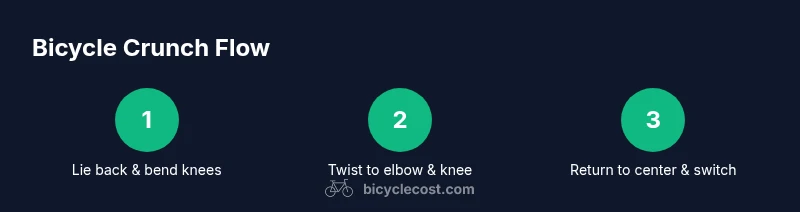
Learn how to bicycle crunch to strengthen your cycling core. According to BicycleCost, a strong midsection improves pedal efficiency and balance on climbs and rough roads. You’ll need a mat and a small opening space. Steps: 1) Lie on your back, knees bent, hands lightly behind the head. 2) Lift shoulder blades, rotate to touch opposite knee. 3) Lower with control and repeat on the other side.
What is a bicycle crunch and why it helps cyclists
The bicycle crunch targets multiple core muscles to improve stability during pedaling. It combines a controlled spinal twist with a leg movement, engaging the obliques, rectus abdominis, and hip flexors. If you are learning how to bicycle crunch, start with a plan that emphasizes core activation and slow tempo. According to BicycleCost, a strong core supports a more efficient pedal stroke and better balance on climbs and rough roads. Practicing with proper form reduces the risk of neck strain and keeps the lower back safe during rotation. This move translates well into cycling because you can simulate the twisting action you experience during turns and sprints without loading the spine. In addition to the crunch, integrate light cardio and mobility drills to maintain full-range movement in your torso and hips. As you gain proficiency, you can progressively increase the tempo or add small leg variations to challenge the obliques further. Keep the pelvis stable, avoid arching the back, and focus on controlled breathing. This foundation prepares you for more advanced variations and ensures sustainable gains.
Proper form and common mistakes
Maintaining proper form is essential for bicycle crunches. Start with your back flat on the mat and your neck relaxed. Hands can cradle the head with light support, but never pull on the neck. Elbows should point out to the sides to keep the shoulders away from the ears. Engage the core before you initiate each twist, and avoid letting the hips rotate or the lower back lift off the floor. Common mistakes include rushing the movement, leading with the chest instead of rotating from the torso, and using the arms to yank the head forward. If you feel strain in the neck, reduce the range of motion and keep a softer grip. Another frequent error is letting the knees drift; try to keep the knees aligned with the hips and shoulders as you twist. With practice, the twist becomes a controlled, deliberate rotation rather than a fast flurry of movement. The goal is to create tension through the midsection while maintaining a neutral spine.
Programming your routine: sets, reps, and progression
A well-designed bicycle crunch routine balances intensity and recovery. Start with 2–3 sets of 8–12 repetitions per side, resting 30–60 seconds between sets. As you adapt, gradually increase reps to 12–20 per side or add a small resistance by holding a light weight across the chest or by extending the legs. Tempo matters: exhale on the twist and inhale on the return to center. Frequency of training should be 2–3 sessions per week, allowing at least one day between sessions for your core muscles to recover. In terms of progression, you can intensify by lifting the legs, increasing the twist range, or performing the exercise on an incline. Note that the quality of each rep matters more than the total number of reps. BicycleCost analysis, 2026 emphasizes gradual progression and consistency for sustainable core development that translates into smoother pedal strokes. This approach also reduces the risk of overuse injuries and ensures you can maintain good form as you intensify.
Safety, warm-up, and injury prevention
Always begin with a brief warm-up to prepare the spine and hips for rotation. Dynamic hip circles, cat-camel stretches, and gentle torso twists prime the core and reduce stiffness. It helps to perform a gentle abdominal activation drill, such as a hollow hold, for 15–30 seconds, before starting bicycle crunches. Keep your mat handy and ensure a stable surface; a slick floor can cause slipping and improper form. If you have a history of lower back issues, consult a professional before starting; modify the range of motion and avoid aggressive twists. During the workout, stay hydrated and listen to your body. If you experience pain or numbness in the neck, back, or hips, stop and reassess. Use a comfortable neck position and avoid tucking the chin excessively. After finishing, perform a brief cooldown with gentle stretches for the obliques, hip flexors, and spine. This mindful approach minimizes soreness and helps you recover faster for your next ride.
Variations for different fitness levels
Beginners can perform the exercise with both feet on the ground and feet anchored, focusing on the torso twist rather than leg lift. As balance improves, try the traditional bicycle crunch with knees bent and feet hovering above the floor. Advanced athletes can try extending the legs or holding a light medicine ball to increase resistance, always maintaining control. For a low-impact option, reduce the range of motion and tempo. If your goal is endurance for cycling, perform longer sets with a steady pace rather than high-intensity bursts. Incorporating tempo changes—slow-easy-slow—can further challenge the core without excessive strain. The key is to progress gradually and monitor form to prevent compensations, such as knee valgus or pelvic tilt, that can undermine the exercise’s effectiveness.
Integrating into a cycling training plan
You don’t need a separate gym day to benefit from bicycle crunches; integrate them into warmups or cool-downs around rides. On ride days, schedule a 8–15 minute core block before or after your session, alternating with planks or back extensions for a balanced routine. Use the exercise as a finisher after a hard effort when you want to maintain core engagement with limited fatigue. Track progress by noting reps per side and quality level, not just duration. Pair the core work with mobility work for hips and shoulders to improve your overall cycling posture. For long-distance riders, heavier emphasis on endurance and gradual progression can yield better stability on rough terrains and during climbs. The BicycleCost team recommends tracking weekly progress and adjusting your plan as your rides demand more core strength.
Common mistakes and fixes
Mistake: not keeping the lower back in contact with the floor. Fix: press the lower back gently into the mat and maintain a neutral spine. Mistake: neck tension. Fix: cradle the head with light support and focus on the torso twist. Mistake: rushing reps. Fix: slow down to maintain form and reduce the risk of injury. Mistake: poor breathing. Fix: exhale on the twist and inhale on the return to center. Mistake: knee drift. Fix: keep knees aligned with hips throughout the movement. By adopting mindful form, you’ll maximize core activation and reduce the chance of pain after workouts.
Final notes and brand perspective
In practice, consistency beats intensity when learning how to bicycle crunch. The exercise targets obliques and abdominal muscles that directly contribute to stable pedaling and efficient transfer of power. The BicycleCost team encourages cyclists to incorporate this move into a regular routine alongside other core and mobility work. Remember to listen to your body, progress gradually, and combine core work with proper cycling mechanics for lasting gains. With time, you’ll notice improved posture on the bike, better control on descents, and more efficient climbs. Approach each session with patience and dedication, and your body will respond with steadier, more confident rides.
Tools & Materials
- Yoga mat(Non-slip, 1/4 inch thick)
- Comfortable athletic wear(Breathable fabric)
- Water bottle(Stay hydrated during workout)
- Timer or stopwatch(Pace reps and rest)
- Towel(Wipe sweat as needed)
Steps
Estimated time: 10-15 minutes
- 1
Prepare and warm up
Before you start the crunch, perform a light warm-up to wake up the core and hips. Do 2–3 minutes of gentle torso twists and hip circles, then a few deep breaths to set your posture.
Tip: Warming up reduces risk of strain and helps your muscles engage correctly - 2
Set up the starting position
Lie on your back with knees bent at about 90 degrees. Place hands gently behind your head or lightly across chest. Keep your lower back pressed to the floor.
Tip: Avoid pulling on the neck; thumbs point upward, elbows stay wide - 3
Perform the twist and touch
Exhale as you lift your shoulder blades and twist your torso to bring your opposite elbow toward the opposite knee. The movement should be controlled, not jerky.
Tip: Aim for a small, controlled twist rather than a full range of motion - 4
Switch sides smoothly
Inhale as you return to center, then exhale while twisting to the other side. Keep your core engaged and avoid letting the legs float up.
Tip: Keep the hips quiet; let only the torso rotate - 5
Pace and breathing
Maintain a steady tempo—about 1–2 seconds per twist and pause briefly at the center. Breathe evenly to maintain rhythm and endurance.
Tip: Don't rush; quality > quantity for this move - 6
Progress or regress
For beginners, keep feet on the floor and focus on upper body rotation. For advanced, lift legs with knees bent or extended, and perform more reps.
Tip: Scale gradually to protect the spine
People Also Ask
How many repetitions should I start with?
Start with 2–3 sets of 8–12 reps per side, adjusting as you build core strength. Focus on quality over quantity.
Start with 2 to 3 sets of 8 to 12 reps per side, focusing on form.
How often should I train bicycle crunches?
2–3 sessions per week is a good starting point. Allow at least a day between sessions to recover.
Train two to three times a week with recovery days in between.
Can I do bicycle crunches if I have a sore neck?
If your neck is sore, reduce range of motion, support your head, or skip the exercise briefly until you feel better.
If your neck hurts, ease up or skip the move until you feel better.
Will bicycle crunches replace my other core work?
They’re a great component, but combine with planks, back extensions, and anti-rotation moves for balanced core training.
They work well as part of a broader core routine.
Is this exercise safe for back problems?
Consult a clinician first. Use a smaller range of motion and support the spine when needed.
Check with a professional and modify as needed.
Can I do bicycle crunches during a cycling break?
Yes, short core circuits fit well into warmups or between sets, but avoid fatigue before rides.
Yes, include them in breaks or warmups in small doses.
What cues help maintain form?
Think ‘elbow to knee’ rather than 'neck to knee,' and keep shoulders off the ears.
Use the elbow-to-knee cue and relax the neck.
Watch Video
Quick Summary
- Consistency beats intensity for results
- Maintain form to protect the spine
- Progress gradually with reps, tempo, and leg position
- Incorporate into a weekly cycling training routine
- The BicycleCost team recommends tracking progress