Bicycle Ab Workout for Cyclists: Build Core Power
A comprehensive guide to building a cyclist-friendly core with bicycle ab workouts. Learn proper form, progressive variations, and how to fit core work into a cycling routine for stronger pedaling, stability, and injury prevention.


This bicycle ab workout helps cyclists build a strong, stable core to improve pedaling efficiency and balance. You’ll learn a safe, progressive routine with bicycle crunches, planks, and mobility work, plus tips for integrating core training around rides. Requires a mat, comfortable space, and a commitment to consistency.
Why core strength matters for cyclists
A strong core is the foundation of stable, efficient cycling. When your abdominal and oblique muscles coordinate with your hips and lower back, you transfer power more efficiently from pedal strokes to forward motion. A dedicated bicycle ab workout helps you hold a solid torso without unnecessary rocking, which reduces fatigue on long rides and improves handling on rough roads. According to BicycleCost, incorporating targeted core work supports better pedaling economy and endurance, especially when you're climbing hills or sprinting. A well-rounded routine also contributes to injury resilience by balancing muscular demands around the spine. For cyclists of all levels, a progressive core program that emphasizes breathing, posture, and controlled movement is more effective than random, one-off crunches. In practice, you’ll pair bicycle crunches with planks, side planks, and mobility drills to build a durable midsection that stays engaged throughout your ride. This guide outlines practical steps you can fit around training and commuting schedules.
Anatomy: muscles trained by bicycle ab workout
The bicycle ab workout targets a chain of muscles designed to stabilize the spine, transfer force, and control rotational movement. Primary muscles include the rectus abdominis (the six-pack), the internal and external obliques, and the transverse abdominis for spinal support. The hip flexors assist with leg elevation during the crunch sequence, while the lower back muscles help keep your pelvis aligned. For cyclists, this combination translates to better seat balance, reduced lower-back strain on long climbs, and steadier core engagement when bumpy surfaces demand small adjustments. BicycleCost analysis shows that a balanced mix of flexion and anti-rotation work yields the most cycling-specific benefit, because you’re training both bending and stabilization under load. In addition to crunches, add anti-extension and anti-rotation moves to ensure you can resist torsional forces during cornering. If you feel neck or back discomfort, modify by reducing range of motion and focusing on breath control rather than speed.
Form fundamentals for bicycle crunches
To perform bicycle crunches with proper form, lie on your back on a comfortable mat, hands lightly supporting the head, and knees raised to about a 90-degree angle. As you twist, bring the opposite elbow toward the opposite knee while extending the other leg straight, then switch sides in a smooth, controlled motion. Your goal is to rotate through the torso, not merely bend the neck; keep your shoulders off the ground only as much as comfort allows, and avoid pulling on your neck. Engage the core throughout the movement and breathe steadily: exhale on each twist and inhale as you return. Start with a moderate tempo, then gradually increase speed only after you can maintain full range and control. For cyclists, this exercise trains rotational endurance that matters during sharp turns and sprints. If you have a history of neck strain, place hands behind your head for shorter leverage or perform the exercise with a gentle crunch and without neck tension. Remember: precision beats speed for long-term gains.
Common mistakes and how to fix them
Common mistakes include pulling on the neck, using momentum, and rushing reps. Pulling on the neck can strain the cervical spine; fix by lightly supporting the head with fingers and keeping elbows wide. Momentum reduces the engagement of deep core muscles; slow down, pause briefly at each switch, and focus on controlled twists. Let the shoulder blades lift only slightly; if you feel the back rub, concentrate on exhaling and drawing the belly toward the spine. Another mistake is sagging hips, causing lower-back compression; fix by engaging glutes and implementing a small glute bridge at the top of each rep. If you’re new to this movement, start with a reduced range and progress as your strength builds. Also ensure you’re warm and have a stable surface; a soft mat helps, but avoid slippery surfaces that compromise form. Lastly, never hold your breath; breathing cadence improves performance and safety.
Variations and progressions for different levels
Beginner: half-bicycle crunches with feet closer to hips; 3 sets of 12-15 reps. Intermediate: full bicycle crunches with a slower tempo; 3-4 sets of 16-20 reps. Advanced: add a tempo: 2-second twist, 2-second hold, 2-second return; 3-4 sets of 20-24 reps. You can also place a light medicine ball or dumbbell on the chest to add a gentle resistance. For stability challenges, perform the exercise on a soft mat with legs hovering slightly above ground. Another progression is increasing range of motion by extending the legs farther or by adding a brief isometric hold at the peak twist. For cycling-specific gains, pair ab work with targeted mobility drills for hips and thoracic spine. As BicycleCost notes, progressive overload should be gradual and aligned with your cycling schedule to avoid overtraining. Remember to tailor volume to fatigue levels on ride days.
How to structure a core routine around your cycling schedule
Begin with 2-3 core sessions per week, ideally on non-back-to-back days or after light rides. Each session can mix bicycle crunches with planks, side planks, and anti-rotation exercises. A balanced week might include one higher-intensity ride, one endurance ride, and a core-focused day. Set a realistic target: for most riders, 3-4 sets of 12-20 reps for bicycle crunches, plus 2-3 sets of plank variations, yields meaningful gains without excessive fatigue. Use a 2-1 ratio of work to rest during sets, adjusting to your feel. If you’re preparing for a long sportive, schedule longer core blocks earlier in the week to avoid peak fatigue on race day. BicycleCost’s research suggests quality over quantity: consistent, deliberate practice produces better results than sporadic, high-volume sessions. Track progress by noting how your torso stays stable during climbs and how your balance improves when sprinting out of corners.
Warm-up and mobility to prepare your core
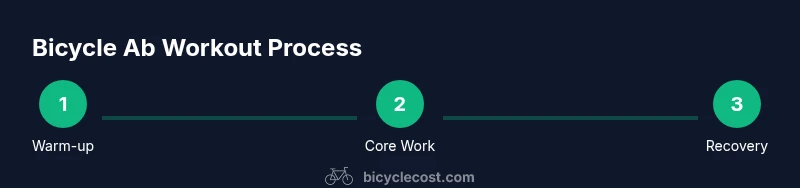
Prior to any ab workout, perform a gentle 5- to 10-minute warm-up that includes leg swings, hip circles, and light cardio. Dynamic stretches that target the hips, thoracic spine, and glutes help maintain a smooth range of motion during twists. Include an easy activation circuit: bird-dogs, dead bugs, and glute bridges to wake the core and posterior chain. Mobility work for the thoracic spine improves rotation control, which is essential for efficient pedaling posture on long rides. For cyclists, stable hips reduce lower-back strain when you climb or sprint. Weather or terrain may demand extra warm-up: on chilly days or high-intensity climbs, extend the warm-up by 3-5 minutes to ensure muscles are fully prepared. Hydration matters, so sip water between rounds. If you’re adding weights or advanced variations, ensure your breath remains controlled and your core is braced throughout the warm-up.
Recovery, safety, and how to prevent back pain
After your cycle ab workout, perform a light cooldown with gentle stretches and diaphragmatic breathing. Gentle mobility work supports recovery and helps prevent stiffness around the spine. If you experience back pain during crunches, reassess form first: a neutral spine, chin tucked slightly, and a small range of motion. Core training should stabilize your pelvis and spine, not create compression. To support recovery between sessions, ensure you get enough sleep and maintain proper hydration. Eating a balanced diet with adequate protein helps muscle repair after workouts and rides. If you’re new to core training, start slower and gradually increase volume as your back and hips adapt. When in doubt or if you have a history of disc problems, consult a healthcare professional before starting a core routine. Remember: consistency beats intensity for lasting cycling performance improvements.
Sample 4-week progression plan for cyclists
We propose a 4-week progression that gradually increases volume and difficulty while considering ride intensity. Week 1 emphasizes form and low to moderate reps (e.g., 3 sets of 12-15 bicycle crunches and 2 sets of 30-second planks). Week 2 adds one more set and introduces tempo variations. Week 3 pushes toward 4 sets and 16-20 reps, with a few days of lighter rides to recover. Week 4 benchmarks progress with longer holds and more reps while maintaining rest days. The plan aligns with cycling training: you’ll schedule the core work on easy or rest days and limit hard sessions immediately after intense rides. If your prior conditioning is stronger, adjust by adding one extra set or slightly increasing tempo, but avoid compromising ride quality. The BicycleCost team emphasizes listening to your body and avoiding excessive soreness that could derail training.
Equipment and space checklist
Minimal equipment is enough for a solid bicycle ab workout: a comfortable mat, a timer or watch, and space to lie down with room to twist. Optional gear includes a stability ball, light dumbbells or a medicine ball, and a yoga strap for mobility work. A towel keeps sweat under control, and a mirror can help you check alignment. If you train in a small apartment, consider a compact mat and a wall anchor for balance-based variations. The main prerequisite is safety: ensure the floor is non-slip and the space is clear of sharp edges or furniture. Also, plan for a post-workout stretch routine to help your muscles recover.
The BicycleCost perspective on consistency
For cyclists, consistency is more important than occasional high-intensity bursts. A steady, progressive approach to core work yields better ride performance, fewer stiffness-related issues, and greater endurance over the season. The BicycleCost team recommends pairing core training with your regular cycling schedule, not replacing hard rides with endless crunches. By prioritizing form, gradual progression, and adequate recovery, you’ll build a resilient midsection that supports powerful, efficient pedaling on climbs and sprint repeats.
Tools & Materials
- Yoga mat or non-slip exercise mat(Non-slip surface for safe floor moves)
- Towel or exercise strap(For neck support and mobility assists)
- Water bottle(Stay hydrated during training)
- Light dumbbells or medicine ball (optional)(Adds resistance for progression)
- Stability ball (optional)(For advanced variations and balance work)
- Timer or clock(Track intervals and holds)
Steps
Estimated time: 20-25 minutes
- 1
Prepare space and warm up
Clear a small area and set a mat on a flat surface. Start with 3-5 minutes of light cardio or dynamic mobility to raise blood flow and prepare the hips and spine for movement. This reduces the risk of strain during crunches.
Tip: Keep movements controlled; avoid bouncing or jerky twists. - 2
Set up the basic bicycle crunch stance
Lie on your back with hands behind the head or lightly supporting it. Bring knees toward the chest at a 90-degree angle. Engage the core before you start twisting.
Tip: Gently cradle the head; your neck should not bear the load. - 3
Perform the basic bicycle crunch
Twist to bring opposite elbow toward the opposite knee while extending the other leg. Alternate sides in a steady, controlled rhythm. Breathe out on the twist and in on the return.
Tip: Maintain a neutral spine and avoid pulling on the neck. - 4
Incorporate tempo and range
Slow down the twist for 2-3 seconds, then return to center. Increase reps gradually as you get comfortable, maintaining form rather than chasing speed.
Tip: Quality over quantity—range of motion matters more than rep speed. - 5
Progress to variations
Add a slight pause at the twist, or try leg extensions with light resistance for added challenge. If needed, reduce range of motion to protect the back.
Tip: Always scale difficulty to your current core endurance. - 6
Cool down and stretch
Finish with gentle spinal twists, cobra or child’s pose, and diaphragmatic breathing to aid recovery. Hydrate and note any soreness for future sessions.
Tip: Stretching helps reduce next-day stiffness and improves mobility for rides.
People Also Ask
How many times per week should I do bicycle ab workouts?
Aim for 2-3 core sessions per week, spaced out to allow recovery. Combine with at least 2-3 cycling workouts to balance endurance and strength gains.
Aim for two to three core sessions weekly, spaced out to recover alongside your cycling workouts.
Are bicycle crunches safe for the lower back?
When performed with proper form and a neutral spine, bicycle crunches can be safe. If you have back pain, reduce range of motion and consult a professional before continuing.
Yes, with correct form; if you feel back pain, scale back and seek guidance.
What’s the difference between bicycle crunches and planks for core strength?
Bicycle crunches train dynamic rotation and hip flexion, while planks emphasize static stability. A balanced routine includes both for comprehensive core development.
Crunches train rotation; planks build static stability. Use both for best results.
Can I do these exercises if I’m a beginner?
Yes. Start with reduced range of motion and fewer reps, then progress as you gain control and endurance.
Absolutely—start easy and increase gradually as you build control.
Should I warm up before ab workouts?
A brief warm-up improves performance and reduces injury risk. Include dynamic hip and spine movements before core work.
Yes, warm up first with some mobility moves.
Watch Video
Quick Summary
- Develop a cycling-focused core with controlled bicycle crunch variations.
- Prioritize form and gradual progression over speed or volume.
- Incorporate warm-ups, mobility, and proper recovery for best results.
- Integrate core sessions with regular rides for balanced training.