Does Cycling Help Weight Loss? A Practical Guide
Explore whether cycling supports weight loss, how calories burned vary with intensity and duration, and how to build a practical plan for sustainable fat loss.


Does cycling make you lose weight? The short answer is yes, under the right conditions. According to BicycleCost Analysis, 2026, cycling can contribute to a sustainable energy deficit when combined with smart nutrition, progressive training, and consistency. Cycling offers a low-impact way to increase daily energy expenditure, making it practical for beginners and seasoned riders alike. By turning commutes into rides and gradually lengthening workouts, cyclists can build a habit that supports fat loss without relying on extreme dieting. Furthermore, the social and environmental benefits of cycling help maintain motivation over weeks and months, which is crucial for long-term weight management. Keep in mind that individual results vary based on diet, body composition, and adherence to a routine.
Does cycling help with weight loss?
Does cycling make you lose weight? The short answer is yes, under the right conditions. According to BicycleCost, cycling can contribute to a sustainable energy deficit when combined with smart nutrition, progressive training, and consistency. Cycling offers a low-impact way to increase daily energy expenditure, making it practical for beginners and seasoned riders alike. By turning commutes into rides and gradually lengthening workouts, cyclists can build a habit that supports fat loss without relying on extreme dieting. Furthermore, the social and environmental benefits of cycling help maintain motivation over weeks and months, which is crucial for long-term weight management. Keep in mind that individual results vary based on diet, body composition, and adherence to a routine.
Energy burn: how many calories can you expect?
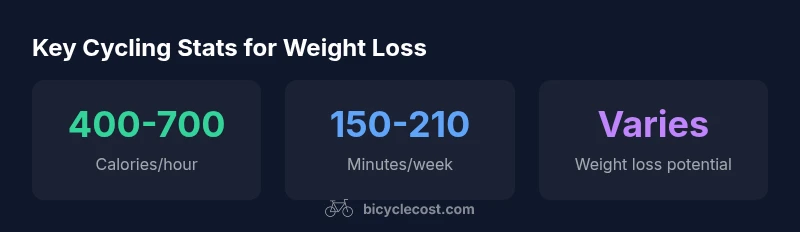
Calorie burn from cycling depends on effort, duration, body weight, and terrain. In general, a moderate cycling session can burn roughly 400-700 kcal per hour, with higher intensities pushing toward 900 kcal per hour for heavier riders or fast intervals. These numbers are estimates and can vary widely. The BicycleCost Analysis, 2026 notes that energy expenditure scales with pace and resistance; the same ride that feels easy for one person may be demanding for another. You can maximize burn by combining longer steady rides with occasional intervals, and by choosing routes that challenge your legs without compromising form. Understanding this variability helps you plan nutrition around training days and avoid overestimating or underfueling.
How cycling compares to other cardio for fat loss
When choosing cardio for weight loss, cycling offers several advantages over high-impact activities like running. It minimizes joint stress while enabling longer workouts, which can increase weekly energy expenditure. Studies consistently show that fat loss is driven by the total energy balance over time, not by a single workout. A brisk, hour-long bike ride can burn as many calories as shorter, higher-intensity sessions, but with less acute fatigue for many people. Ultimately, the best approach combines consistency, variety, and a diet that supports your goals. For some, cycling is more enjoyable than alternatives, which improves adherence and long-term outcomes.
Key factors that influence weight loss on a bike
Several variables affect how effectively cycling supports weight loss. Training volume (how many minutes you ride per week), intensity (ease, moderate, or vigorous), and progression (gradually increasing workload) are critical. Diet quality and total calories consumed matter just as much as calories burned on the bike. Sleep quality and stress levels can influence appetite and recovery, while hormonal factors and genetics affect fat distribution and metabolism. A practical takeaway is to aim for a sustainable routine that you can maintain for months, since rapid weight changes often stall when habits falter. Practical planning should also consider safety, gear, and recovery days to prevent burnout.
Building a weight-loss cycling plan: a practical guide
Start with a baseline: determine your current weekly mileage and how your body responds to rides. Set a realistic weekly target (for example, 150-210 minutes of cycling at a comfortable effort) and gradually raise it every 2-3 weeks. Mix steady rides that you can complete comfortably with some interval segments to boost calorie burn and metabolic rate. Use heart rate or perceived exertion (RPE) to guide intensity: moderate effort should feel like you can talk in short sentences, while vigorous efforts feel challenging but sustainable for 1-4 minutes. Include at least one rest day per week and vary terrains to keep your muscles adapting. Finally, pair training with a simple nutrition plan that prioritizes protein, fiber, and balanced meals around rides.
Sample 4-week progression to kickstart fat loss
Week 1: 150 minutes total, mostly at a comfortable pace with two short intervals. Week 2: 180 minutes, include 2-3 longer intervals and one longer ride. Week 3: 210 minutes, add a hill climb session or tempo ride. Week 4: 210-240 minutes, blend steady rides with higher-intensity intervals and a longer endurance ride. If you’re new to cycling, start slower and ramp up gradually to avoid injury. Use a simple tracker to monitor minutes and perceived exertion, rather than chasing a number on a scale alone.
Nutrition and cycling: syncing meals with rides
Fueling appropriately supports fat loss and performance. Before rides, aim for a small combination of complex carbohydrates and some protein about 1-2 hours prior. During longer sessions, consider sipping water with a light electrolyte drink; after rides, prioritize protein and vegetables to support muscle repair and satiety. Avoid ultra-restrictive diets that could impair performance or recovery. Hydration matters for appetite regulation and energy levels. A balanced approach—steady calories in, high-quality nutrients, and enough sleep—offers the best chance for sustainable fat loss while enjoying cycling.
Common mistakes to avoid on a weight loss journey with cycling
Common errors include underfueling, overtraining, and neglecting strength work. Missing recovery days can lead to fatigue and higher injury risk, while relying solely on cardio without resistance training may limit improvements in body composition. Another pitfall is obsessing over the scale, which can misrepresent gains in muscle mass and fitness. Finally, neglecting form, footwear, and bike fit can reduce comfort and consistency. Avoid drastic calorie cuts and ensure your plan is adaptable to life events, travel, and weather.
Measuring progress and staying motivated
Use a multifaceted approach to track progress: scales capture weight, but waist measurements, body fat estimates, and fitness milestones (like longer rides or better power) provide better context. Regular rides with increasing distance, speed, or hill work signal improved fitness and better energy expenditure. Keep a simple training log and set small, achievable weekly goals to maintain momentum. Remember that fat loss is often gradual and non-linear, so celebrate small wins, stay consistent, and adjust as needed.
Calorie burn and weight loss potential by cycling intensity
| Activity Level | Typical Calorie Burn (per hour) | Weight Loss Potential | Notes |
|---|---|---|---|
| Moderate cycling | 400-700 kcal | Moderate | Sustainable and safe |
| High-intensity cycling (intervals) | 600-900 kcal | Higher | Requires careful recovery |
| Long daily rides | 500-800 kcal | Good | Depends on weekly balance |
People Also Ask
Will cycling alone cause weight loss?
Cycling contributes to energy expenditure and fat loss when paired with a calorie deficit; if your diet doesn't support deficit, progress may stall. Consistency and nutrition are key.
Cycling helps burn calories, but you still need to eat smart to lose fat.
How long should I cycle each week to lose weight?
There isn't a one-size-fits-all answer. Starting around 150-210 minutes per week is a common baseline for many people, then adjusting upward as fitness improves.
Aim for about 2.5 to 3.5 hours weekly and build up gradually.
Is interval training better than steady cycling for weight loss?
Intervals can increase calorie burn and the afterburn effect, but they require recovery. A mix of steady rides and intervals over weeks often yields the best balance.
Intervals can help, but balance with steady rides for sustainability.
Should I bike on an empty stomach to lose fat?
Fasted riding isn't necessary for fat loss and may impair performance for some people. Focus on fueling appropriately around workouts.
Fasted rides aren’t required for fat loss.
Can weight loss stall on cycling?
Plateaus happen as you adapt. If progress stalls, adjust intensity, duration, and diet to restart momentum.
Plateaus happen; tweak training and nutrition.
How can I track progress effectively on a cycling weight loss plan?
Use multiple metrics—weight, waist measurements, body fat estimates, and fitness milestones. Track trends over 4-8 weeks to see true changes.
Track more than just the scale to see real progress.
“Regular cycling can help create a sustainable energy deficit without excessive stress on joints, making fat loss more attainable over weeks and months.”
Quick Summary
- Start with a sustainable weekly plan.
- Pair cycling with a modest calorie deficit.
- Incorporate a mix of steady rides and intervals.
- Monitor progress with multiple metrics.
- Fat loss on the bike is gradual and individualized.