Electric Bicycle Price in 2026: What to Expect Range
Navigate the 2026 electric bicycle price landscape with a practical, data-driven guide. Learn price bands, ownership costs, and buying strategies to maximize value without overpaying.


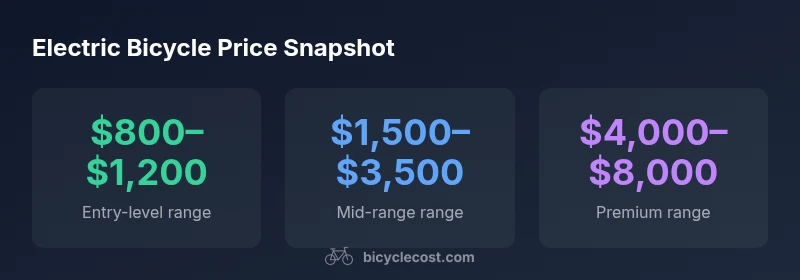
Electric bicycle price ranges widely by category and features: entry-level models typically start around $800-$1,200, mid-range bikes run $1,500-$3,500, and premium models often exceed $4,000 up to $8,000. Battery capacity, motor type, and component quality drive most of the variance, with ownership costs shaping total value.
Why electric bicycle price matters
According to BicycleCost, electric bicycle price is not just a sticker price—it encodes a bundle of performance expectations and ownership costs. The BicycleCost team found that most riders who understand price drivers end up with bikes that match their daily use and total cost of ownership. In 2026, the price landscape remains segmented into entry-level, mid-range, and premium options, with advances in battery chemistry and motor design gradually shifting value toward longer range and reliability. Understanding price matters because it informs decisions about commuting, cargo needs, and the frequency of charging sessions. When you evaluate price, scrutinize battery capacity (Wh), motor type (hub vs mid-drive), frame material, component quality, warranty coverage, and after-sales service. These drivers explain why two bikes with similar sticker prices can diverge dramatically in performance, weight, and long-term maintenance costs. This section sets the stage for a practical, buyer-focused approach to pricing across brands and markets, including tips for comparing like-for-like configurations.
Price bands by category
Electric bicycle price varies by category and feature set. Here’s a practical breakdown to help you align price with needs:
- Entry-level e-bikes ($800–$1,200): Basic components, shorter range, and simpler brakes. Great for short commutes or casual rides. Expect lighter frames and standard warranties.
- Mid-range e-bikes ($1,500–$3,500): Stronger motors (often 250–500W), larger batteries, better frames, and more durable components. Better for longer commutes and mixed terrain.
- Premium e-bikes ($4,000–$8,000): High-end components, mid- or high-drive motors, long-range batteries (600–700 Wh+), integrated displays, and carbon or advanced aluminum frames. Targeted at demanding riders and daily commuters who value performance and resale value.
- Cargo and specialty models: Prices vary widely, commonly from $2,000 up to $6,000+ depending on load capacity and system complexity. These bikes emphasize durability and payload versatility.
When evaluating price, compare like-for-like specs (motor type, battery size, frame material, warranty length) to avoid overpaying for cosmetic upgrades. Testing a few models in the same price band can reveal which components deliver real value for your typical miles and terrain.
Total ownership cost beyond the sticker price
The sticker price tells only part of the story. Total ownership cost includes charging, maintenance, parts, and, in some cases, insurance or theft protection. Battery wear over time is a major factor; most modern packs degrade slowly but warranties vary by brand and use case. Routine maintenance for e-bikes—tire replacements, brake work, chain or belt upkeep, and occasional motor service—adds up differently than on traditional bikes. Charging costs stay a small fraction of overall expenditure, but they accumulate with miles ridden. Consider the local cost of electricity, your daily commute distance, and charging habits when budgeting. Shopping with a mindset toward ownership cost helps avoid surprises if you ride daily or carry cargo on a regular basis.
How to estimate price for your needs
To estimate price accurately, start with your intended use and terrain. Then map these factors:
- Type of riding (commute, hills, cargo, off-road)
- Desired range per charge (Wh) and motor output (W)
- Frame material and build quality
- Battery chemistry and warranty terms
- Accessories (rack, fenders, lights, locks) and after-sales service
- Financing options and potential tax credits or incentives in your region
With these inputs, you can build a price ladder from entry-level to premium and decide where you want to invest for long-term value. Always factor total cost of ownership, not just the upfront price, and give stronger weight to components that affect reliability and resale value.
Buying strategies to maximize value
Smart buying hinges on timing, risk management, and getting the right support. Seasonal sales around holidays can unlock meaningful discounts, especially on last-year models. Consider certified used e-bikes with honest mileage and a transferable warranty, if available, and verify the charging system, battery health, and motor diagnostics before buying. Financing can help spread upfront costs, but compare interest rates and total payback. Prioritize bikes with credible service networks to lower long-term maintenance costs. Warranties covering battery and drive components provide peace of mind and can dramatically affect total ownership cost over time.
Regional price differences and where to shop
Prices vary by region due to taxes, tariffs, currency fluctuations, and distribution costs. Urban regions with robust dealer networks often offer stronger test-ride experiences and better service options, which can translate into higher upfront prices but lower maintenance friction. Government incentives or local programs may also influence final out-of-pocket costs. When shopping, request a local price quote including delivery, assembly, and any added protective gear, so you’re comparing apples to apples across nearby retailers.
What to watch for in price-related specs and future trends
Look for battery capacity (Wh), motor type (hub vs mid-drive), weight, and how the bike handles real-world use (terrain, hills, payload). Mid-drive motors generally offer better torque and efficiency on varied terrain, which can justify price differences. Battery chemistry and management systems affect range and longevity, influencing long-term value. As manufacturers push for lighter frames and smarter battery packs, higher upfront costs may be offset by longer range and easier maintenance. Stay alert to warranty terms and service networks, which often determine how price translates to reliable ownership.
Electric bicycle price bands by category
| Category | Typical price range | Key considerations |
|---|---|---|
| Entry-level e-bikes | 800–1200 | Basic components; shorter range; standard warranty |
| Mid-range e-bikes | 1500–3500 | Enhanced motor and battery; better components; longer range |
| Premium e-bikes | 4000–8000 | High-end components; long-range battery; lighter frame |
| Cargo/electric cargo bikes | 2000–6000+ | Load capacity; frame durability; complex drivetrains |
People Also Ask
What primarily drives electric bicycle price?
The price is mainly driven by battery capacity, motor type, frame material, and component quality. Upfront costs often reflect expected range, torque, and durability, while maintenance needs can influence long-term value.
Battery size and motor type largely set the price, with build quality and service availability affecting long-term value.
Are used electric bikes a good value?
Used e-bikes can offer substantial savings if the battery and motor are in good condition, but check battery health and warranty transferability. A pre-purchase inspection is essential to avoid hidden issues.
Used e-bikes can save money, but inspect the battery and motor before buying.
How does battery capacity affect cost?
Larger batteries add weight and cost but extend range and usability. Buyers should balance range needs with bike weight and frame strength to avoid overpaying for capability they won’t use.
Bigger batteries cost more but give more range; choose a size that matches your daily riding.
Do mid-drive and hub motors cost differently to maintain?
Mid-drive motors typically offer efficiency and torque on varied terrain but may require more frequent service. Hub motors are simpler and often cheaper to repair. Consider your riding environment when evaluating maintenance costs.
Mid-drive gives torque but can cost more to service; hub motors are simpler and cheaper to fix.
Is it worth buying an extended warranty?
Extended warranties can be worthwhile if they cover the battery and drive system for the full period of heavy use. Read the fine print for coverage exclusions and service requirements.
An extended warranty can be valuable if it covers the battery and motor for the whole period you ride a lot.
When do price drops typically occur?
Price drops commonly occur around season transitions and model year changes. Planning buys around these periods can yield meaningful savings without sacrificing warranty or support.
Look for sales during season changes and model year shifts to save money.
“Pricing for electric bicycles reflects a balance between performance, reliability, and total cost of ownership. In 2026, discerning shoppers who compare motor types, battery capacity, and after-sales support consistently find better value.”
Quick Summary
- Define your riding needs to anchor your budget
- Match price bands to anticipated use and terrain
- Factor total ownership costs, not just upfront price
- Prioritize warranty and service networks for long-term value
- Shop timing and consider certified used options