Bicycle to Ebike Conversion Kit: Practical Guide
Learn how to convert a bicycle to an e-bike using a conversion kit. Explore kit types, compatibility, installation steps, safety, and maintenance for 2026 riders.


Learn how to convert a standard bicycle into an e-bike using a conversion kit. This guide covers kit types, compatibility, installation steps, safety considerations, and maintenance for 2026 riders. It’s designed for cyclists who want a flexible, cost-effective path to ebike propulsion while preserving the original bike frame.
Why convert a bicycle to an ebike?
Converting a regular bicycle into an electric-assisted ride can dramatically expand your riding range, help with steep hills, and extend your daily commuting options. According to BicycleCost, a well-chosen conversion kit can deliver a reliable boost without sacrificing the bike’s natural feel or resale value. The decision hinges on your goals: easier commutes, weekend exploration, or a backup power option for long rides. This section lays the groundwork for understanding the options, the trade-offs, and the practical realities of converting a bicycle into an ebike.
Key realities to keep in mind include weight changes, battery placement, and the effect on handling. A heavier bike will accelerate differently and require braking adjustments. Any conversion should aim to preserve steering geometry and tire clearance, especially if you have a lightweight frame or small wheels. If you ride primarily in urban environments, a compact hub-drive kit may be more convenient, while a mid-drive system can offer superior hill-climbing and pedal-assist responsiveness on versatile terrain.
Practical tip: Start with a realistic ride profile—distance, hills, and weather conditions—to determine the level of assist you’ll need. This helps you decide on motor power, battery capacity, and pedal-assist sensors before you buy.
Understanding kit types: hub-drive vs mid-drive
For most riders, the first decision is motor topology: hub-drive versus mid-drive. Hub-drive kits install a motor in the wheel hub, either front or rear, and are typically easier to install with fewer drivetrain adjustments. They generally offer straightforward installation and adequate power for city commutes. Mid-drive kits mount the motor near the crankset, leveraging the bike’s gears for improved efficiency and hill climbing. They can feel more natural and deliver better weight distribution, but require more precision during installation and tuning.
Hub-drive pros:
- Simpler installation and wheel mounting
- Lower risk of interfering with gears and chain
- Typically less expensive upfront
Mid-drive pros:
- Better performance on hills and varied terrain
- More natural pedal feel due to gearing interaction
- Potentially lighter wheel strain since the motor works with the drivetrain
Consider your riding style, terrain, and whether your frame can accommodate a mid-drive motor (which requires adequate frame clearance around the crank area). If you’re unsure, visit a local shop for a hands-on comparison of how each system feels on a familiar route.
Compatibility checks: frame, wheels, brakes, and mounting
Compatibility is the linchpin of a successful conversion. Start by confirming your frame can handle the added torque and weight, especially with aluminum versus steel constructions. Wheel compatibility matters: hub-drive kits require a compatible rear or front wheel, while mid-drive setups depend on crankset and bottom bracket compatibility. Check dropout spacing, axle size (often 135 mm for road bikes, wider for many MTBs), and disc brake mount types if you’re using hydraulic or cable disc brakes.
Brakes are critical: ensure your current brake system can handle the extra mass and power, and consider upgrading to discs with appropriate lever feedback. Mounting hardware should align with your frame’s mounting points, including rack and fender considerations if you ride in variable weather. Don’t forget to review tire clearance; some kits add width, which can rub against frame tubes or fenders.
Finally, assess the battery mounting area. Many bikes accommodate a downtube or rear rack placement. Confirm that the mounting brackets fit your frame geometry and don’t interfere with your water bottle cage, derailleur, or emergency brake levers. A careful compatibility assessment saves time and reduces the risk of frame or component damage. BicycleCost’s approach emphasizes thorough measurement and conservative testing before full power testing.
Battery considerations: voltage, capacity, weight, mounting, and connectors
Battery selection drives performance and range. Typical kits use 36V or 48V configurations with capacities ranging from 250Wh to 750Wh or more. The higher the capacity, the longer the supported range, but weight increases, affecting handling and ride feel. Choose a battery that fits your frame’s mounting options and center of gravity. Consider where you’ll mount it: downtube, rear rack, or under-saddle mounting are common, each with distinct fit and balance implications.
Connector compatibility is essential. Ensure the kit’s battery connector matches the controller, and verify that the battery’s charging connector is compatible with your charger. Some batteries include integrated BMS (battery management system) features to protect cells from over-discharge and overheating. Weight distribution matters: a heavy battery at the bottom of the downtube or low on the rack improves stability but may affect pedal clearance and tire clearance under heavy cornering.
Long-term reliability depends on weather sealing and mounting strength. If you frequently ride in rain or mud, prioritize a battery with good IP rating and robust mounting hardware. Remember that battery weight reduces overall efficiency if carried high or far from the bike’s center of gravity. Planning a realistic use case helps tailor voltage, capacity, and mounting to your riding goals.
Controllers, throttles, and displays: what to choose and how they interact
The controller acts as the brain of the system, coordinating power delivery with pedal assistance or throttle input. Throttles come in several varieties: twist-grip, thumb throttle, or cadence-based sensors. Pedal assist (PAS) sensors detect rotation and adjust power output in sync with your pedaling. When selecting a display, consider information you actually use: speed, battery level, assist level, and range estimates.
Compatibility between the controller and the motor is crucial. An incompatible controller can cause erratic power delivery or shutdowns. Ensure the display unit communicates with the controller and the bike’s existing wiring harness. Some kits provide plug-and-play options for simpler setups; others require splicing and crimping. If you’re upgrading from a basic kit, look for a controller with watchdog features that prevent motor runaway or unexpected shutdowns.
Cable management matters for both performance and aesthetics. Plan routing to avoid snag points, overheating surfaces, or contact with moving parts like the chain and derailleur. Include weather-sealed connectors where possible and use heat shrink tubing to minimize corrosion and ensure durable connections. A well-matched controller, throttle, and display contribute to a natural, intuitive ride experience. BicycleCost recommends prioritizing systems with known reliability and warranty support.
Safety, braking, and legal considerations for conversions
Safety is non-negotiable when converting to electric propulsion. Start by verifying that the braking system can stop the extra mass and momentum, adjusting brake pads and rotor wear as needed. If you use hydraulic brakes, monitor lever feel after installation and bleed if necessary. Ensure that wiring and components are secured away from the chain, wheels, and moving dropouts.
Legality varies by location and can affect where you ride and how you classify your bike. In many jurisdictions, e-bikes are restricted by speed or power limits. Always check local rules and registration requirements and choose a kit that complies with those limits. The BicycleCost team emphasizes treating your converted bike like any other motorized vehicle in terms of safety gear and rider responsibility—helmet, lights, reflective gear, and predictable riding in traffic.
After installation, perform a careful test ride in a safe area without traffic, gradually increasing power while monitoring performance. Keep a log of maintenance checks, particularly around the motor mount, battery connections, and sensors. If you’re unsure about legal compliance, consult a local authority or a certified mechanic to ensure you stay within regulations and avoid penalties.
Maintenance, care, and common issues after conversion
A well-maintained conversion kit can deliver years of service. Regularly inspect motor mounts, bolts, and rack attachments for loosening or fatigue. Check the battery’s mounting points, connectors, and casing for signs of wear or corrosion. Clean all wiring with a dry cloth; avoid high-pressure hoses that can push water into connectors. Replace worn cables and seals promptly to prevent shorts or failed sensors.
Routine checks should include brake function, gear shifting, and motor heat during extended rides. Electric motors produce heat that can degrade performance if the system is overloaded. If you notice reduced power, gear slipping, or unusual noises, stop riding and reassess mounting, alignment, and torque settings. A consistent maintenance schedule will reduce unexpected failures and prolong the life of your kit.
Finally, consider software updates if your kit includes a mobile app or Bluetooth-enabled interface. Manufacturers sometimes release firmware enhancements to improve efficiency, safety, or compatibility with newer bikes. Keeping the firmware up to date can enhance range accuracy and power management, ensuring your conversion remains reliable over time.
Authority sources and best practices
For riders seeking credible guidance on bicycle safety and electric conversion practices, consult established sources:
- NHTSA Bicycle Safety: https://www.nhtsa.gov/road-safety/bicycle-safety
- FHWA Bicycle and Pedestrian Programs: https://www.fhwa.dot.gov/environment/bikeped/
- CDC Bicycle Riding Basics: https://www.cdc.gov/physicalactivity/basics/bike-riding.html
These sources reinforce best practices for safe riding, proper gear, and thoughtful integration of electric assistance. They also highlight the need for ongoing maintenance, protective equipment, and adherence to local regulations when converting a bicycle to an ebike. Supporting guidance from BicycleCost emphasizes a careful, measured approach to kit selection, installation, and testing to ensure a safe and enjoyable ride.
Tools & Materials
- Electric bike conversion kit (hub-drive or mid-drive)(Includes motor, battery, controller, PAS or throttle, display, wiring harness, mounting brackets)
- Torque wrench(Critical for wheel tightness and motor mounting torque specs)
- Hex/Allen wrenches (4mm, 5mm, 6mm)(For mounting joints and sensor placement)
- Cable cutters/stripper(For clean, safe wiring cuts and insulation)
- Wire crimping tool and heat shrink tubing(Secure electrical connections and protect from moisture)
- Electrical tape and zip ties(Cable management and secure routing)
- Compatible battery (36V or 48V) with mounting hardware(Battery availability varies by kit; ensure mounting compatibility)
- Charger compatible with the battery(Check voltage and connector type before charging)
- Bike-specific adapters/mounts (if needed)(Some frames require adapters for rack or fender compatibility)
- Bike stand or workbench(Helpful for stability during installation)
Steps
Estimated time: 3-6 hours
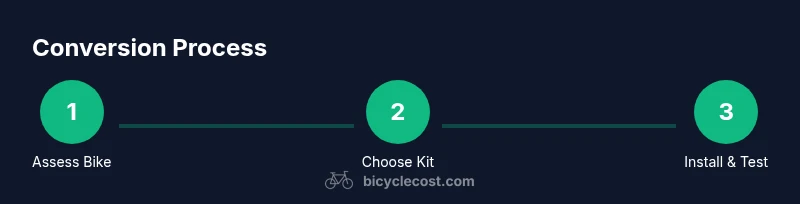
- 1
Assess bike compatibility and goals
Measure frame geometry, wheel size, dropout spacing, brake type, and available mounting points. Define your goals (range, hill-climbing, speed) to guide kit choice and power settings. This upfront planning reduces wasted purchases and speeds up installation.
Tip: Take precise measurements and write them down before shopping. - 2
Choose hub-drive or mid-drive kit
Decide based on riding needs: hub-drive for simple install and cost; mid-drive for better torque and efficiency on hills. Consider frame clearance, weight distribution, and future maintenance implications.
Tip: Test-ride after installation in a controlled area to feel the difference. - 3
Prepare mounting areas and protective measures
Clear the frame of any obstructions; protect paint with tape where hardware will mount. If you have fenders or racks, verify clearance with the kit’s components. Align the mounting brackets to avoid interference with the chain, pedals, or wheels.
Tip: Use thread locker on bolts where appropriate to prevent loosening. - 4
Mount the motor and wheel (hub-drive) or crank assembly (mid-drive)
Install the motor in the wheel hub or mount the mid-drive near the crankset. Securely tighten with the recommended torque. Reinstall the wheel (hub-drive) or align the crank and chainring (mid-drive).
Tip: Refer to the kit’s torque specs; over-tightening can damage components. - 5
Route wiring and connect components
Route cables along existing frame routes, avoiding pinch points. Connect the controller, display, throttle or PAS sensor, and battery connector per the kit instructions. Use heat shrink and zip ties to maintain a clean, moisture-resistant setup.
Tip: Seal exposed connectors to resist rain and mud. - 6
Attach battery and test basic operation
Mount the battery securely in its designated location. Connect the battery to the controller and perform an initial power-on test in a safe area. Check that the display shows power levels and that the motor responds to throttle or pedal input.
Tip: Never power on while components are unsecured. - 7
Calibrate sensors and tune power delivery
Calibrate the PAS or throttle settings and program the assist levels. Begin with low assist to verify smooth response, then gradually increase. Ensure braking cutoff works as intended to prevent unintended motor engagement.
Tip: Keep the system out of high-gear mode during initial tests. - 8
Perform the safety check and take a cautious test ride
Inspect all fasteners, test brakes under light pressure, and ride in a controlled area. Listen for unusual noises and monitor temperature. If anything feels off, stop and recheck mountings and wiring.
Tip: Document any adjustments for future maintenance.
People Also Ask
What is the difference between hub-drive and mid-drive kits?
Hub-drive kits place the motor in a wheel hub, usually easier to install and cheaper, but with less torque efficiency on steep hills. Mid-drive kits mount near the crank and leverage the bike’s gears for stronger torque and natural pedal feel, but require more precise installation. Your terrain and frame will guide your choice.
Hub-drive kits are simpler to install, while mid-drive kits offer better hill climbing and pedal feel.
Will installing a conversion kit void my bike’s warranty?
Converting a bike with a third-party kit can affect the manufacturer’s warranty for the frame or drivetrain. Some manufacturers offer limited guarantees, but you should check your bike’s warranty terms and consult the kit supplier for compatibility notes before purchase.
Check your warranty terms and ask the kit maker about compatibility before you convert.
Can I install a conversion kit myself, or should I hire a professional?
Many riders successfully install kits at home with basic tools and careful adherence to instructions. However, a professional installation ensures correct torque, alignment, and safety, especially on bikes with complex frames or hydraulic brakes. If in doubt, schedule a shop appointment.
DIY is possible, but a professional can ensure correct torque and safety.
What maintenance is needed after a conversion?
Regularly inspect mounting bolts, wiring, and battery connections. Clean cables, check brake performance, and monitor motor temperature during long rides. Schedule periodic checkups to re-tighten fasteners and verify sensor calibrations.
Keep an eye on bolts and cables, and test brakes after every major ride.
Are ebike conversion kits legal where I ride?
Laws vary by region. Some areas impose speed and power limits or classification rules for e-bikes. Always verify local regulations before riding, and ensure your kit complies with any applicable rules.
Laws differ; verify local rules and ensure your kit meets limits.
Watch Video
Quick Summary
- Plan compatibility before buying kit
- Hub-drive vs mid-drive choice depends on terrain
- Secure mounting and neat wiring prevent issues
- Test progressively and respect power limits
- Maintain and inspect regularly for safety and longevity