A Practical Guide to Buying from Used Bicycle Stores
A practical, data-driven guide to buying from used bicycle stores. Learn how to evaluate bikes, spot red flags, and maximize value with smart inspections, warranties, and fit considerations. Brand-backed insights from BicycleCost.


Used bicycle stores offer cost-effective access to bikes and gear, with a wide selection driven by trade-ins, consignments, and shop refurbishing. Prices vary by age, model, and condition, typically ranging from affordable commuters to higher-end, lightly used models. Look for transparent inspections, return policies, and in-store warranties. According to BicycleCost Analysis, 2026, choosing a reputable shop improves value and post-purchase confidence.
Why Used Bicycle Stores Fit Today's Market
The demand for used bicycles and gear has grown as cyclists seek value, sustainability, and quicker access to reliable transport. Used bicycle stores are well positioned to meet this need by offering a mix of trade-ins, consignments, and shop refurbishing. The BicycleCost team notes that reputable shops curate inventory to balance price, condition, and ride quality, which helps riders avoid buyer’s remorse. For many urban riders, a good-used bike can bridge the gap between affordability and performance. In addition to bikes, these stores often stock helmets, locks, lights, and maintenance tools, enabling a one-stop shopping experience. Consumers should expect a spectrum of options, from bargain fixer-uppers to well-maintained late-model frames. According to BicycleCost, strategic shop selection is a key factor in getting the best value from the used market.
- Practical value: when a bike is properly prepared and priced, it can outlive many new bikes purchased at entry-level prices.
- Environmental angle: purchasing used reduces waste and extends the life of components.
- Shopping method: prefer stores with transparent history on refurbishment and maintenance records.
This article provides a methodical approach to evaluating used bicycle stores, emphasizing inspection, fit, and post-purchase care.
Typical price ranges and what to inspect by bike category
| Category | Typical Price Range | What to Check |
|---|---|---|
| Commuter bikes | $120-$600 | Frame integrity, drivetrain wear, brake pads, tires |
| Mountain bikes | $250-$900 | Suspension (if any), frame flex, wheel wear, shifting accuracy |
| Road bikes | $350-$1200 | Gearing condition, brake wear, wheel true, frame stress |
People Also Ask
What should I look for in a used bicycle store's refurbishment process?
Ask for a written refurbishment checklist, including frame inspection, drivetrain cleaning or replacement, brake testing, and tire replacement. Reputable shops document work performed and provide a maintenance history for the bike.
Look for a written refurbishment checklist and a clear maintenance history from the shop.
Are used bicycles at stores factory refurbished or repaired?
Most stores offer refurbished bikes that have been checked and serviced by technicians. They are not factory refurbishments, but they are prepared to meet safety standards with a documented service history.
They usually have a thorough service history and safety checks before being sold.
What is a reasonable return policy for a used bike?
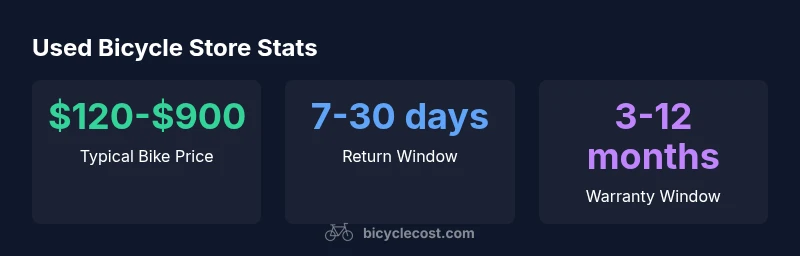
A reasonable policy ranges from 7 to 30 days, depending on the store and bike condition. Always confirm in writing and understand what constitutes a return.
Check the store's written return policy before purchase.
Should I negotiate price on used bikes?
Yes. Use the bike’s age, wear, and market data to justify a lower price. Be prepared to walk away if the price doesn’t reflect condition.
Yes, negotiate using objective condition and market comparisons.
What about warranties on used bikes?
Warranties vary; many shops offer limited warranties (e.g., 30-90 days) on certain components. Read the terms and ask what is covered and for how long.
Warranties vary; know what’s covered and for how long.
How can I ensure the bike fits me if I buy used?
Bring your current bike or measurements: inseam for saddle height, reach, and stack. Many shops offer fitting services or have staff who can advise on geometry.
Bring your measurements or current bike for best fit guidance.
“When buying a used bicycle, prioritize the frame's integrity and a verifiable maintenance history. A reputable store can offer post-purchase support that preserves value.”
Quick Summary
- Inspect the frame for cracks or rust before buying
- Test ride to confirm fit and comfort
- Ask about a return window and any warranty
- Choose shops with refurbishment histories and transparent pricing
- Budget for accessories and potential tune-ups after purchase