How to Remove Training Wheels from a Bicycle: Step-by-Step Guide
Learn how to safely remove training wheels from your child's bike or a learner's bike. This step-by-step guide covers prep, tool needs, balanced riding techniques, drills, safety, and progression for confident, independent cycling.


By following these steps, you’ll safely remove training wheels from a bicycle, set up for solo riding, and begin a gradual balance practice. You’ll need basic tools, a helmet, and a calm, flat space. This quick guide covers prep, removal steps, balance drills, and progression tips for safe, confident riding.
Why remove training wheels and when to start
Removing training wheels is a natural milestone for young riders and new cyclists. If you’re wondering how to remove training wheels from bicycle, this guide walks you through a safe, progressive path. According to BicycleCost, this transition supports balance development and confidence when the rider demonstrates consistent pedaling and control. Look for signs of readiness: smooth pedaling, the ability to keep a straight line for short periods, and a steady stance when coasting. The goal isn’t perfection on day one, but steady improvement and safer cycling habits. As you proceed, emphasize practice in a supportive, low-traffic environment. The BicycleCost Team recommends patience, praise, and consistent practice to build enduring riding skills.
Safety considerations before you start
Before you begin the removal process, prioritize safety. Have a certified helmet, closed-toe shoes, and knee pads if desired. Practice on a smooth, flat surface away from traffic, pets, and crowds. A supervising adult should stay close, ready to steady the bike if needed. Check brakes, chain, and tires for proper operation, and ensure the bike frame is structurally sound. Removing training wheels alters the balance dynamics, so start slowly and avoid high speeds or sudden turns. Remember: safety first keeps learning enjoyable and builds confidence for future rides.
Tools and materials you’ll need (overview)
You’ll work with common bike tools and protective gear. Having these items on hand streamlines the process and minimizes frustration. A helmet is essential for every practice session. Keep the workspace organized so you don’t misplace small parts like washers or bolts. While not always necessary, a helper can stabilize the bike during wheel removal, reducing the risk of accidental slips. This section outlines what to gather before you start, with a note to consult the detailed Tools & Materials list for exact items and specifications. A well-prepared setup makes the learning curve safer and more approachable.
Step-by-step overview: what to expect
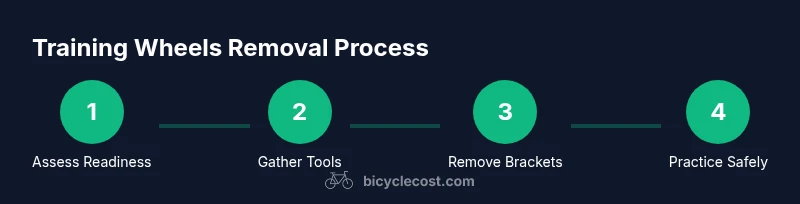
The removal process involves inspecting how the training wheels attach to your bike, loosening and removing the brackets, and then preparing the bike for solo riding. After removal, align the bike for safe practice by adjusting seat height and handlebars. It’s normal to see a brief wobble as balance shifts. Gradually increase practice time in supervised settings, starting with slow laps and short sessions. This overview prepares you for the concrete steps below and helps set realistic expectations for progression.
Step-by-step: removing the training wheels (detailed)
- Prepare the bike and safety gear: Put on a helmet and shoes, secure the area, and have a helper stabilize the bike. Gather the needed tools so you’re ready to work without interruptions. This initial preparation reduces risk and makes the removal smoother. Tip: communicate clearly with your helper and take a moment to inspect the mounting points for any signs of wear.
- Locate and inspect attachment points: Identify the bolts or nuts that hold the training wheels and brackets to the frame. Note any spacers, washers, or brackets. A quick scan helps avoid losing parts mid-removal. Tip: lay out spacers and bolts in order to replicate the same sequence when reassembling or storing hardware.
- Loosen and remove the training wheels and brackets: Use the correct wrench or screwdriver to loosen bolts counterclockwise. Hold the bracket steady to prevent bolt spin, then lift the wheel and bracket away. Tip: remove one side at a time and place hardware in labeled containers to avoid mix-ups.
- Inspect and clean mounting points; store hardware: Check the bolt holes and brackets for burrs or dirt. Wipe clean and apply a light lubrication to threads if you plan to reuse hardware later. Store all hardware in a labeled bag or container for future use. Tip: take a quick photo of the layout before removal for reference.
- Adjust seating and handlebars for balance: With the wheels removed, tweak the seat height so the rider can touch pedals with a slight knee bend at the bottom of the pedal stroke. Ensure handlebars are at a comfortable reach. Tip: small adjustments now prevent undue strain during early practice.
- First short test ride with supervision: Start on a flat, smooth surface. Have the rider practice pedaling, gliding, and stopping with a steady person nearby to guide or catch if needed. Gradually extend the session as confidence grows. Tip: celebrate small successes to reinforce progress.
Balancing and riding posture after removal
After removing the training wheels, balance naturally shifts. Encourage an upright posture with relaxed shoulders and soft elbows, and remind riders to look ahead rather than at the front wheel. A lower saddle reduces reach and can improve stability for new riders, while a slightly higher handlebar height can help with confidence on straight paths. Short, frequent practice sessions beat long, exhausting ones. Using a gentle slope can be a safe training ground for experimenting with balance and steering. As progress continues, incorporate slow-turn drills and stopping practice to build full-body control. Remember to continue wearing safety gear and practicing in controlled environments. The goal is stable momentum and confident steering rather than fast riding.
Practice drills and progression tips
Structured drills accelerate learning without overwhelming the rider. Start with straight-line glides on a quiet path, then introduce gentle curves, then figure-8 patterns to train steering and balance. Gradually increase speed as comfort grows, ensuring the rider can stop smoothly with even braking. Include occasional pauses to reflect on posture, pedal cadence, and the feel of balance. Progression should be gradual and supervised until the rider demonstrates consistent control in varied conditions. Regular, short sessions are more effective than occasional long sessions.
Troubleshooting and next steps
If wobble or hesitation persists after several sessions, revisit posture, seating height, and braking technique. Consider reintroducing training wheels temporarily if the rider feels unsafe; review the attachment points for wear or looseness. Ensure the rider’s footwear is gripped firmly on the pedals and that pedals aren’t slipping. If the bike still feels unstable, seek guidance from a local bike shop or a knowledgeable mentor. With patient practice and proper technique, most riders achieve solid balance in a few weeks.
FAQs and wrap-up
Spacing practice with family support and setting realistic goals are essential. As the rider gains confidence, gradually extend riding time and explore slightly varied terrains. The overarching aim is safe, enjoyable, and independent cycling. Remember: every rider progresses at their own pace, and consistency wins the long game.
Tools & Materials
- Allen wrench set(For removable training wheel bolts)
- Screwdriver (Phillips/flat-head as needed)(Use the correct head for bolts)
- Wrench set(If nuts are hex bolts)
- Adjustable wrench(Helpful for stubborn bolts)
- Helmet(Mandatory for all practice sessions)
- Knee pads (optional)(Extra protection for beginners)
- Stabilizing stand or helper(Assists balance during removal)
- Clean cloth and light lubricant(Clean bolts and apply light lube to threads if reusing hardware)
Steps
Estimated time: 60-90 minutes
- 1
Prepare bike and safety gear
Put on a helmet, close-toed shoes, and have a helper stabilize the bike. Gather all necessary tools so you can work efficiently. This step reduces risk and sets the tone for a safe removal.
Tip: Have a second person ready to steady the bike during removal. - 2
Locate and inspect attachment points
Identify training wheel bolts, brackets, spacers, and washers. Note their order and how they connect to the frame. This helps prevent misassembly later.
Tip: Laying parts out in line helps maintain order during reassembly. - 3
Loosen and remove the training wheels and brackets
Loosen bolts counterclockwise with the appropriate tool while holding the bracket to prevent spin. Lift away the wheel and brackets, one side at a time.
Tip: Keep hardware in labeled containers to avoid mixing parts. - 4
Inspect and clean mounting points; store hardware
Check the mounting points for wear or burrs and wipe clean. Lightly grease bolt threads if you plan to reuse hardware later. Store all hardware safely.
Tip: Take a quick photo of the layout for reference. - 5
Adjust seating and handlebars for balance
Set seat height so the rider’s knee has a slight bend at pedal bottom. Ensure handlebar reach is comfortable and upright posture is possible.
Tip: Small adjustments now save balance problems during early rides. - 6
First short test ride with supervision
Practice pedaling, gliding, and stopping on a flat surface. A supervising adult should be ready to assist if wobbling occurs. Gradually extend the session as confidence grows.
Tip: Stop the ride if the rider tires or becomes discouraged.
People Also Ask
How long does it typically take to learn balance after removing training wheels?
Learning balance varies by rider, but consistent practice over a few weeks is common. Short, frequent sessions are more effective than long, sporadic ones. Always prioritize safety and supervision.
Most riders show progress over a few weeks with regular practice. Keep sessions short and safe, and progress at a comfortable pace.
Should I start on a flat surface or gentle slope?
Begin on a flat, smooth surface to minimize wobble. Once balance improves, gradually introduce gentle slopes and wider spaces. Always supervise and use protective gear.
Start flat, practicing balance and braking. Only move to gentle slopes when riding remains steady.
What age is appropriate to remove training wheels?
There isn’t a fixed age; readiness depends on motor control, confidence, and safety awareness. Watch for consistent pedaling, gliding, and braking with supervision.
There’s no exact age—look for readiness cues and practice safely.
Do I need to adjust gear or brakes after removing training wheels?
Yes. Check brakes for proper contact and ensure gears shift smoothly. Stability improves as braking is predictable and consistent.
Yes, check brakes and gears to ensure smooth, reliable operation.
What if the bike wobbles despite practice?
Pause practice, re-check seating height and balance posture, and ensure the rider isn’t overreaching. If wobble persists, reintroduce training wheels temporarily and revisit fundamentals.
If wobble continues, take a break and review posture and height. Reintroduce wheels if needed and retrace steps.
Is it okay to practice without a helmet at any stage?
Always wear a helmet during practice. Even experienced riders can fall, and a helmet significantly reduces injury risk.
Always wear a helmet when practicing, no exceptions.
Watch Video
Quick Summary
- Practice in a safe space with supervision.
- Organize hardware to prevent mix-ups.
- Adjust seat and handlebar height for balance.
- Progress through structured drills and short sessions.