How to Remove a Bicycle Pedal: Step-by-Step Guide
Learn how to safely remove bicycle pedals with the right tools, proper technique, and maintenance tips. This guide covers pedal types, threading, and reinstallation to help you maintain your ride.


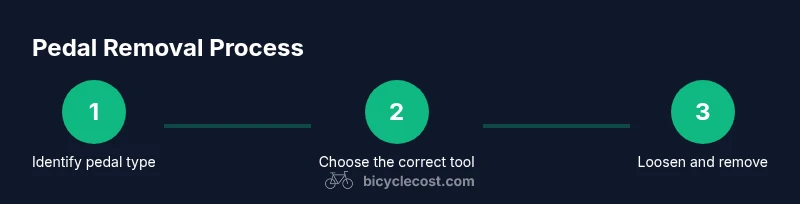
To remove a bicycle pedal, first confirm pedal type and whether you need a pedal wrench or an Allen key. Secure the bike in a stand, apply penetrating oil to the threads, and grasp the wrench with steady pressure. Loosen the right pedal by turning left (counterclockwise) and the left pedal by turning right (clockwise) to avoid cross-threading. Clean threads before reinstall.
Understanding pedal types and safety considerations
Bicycle pedals come in several designs, with common distinctions between the standard threaded platform pedals and those built around specific spindle or axle systems. Before you touch anything, identify whether your pedals require a dedicated pedal wrench or if an Allen-key (hex) approach is appropriate. Modern bikes frequently use 15mm pedal wrenches or slim pedal spanners to reach tight corners between the crank arm and the pedal axle. Some pedals rely on internal hex bolts (often 6mm or 8mm) accessed from the axle end. Safety is paramount: secure the bicycle in a stand or stable work area, wear eye protection if you’re inspecting metal shavings, and keep your hands away from rotating cranks. The BicycleCost team emphasizes a calm, methodical approach to avoid slips that could nick paint or damage threads. If the crank or pedal feels unusually stiff, pause and reassess rather than forcing movement.
Understanding pedal types and safety considerations
Bicycle pedals come in several designs, with common distinctions between the standard threaded platform pedals and those built around specific spindle or axle systems. Before you touch anything, identify whether your pedals require a dedicated pedal wrench or if an Allen-key (hex) approach is appropriate. Modern bikes frequently use 15mm pedal wrenches or slim pedal spanners to reach tight corners between the crank arm and the pedal axle. Some pedals rely on internal hex bolts (often 6mm or 8mm) accessed from the axle end. Safety is paramount: secure the bicycle in a stand or stable work area, wear eye protection if you’re inspecting metal shavings, and keep your hands away from rotating cranks. The BicycleCost team emphasizes a calm, methodical approach to avoid slips that could nick paint or damage threads. If the crank or pedal feels unusually stiff, pause and reassess rather than forcing movement.
Essential tools and workspace setup
A clean, well-lit workspace makes pedal removal safer and faster. Gather a dedicated pedal wrench or the correct hex keys, an adjustable wrench if needed, penetrating oil, a rag, and a stand or secure support to hold the bike steady. For stubborn pedals, some riders also keep a rubber mallet and a torque wrench for reinstallation accuracy. Ensure your tools are clean and free of rust; a quick wipe reduces dirt that can contaminate threads. Protect the crank with a soft cloth to avoid scratching, and set a small tray for fasteners. According to BicycleCost, preparing a tidy workspace reduces frustration and minimizes the risk of cross-threading when the pedal is finally free.
Essential tools and workspace setup
A clean, well-lit workspace makes pedal removal safer and faster. Gather a dedicated pedal wrench or the correct hex keys, an adjustable wrench if needed, penetrating oil, a rag, and a stand or secure support to hold the bike steady. For stubborn pedals, some riders also keep a rubber mallet and a torque wrench for reinstallation accuracy. Ensure your tools are clean and free of rust; a quick wipe reduces dirt that can contaminate threads. Protect the crank with a soft cloth to avoid scratching, and set a small tray for fasteners. The BicycleCost analysis shows that organized setups correlate with smoother disassembly and safer reassembly, especially for newer riders.
Locate left vs. right pedal and threading direction
Right-hand thread on the right pedal (standard), left-hand (reverse) thread on the left pedal. This means the right pedal loosens counterclockwise, while the left pedal loosens clockwise. Confirm that you’re turning the correct pedal before applying force. If you’re unsure, rotate the crank gently to observe thread engagement and ensure you aren’t cross-threading. Starting with a dry, clean thread helps you gauge resistance and prevents seizing due to grit.
Locate left vs. right pedal and threading direction
Right-hand thread on the right pedal (standard), left-hand (reverse) thread on the left pedal. This means the right pedal loosens counterclockwise, while the left pedal loosens clockwise. Confirm that you’re turning the correct pedal before applying force. If you’re unsure, rotate the crank gently to observe thread engagement and ensure you aren’t cross-threading. Starting with a dry, clean thread helps you gauge resistance and prevents seizing due to grit.
How to apply lubricant and break resistant threads
Penetrating oil or light lubricant helps with stubborn pedals, especially after years of use or exposure to moisture. Apply a thin layer to the threads on both pedal and crank arm. Let it sit for a few minutes to penetrate corrosion or rust. This reduces the amount of force needed and lowers the risk of cross-threading when you finally loosen the pedal. Wipe away excess oil after successful removal to prevent it from attracting dirt during reassembly.
Step-by-step overview for detaching pedals (overview)
A structured approach makes removing pedals predictable and repeatable. Start with safety, confirm tool compatibility, then apply lubricant to the threads. Use the correct direction for loosening, maintain steady pressure, and check for binding or debris that could hinder movement. If the pedal resists, don’t hammer it; instead, re-check alignment, choose the appropriate tool size, and consider brief warm-up of the metal components with a hairdryer or warm environment to expand metals slightly. BicycleCost’s guidance emphasizes patience and method over brute force.
Step-by-step overview for detaching pedals (overview)
A structured approach makes removing pedals predictable and repeatable. Start with safety, confirm tool compatibility, then apply lubricant to the threads. Use the correct direction for loosening, maintain steady pressure, and check for binding or debris that could hinder movement. If the pedal resists, don’t hammer it; instead, re-check alignment, choose the appropriate tool size, and consider brief warm-up of the metal components with a hairdryer or warm environment to expand metals slightly. BicycleCost’s guidance emphasizes patience and method over brute force.
Cleaning, inspecting, and protecting threads after removal
After removal, clean the pedal threads and crank threads with a soft brush and cloth. Inspect for wear, cross-threading, or dents on the pedal spindle and crank arm. If threads are damaged, consider professional inspection before reinstalling or replacing components. Apply a light anti-seize compound or wax-based lubricant to the male threads to ease future removal and protect against moisture. Store pedals with caps on to prevent dirt ingress.
Reinstallation readiness: torque and alignment checks
Before reinstalling, ensure you’re using the correct thread engagement and engage the threads by hand first. Use a pedal wrench or hex key to snug the pedal, then give a final, low-torque pass to secure it without risking thread damage. Avoid overtightening, which can strip threads or stress the crank. Align the pedal face with the shoe direction to prevent cross-threading and ensure smooth pedaling motion from the moment you ride away.
Reinstallation readiness: torque and alignment checks
Before reinstalling, ensure you’re using the correct thread engagement and engage the threads by hand first. Use a pedal wrench or hex key to snug the pedal, then give a final, low-torque pass to secure it without risking thread damage. Avoid overtightening, which can strip threads or stress the crank. Align the pedal face with the shoe direction to prevent cross-threading and ensure smooth pedaling motion from the moment you ride away.
Final safety checks and test ride
After reassembly, spin each crank by hand to confirm smooth rotation and absence of rubbing. Check that the pedals are firmly attached and do not wobble. Take a short test ride in a safe area to confirm pedal action and braking compatibility. If anything feels off, stop and inspect the installation before continuing.
Tools & Materials
- Pedal wrench or 15mm pedal spanner(Thin profile to fit between crank and pedal; use a dedicated pedal wrench if possible)
- Allen keys (6mm and 8mm)(Needed for pedals with hex bolts inside the spindle end caps)
- Adjustable wrench(Useful if you don’t have a dedicated pedal wrench, but may be bulkier)
- Penetrating oil or lubricant(Apply to threads to ease removal and protect against corrosion)
- Rags and a small brush(Clean threads and wipe off excess lubricant)
- Bike stand or secure work surface(Stability reduces risk of slips and injuries)
- Safety glasses(Protect eyes from metal debris and rust flakes)
- Torque wrench (optional)(Use for precise reinstallation torque if you’re aiming for exact specs)
Steps
Estimated time: 20-40 minutes
- 1
Prepare the workspace and secure the bike
Place the bike on a stable stand or prop it on a solid surface. Clear the area of tools that aren’t needed and inspect the pedals for any visible damage. Wipe off dirt to prevent grit from falling into threads.
Tip: A stable base reduces the chance of slippage and slip injuries. - 2
Identify pedal orientation and prepare the hardware
Look at the left and right pedals and confirm the correct loosening direction. Apply a thin coating of penetrating oil to the threads of both pedal and crank to help loosen any corrosion.
Tip: Always begin with a hand-guided turn to feel for binding before using a tool. - 3
Choose the proper tool and engage the pedal
Position the pedal wrench or hex key on the appropriate flats or bolt head. Ensure the tool is seated firmly to avoid slippage, then apply steady, controlled torque.
Tip: If the wrench slips, stop and re-seat before applying more force. - 4
Loosen the pedals in their correct directions
Loosen the right pedal by turning counterclockwise; loosen the left pedal by turning clockwise (reverse-threaded). Work gradually, applying oil if resistance remains.
Tip: Keep wrists straight and use your body weight to stabilize the hand on the tool. - 5
Remove and inspect the pedals
Once freed, unscrew the pedal completely by hand and wipe the threads. Inspect the spindle and crank threads for wear or damage; if present, stop and assess replacement needs.
Tip: A clean, dry thread is easier to reassemble without cross-threading. - 6
Clean and protect threads before storage
Clean all threads with a rag; apply a light anti-seize compound or lubricant. Store pedals protected from grit when not in use to prevent future corrosion.
Tip: Avoid over-lubricating as excess oil can attract dirt. - 7
Reinstallation readiness and torque check
When reassembling, engage threads by hand first to avoid cross-threading. Then tighten to the recommended feel or torque spec if you’re using a torque wrench.
Tip: Always double-check toe-in direction to prevent leg injuries during the first ride. - 8
Final test and ride safety check
Spin the cranks to ensure smooth rotation, verify that pedals don’t rub, and perform a cautious test ride in a safe area. If anything feels loose, stop and inspect.
Tip: If you hear grinding or see wobble, stop and re-check the installation.
People Also Ask
What tools do I need to remove bicycle pedals?
The most common setup uses a pedal wrench or 15mm spanner for standard pedals, and hex keys (6mm or 8mm) for pedals with internal bolts. Penetrating oil helps if threads are stubborn. Have a rag and stand ready for a clean workspace.
You’ll typically need a pedal wrench or hex keys, plus oil and a clean workspace for easy removal.
Which way do I loosen the pedals?
Right pedal loosens counterclockwise (normal thread). Left pedal loosens clockwise (reverse thread). Always confirm by looking at the spindle orientation and test with light pressure first.
Right pedal goes lefty, left pedal goes righty—remember reverse threads on the left side.
What if the pedal won’t loosen even with lubricant?
Apply penetrating oil and let it soak for several minutes. Re-seat the tool, apply even pressure, and consider warming the metal slightly. If still stuck, stop to avoid stripping the threads.
If a pedal is stubborn, give it a soak, reseat the tool, and try again slowly; don’t force it.
Can I remove pedals without removing the crank?
Yes, you can remove pedals without removing the crank. Focus on the pedal itself and the contact between the crank arm and pedal spindle. In some cases, you may need to rotate the crank to access the wrench flats.
You usually don’t need to remove the crank; work around it with the right tool access.
How should I reinstall pedals after maintenance?
Reinstall by hand first to ensure threads engage cleanly, then tighten with the appropriate tool to a snug finish. Avoid overtightening to prevent damage.
Hand-tighten, then finish with the proper tool. Don’t overdo it.
Quick Summary
- Identify pedal type and correct tool before starting
- Loosen right pedal counterclockwise; left pedal clockwise
- Lubricate threads to reduce seizing and cross-threading
- Inspect threads for damage and reinstall with proper torque
- Test ride carefully after reassembly