How to Make Bicycle Drawing: A Step-by-Step Guide
Learn how to make bicycle drawing with a beginner-friendly, step-by-step approach. Build accuracy using simple shapes, perspective, and shading to create expressive bike sketches and a repeatable practice workflow.


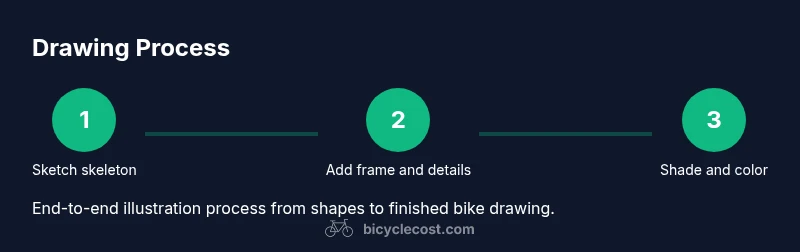
You can learn to draw a bicycle by building from a simple skeleton to a finished illustration. Start with basic shapes for the frame, wheels, and handlebars, then refine with proportions, perspective, and shading. Gather a pencil, eraser, ruler, and optional colored pencils. Practice multiple angles to master bike drawing.
Introduction to Bicycle Drawing Basics
Learning to draw a bicycle begins with a clear mental map of how the parts fit together and how perspective warps those shapes. According to BicycleCost, breaking a bike into simple geometric components helps beginners translate anatomy into a readable sketch. A well-made bicycle drawing communicates motion, function, and style, whether you're planning a repair guide, an infographic, or a comic panel. For 2026, the approach remains practical: start with light, flexible lines, use construction shapes, and gradually refine into precise edges. In this guide you'll learn the core philosophy, then move step by step into shapes, proportions, and shading that produce credible bike illustrations. Expect to sketch several versions to find the form that suits your study goals, from side views to three-quarter angles. This foundation will serve riders who want to visualize maintenance steps, plan custom builds, or simply enjoy the craft of drawing bicycles.
Essential Tools and Materials
Before you pick up a pencil, gather supplies that keep your lines clean and your mind focused. A graphite pencil (HB or 2B) provides stable lines for initial sketches, while a soft eraser lets you lift errors without smudging. A ruler helps with straight frame lines, and paper with a light texture accepts shading smoothly. Optional tools include a charcoal pencil for bold contrast, blending stumps for smooth gradients, and colored pencils or markers for finishing touches. Having a dedicated drawing pad and a sharp pencil sharpener keeps your workflow efficient. Organize your workspace so everything you need is within arm’s reach, reducing interruptions and encouraging longer practice sessions. Brand context notes: this method aligns with BicycleCost's guidance on practical, incremental practice.
Understanding Bicycle Proportions
Bicycles can be broken into a few key shapes: circles for wheels, a diamond-shaped frame, and straight lines for forks, seat stays, and handlebars. Start by deciding the wheel diameter and the overall bike length. In general, the wheel diameter is about 1/3 the bike’s total height in a side view, and the top tube length roughly mirrors the seat tube angle. These relationships give you a believable starting point for your drawing. When you sketch, keep your construction lines very light so you can adjust proportions without creating heavy marks. Practice comparing several real bicycles to refine your sense of scale and silhouette; this habit translates well to other mechanical subjects too.
Establishing Perspective: Side, Front, and Isometric Views
Drawing a bicycle from the side is the easiest for beginners, but you can expand your skills by exploring front and isometric perspectives. In a side view, align the wheels on a common baseline and draw the chainring’s circle as a secondary focal point. For a front view, show the wheels foreshortened and use diagonal lines to imply depth. Isometric perspective uses parallel lines to create a sense of three-dimensional form without vanishing points. Practicing all three viewpoints helps you communicate more complex scenes, like bike repairs or showroom illustrations, with clarity.
Step-by-Step Sketch: From Skeleton to Finish
- Sketch the basic skeleton: a large double-triangle frame and two circles for wheels. 2) Add the fork, seat tube, and chain stays to connect the frame. 3) Place handlebars, stem, and cranks. 4) Draw the chain, pedals, and gears with simple rounded shapes. 5) Refine proportions, erase construction lines, and tighten the outlines. 6) Apply shading to suggest light direction and form. 7) Add details like spokes and tread texture for realism. 8) Review alignment and adjust as needed before finalizing. 9) Consider multiple angles to deepen understanding. The goal is steady, incremental accuracy rather than perfection on the first try.
Adding Details: Chain, Pedals, and Handlebars
Focus on the mechanical details that define a bicycle’s silhouette. The chain should run from the chainring to the rear cog with a gentle curve, while the pedals align with the crank arms. Handlebars can be curved or flat, depending on the model you’re drawing. Use lighter lines for hidden parts and darker lines for visible edges to increase depth. When adding rims, keep the inner shapes slightly smaller than the outer circles to imply depth. Small touches like brake cables or reflections on metal can elevate realism without overcomplicating the sketch.
Shading and Texture: Bringing the Bike to Life
Shading adds volume and suggests material. Start with a light source and build layers from light to dark. Use cross-hatching or smooth gradients to render metal, rubber, and paint. Highlight reflective edges along tubes and rims, and deepen shadows where tubes overlap or where the bike rests on a surface. To simulate metallic surfaces, keep a few crisp light highlights and blend contrast gradually; for tires, emphasize texture with subtle stippling or tiny parallel lines.
Coloring Your Bicycle Drawing
If you want color, apply a base tone first, then layer with a slightly darker shade for shadows. Use small, controlled strokes to keep color within the lines, and consider color temperature—cool highlights with warm shadows for a dynamic look. Colored pencils or markers can mimic glossy paint or matte finishes depending on the stroke. Test color choices on a scrap sheet to ensure harmony across frame, components, and background. For poster-ready results, limit your palette to 3-4 main colors plus neutrals.
Common Mistakes and Fixes for Beginners
Small errors in wheel alignment, perspective, or proportions can derail a drawing. If wheels look ovoid, check your baseline and ensure both circles are true. If the frame looks off, compare the top tube length to overall bike height and adjust until the silhouette reads as a believable bicycle. Keep construction lines light so you can erase without leaving marks. Another frequent issue is inconsistent line weight; maintain a clear hierarchy by using bold outlines for the outer silhouette and lighter strokes for internal mechanics. Practice with a single model before branching into multiple styles.
Practice Plan: A Simple Weekly Routine
Set aside 20-30 minutes, 3-4 days a week, to draw a bicycle from reference photos. Start with a side view, then rotate to a three-quarter angle. Track progress in a sketchbook by labeling observations about proportion, perspective, and shading. Revisit difficult angles every other session to build confidence. Progress can be accelerated by setting small goals, such as perfecting wheel circles in week one and refining drivetrain details in week two. Over time, your speed and accuracy will improve with consistent, structured practice.
Quick Exercise: Draw a Bicycle from a Photo Reference
Find a clear photo of a bicycle and try a quick, 15-minute sketch. Focus on capturing major shapes and the silhouette first, then layer in small details. Compare your result with the reference and note opportunities to improve balance and proportion in the next attempt. After several iterations, try a three-quarter view and a perspective shot to broaden your skill set.
Tools & Materials
- Graphite pencil (HB or 2B)(For clean initial lines and light shading)
- Eraser (kneaded or plastic)(Lifts graphite without tearing the paper)
- Ruler or straightedge(Helpful for straight frame lines)
- Drawing paper or sketchpad(Choose medium-weight paper with some tooth)
- Blending stump or tortillon(For smooth shading)
- Colored pencils or markers (optional)(Adds color after the graphite draft)
- Reference photo (optional)(A real bicycle image helps accuracy)
Steps
Estimated time: 60-90 minutes
- 1
Set up workspace
Prepare your drawing area with good lighting and a stable surface. Keep your reference photo nearby and have all tools within reach. Start with a clean page to avoid smudges and distractions.
Tip: Use a fresh sheet to establish a confident start. - 2
Draw basic shapes for the skeleton
Sketch two circles for the wheels and a rough diamond shape for the main frame. Add light construction lines to connect the joints—this establishes proportion before details.
Tip: Keep lines very light so you can erase without leaving marks. - 3
Add the frame and fork
Refine the frame geometry by connecting the circles with straight and curved lines. Draw the fork from the head tube to the front wheel in a slightly curved line.
Tip: Check wheel alignment by ensuring both circles sit on the same baseline. - 4
Position handlebars, seat, and pedals
Place the handlebars above the front wheel and set the seat atop the seat tube. Add the crank arms and pedals connected to the chainring.
Tip: Angle the handlebars and seat to imply rider posture. - 5
Incorporate drivetrain and details
Sketch the chain path from chainring to rear cog with a gentle curve. Add spokes in the wheels and outline the brake setups if visible.
Tip: Draw spokes with evenly spaced intervals for balance. - 6
Refine and clean lines
Darken visible edges, erase stray construction lines, and adjust curves for smooth continuity. Ensure joints and tube intersections feel solid.
Tip: Use bolder lines for the outer silhouette and lighter lines for inner details. - 7
Add shading and light source
Identify your light direction and apply light shading to metal surfaces and rubber tires. Build depth with gradual tonal changes and subtle highlights.
Tip: Maintain a consistent light source across all components. - 8
Color (optional) and final touches
If adding color, start with a flat base and layer shadows. Keep edges crisp by resisting color bleed beyond lines.
Tip: Test color combinations on a scrap sheet first. - 9
Review, compare, and practice
Compare your drawing with references or your previous sketches. Note improvements in proportion and perspective, then plan a repeat session.
Tip: Maintain a regular practice cadence for faster improvement.
People Also Ask
What materials do I need to start drawing a bicycle?
Begin with a graphite pencil, an eraser, and a ruler on plain drawing paper. A reference photo helps establish proportions and perspective. Optional shading tools and color supplies can enhance the final image.
You need a pencil, an eraser, a ruler, and paper. Add shading tools and a reference photo if you want color or depth.
Which perspective is easiest for beginners when drawing a bicycle?
The side view is the simplest starting point because the silhouette is clear and proportions are easier to gauge. Move to front and three-quarter views as you gain confidence.
Start with the side view; it’s the easiest. Then try front and three-quarter views as you get more comfortable.
How can I improve accuracy of proportions over time?
Practice drawing from references regularly, compare against measurements, and adjust the frame length, wheel size, and top tube angle to match real bikes. Use construction lines to keep everything proportional.
Draw from references often and check measurements against the bike’s silhouette.
Can I color my bicycle drawing, and what colors work best?
Color can enhance realism. Start with a base color and layer darker hues for shadows. Use warm tones for shadows if you want a rich look, and keep highlights bright to suggest metal or gloss.
Yes, you can color it. Build up color gradually and use highlights for shine.
Watch Video
Quick Summary
- Practice with simple shapes first to map proportion.
- Master perspective by starting with the side view.
- Refine lines and add shading in stages.
- Use references to calibrate proportions and details.
- Consistency beats sporadic bursts of progress.