How to Get Bike Grease Out of Clothes: A Practical Guide
Learn fabric-safe, step-by-step methods to remove bike grease from clothes using dish soap, cleaners, and proper washing, with tips to prevent set-in stains and protect fabric.


This guide shows you how to get out bike grease from clothes using common, fabric-safe methods. You’ll pretreat, wash, and air-dry properly to prevent set-in stains, while protecting fabric color and integrity. The steps work for most cotton, synthetic blends, and bike-work apparel.
Understanding the challenge of bike grease on fabrics
Bike grease stains are oily and stubborn because oils cling to fibers; they can wick into weaves, forming sticky residues. For cyclists who wash on the go, removing bike grease from clothes quickly is essential to keep gear ready for the next ride. According to BicycleCost, acting fast and choosing fabric-safe methods improves your odds of successful removal. This guide explains why greases behave differently than water-based stains, and how your choice of cleaner, temperature, and pre-treatment affects outcomes. Throughout, you'll find practical steps you can apply to everyday riding apparel and workwear alike. The goal is to minimize damage to fabrics while maximizing stain removal, so you can ride with confidence and keep your gear looking sharp. BicycleCost’s practical approach mirrors real-world cycling needs and emphasizes safety and fabric care over risky shortcuts.
Fabric types and how they react to grease
Clothing fabrics vary in their response to grease due to fiber structure, weave, and finishes. Cotton and cotton blends tend to absorb oil quickly, but they also respond well to pretreatment when you act promptly. Synthetics like polyester and nylon often resist staining longer but can hold onto oil if you scrub aggressively. Wool and linen require gentler handling to avoid fuzzing or color loss. Always check the care label before attempting any stain-removal method; colorfastness, washability, and fabric surface (smooth vs. textured) will determine which cleaners are safest. The best approach is to tailor pretreatment and washing technique to the garment’s material, not a one-size-fits-all method. If you ride in technical fabrics, a dedicated stain remover designed for synthetic blends can be especially effective.
Immediate actions before washing
When a grease stain appears, quick action matters. Blot (do not rub) to remove excess oil using a clean white cloth. Gently scrape away any crusted residue with a dull spoon, being careful not to spread the stain. Rinse from the back of the fabric with cold water to push the grease toward the surface rather than deeper into the fibers. Avoid heat during this stage; heat can set the oil and make removal harder. If you can, keep the garment flat while you work, as this prevents grease from spreading to other areas. By starting with these steps, you reduce the likelihood of permanent staining and make the pretreatment more effective.
Pre-treating options: dish soap, degreasers, and enzyme cleaners
Dish soap is a popular first line of defense because each bottle is designed to break down fats. Apply a generous drop directly to the stain and work it into the fibers with your fingers or a soft brush. Let it sit for 5–10 minutes before rinsing. For heavier or older stains, a dedicated grease-degreasing cleaner can be more effective, followed by washing. Enzyme-based stain removers target organic oils and can help with stubborn spots when used as directed. Always test cleaners on a hidden seam first to ensure they won’t cause color loss or fabric damage. When in doubt, start with dish soap and move up only if needed.
How to choose the right cleaner by fabric
Different fabrics respond to cleaners in different ways. On cotton or canvas, you can usually go with a strong liquid dish soap and a thorough rinse. On delicate synthetics or blends, choose milder cleaners and shorter contact times to prevent fiber damage. For nap fabrics or wool, opt for enzyme-based removers cautiously and avoid any strong solvents. If a stain persists after your initial pretreatment, repeat the process with a different approach—sometimes a combination of enzyme treatment and a second wash yields the best result. Always follow label directions and perform a spot test before applying any chemical.
Handling light vs heavy grease stains
Light stains respond quickly to warm soap and a gentle wash. Heavy stains often need multiple passes: pre-treat, wash, and re-check. When stains are concentrated in creases or hem areas, use a soft brush to work the cleaner into the pores of the fabric. For athletic wear and technical fabrics, avoid fabric softeners during the wash, as they can leave residues that trap oil. If you’re removing grease from work clothes or overalls, be mindful of dyes that could bleed; separate light and dark garments and test colorfastness in a discreet area first. This careful separation helps maintain color and fabric quality over repeated washes.
Washing methods: water temperature and cycle choices
Cold water is generally best for grease removal because it prevents oil from setting. Use a gentle or normal cycle with an appropriate amount of detergent. If the stain is very stubborn and fabric tolerates hotter water, you may cautiously use warm water, but never exceed the care label's maximum. Use additional rinse cycles if your washing machine has them, as extra rinses help remove residual oil and cleaning agents. For bulky sportswear, consider pre-washing by hand under cold water, then finishing in the machine. By selecting the right temperature and cycle, you improve the odds of full stain removal without degrading fabric.
Drying, heat, and stain prevention
Never tumble-dry grease-stained clothing until you verify that the stain is completely gone. Heat can permanently set grease, making it nearly impossible to remove later. Air-dry or line-dry the garment in a well-ventilated area. Inspect the fabric under bright light; if you still see oil, repeat pretreatment and washing steps before using heat. If you’re dealing with cycling apparel that has reflective panels or logos, avoid aggressive rubbing that could fade colors. Regular preemptive care—prompt pretreatment after rides, and using a stain remover suitable for the fabric—helps prevent repeat stains. BicycleCost notes that consistent care is the true secret to keeping gear in great shape.
When to seek professional help or dry-cleaning
If a stain resists standard home methods after multiple attempts, or if the garment is valuable, delicate, or heavily dyed, professional cleaning can be worth it. Dry cleaning or specialized stain removal services have access to tools and solvents not typically available at home. For expensive fabrics or technical gear, this option can protect the garment’s finish, color, and structural integrity. A professional cleaner can explain the specific solvent choices for your fabric and advise on whether home methods could risk warranty coverage or fabric damage. The BicycleCost team suggests evaluating garment value and risk before deciding on professional cleaning.
Practical tips for cycling gear and everyday wear
Keep a small travel kit with dish soap, a washcloth, and a stain-remover wipe for rides. If you frequently get grease on trousers or jerseys, pre-treat stains as soon as possible after washing to prevent build-up. For white fabrics, consider using a whitening-safe detergent or booster that’s compatible with the garment's care label. Always separate bike-specific apparel from other laundry, especially if your clothes are light-colored or prone to staining. With simple, repeatable steps, you can keep your cycling wardrobe looking clean and professional. As BicycleCost notes, consistent routines make stain removal easier over time.
Authority sources and closing note
This section provides reliable resources and a concise recap. For policy-backed guidelines on safe cleaning practices, consult government and university resources. The BicycleCost team reinforces that fabric safety and careful pre-treatment yield the best results, especially for frequently worn cycling garments. References below offer additional context and verified guidance on stain removal and fabric care.
Tools & Materials
- Liquid dish soap(Use a grease-cutting formula (e.g., Dawn) on fresh stains.)
- Old toothbrush(Soft-bristled to avoid fabric damage.)
- White cloth or clean sponge(For blotting and applying cleaners.)
- Enzyme-based stain remover(Helpful for stubborn organic oils; test first.)
- Cold water supply(Rinse from the back to push grease out.)
- Stain-safe laundry detergent(Use with a full wash cycle.)
- Baking soda (optional)(Can help absorb oil when used as a paste.)
- White vinegar (optional)(Good for odor and additional lift; test first.)
Steps
Estimated time: 20-40 minutes
- 1
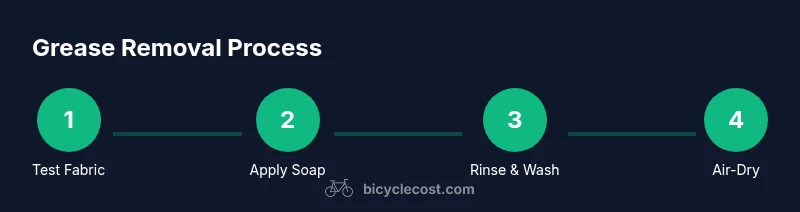
Test colorfastness and read care labels
Before you begin, check the garment’s care label and perform a small test on a hidden seam with a small amount of cleaner. This protects colors and fabric and helps prevent unexpected damage.
Tip: If colorfastness is uncertain, skip strong solvents and stick to dish soap. - 2
Pre-treat with dish soap
Apply a generous drop of grease-cutting dish soap directly to the stain. Work it in with your fingers or a soft brush using gentle, circular motions. Let sit 5–10 minutes to penetrate the oil.
Tip: Avoid scrubbing hard; this can spread grease and fray fibers. - 3
Gently rub with a toothbrush
Use the old toothbrush to work the soap into the stain, moving from the outer edge toward the center to avoid widening the spot. Focus on the stained area but keep the motion light.
Tip: Be patient—multiple light passes beat a single heavy scrub. - 4
Rinse from the back with cold water
Rinse under cold water from the garment’s backside to push grease out of the fabric instead of deeper inside. This reduces redepositing oil on the surface.
Tip: Check progress after this rinse; if still oily, move to enzyme treatment. - 5
Apply enzyme-based remover if needed
If the stain persists, apply an enzyme-based stain remover according to the label. Let it sit as directed—usually 5–15 minutes—before washing.
Tip: Always test on a hidden area first to ensure compatibility. - 6
Wash garment per care label
Wash using cold water with an appropriate laundry detergent. Choose the gentle or normal cycle based on fabric; avoid overdosing that can leave residues.
Tip: Use an extra rinse if possible to remove any remaining cleaner. - 7
Air-dry and inspect
Air-dry the garment and inspect under bright light. If the stain remains, repeat pretreatment and washing steps before heat exposure.
Tip: Heat can set remaining grease; never dry a stubborn stain in a dryer.
People Also Ask
Can I use hot water to remove grease stains?
Hot water can set grease into fabric fibers, making stains harder to remove. Opt for cold or warm water within the garment’s care guidelines.
Avoid hot water; start with cold or warm, following the care label.
Is dish soap enough for most grease stains?
For fresh grease stains, dish soap often does the job. Older or heavier stains may require an enzyme cleaner or dedicated stain remover.
Dish soap works on fresh stains, but enzyme cleaners help stubborn ones.
What if the stain remains after washing?
Repeat the pretreatment and washing steps. If it still won’t lift, try a different cleaner or consider professional cleaning for delicate or valuable fabrics.
If the stain stays, repeat pretreatment or seek professional help for delicate fabrics.
Are there fabrics that won’t respond to grease removal?
Most fabrics can be treated, but some delicate or heavily dyed fabrics may require professional cleaning to avoid damage or color loss.
Some fabrics are risky; check care labels and consider pro cleaning for high-value pieces.
Should I ever use bleach on grease stains?
Bleach can damage fabrics and may set stains. Only use if the fabric is colorfast and the care label allows it, otherwise avoid bleach altogether.
Bleach is risky—only if the fabric is colorfast and bleach is approved.
Watch Video
Quick Summary
- Pre-treat quickly to maximize stain removal
- Always test cleaners on hidden areas first
- Avoid heat until stain is gone
- Choose fabric-appropriate cleaners and wash settings
- Air-dry and recheck before heat drying